Forty Whacks: Lizzie Borden Axe Murders America Never Solved

🎬 The video premieres soon
On a sweltering August morning in 1892, Andrew and Abby Borden were found hacked to death in their own home in Fall River, Massachusetts. Suspicion fell almost immediately on Andrew's own daughter, Lizzie — a devout Sunday school teacher with no criminal history. What followed was one of the most sensational trials in American history, filled with contradictory alibis, a mysteriously burned dress, a missing hatchet handle, and a jury verdict that shocked the nation. Over a century later, historians, novelists, and true-crime obsessives still argue over what really happened behind those locked doors. This documentary walks through the murders, the investigation, the trial, and the theories that refuse to die.
Chapter 1Cold Open: Father's Dead

On the morning of August 4, 1892, in the quiet textile-mill city of Fall River, Massachusetts, something happened that shocked all of America. In a modest house on Second Street, 69-year-old wealthy businessman Andrew Borden was found lying silently on the sitting room sofa. That morning, Andrew Borden was found dead in his own home. His head had been struck ten or eleven times with an axe-like weapon, and the wounds were still fresh.
His daughter, Lizzie Borden, called down to the maid Bridget Sullivan: 'Maggie, come quick! Father's dead.' Shortly afterward, it was discovered that Andrew's wife, Abby Borden, was also lying dead in an upstairs room, also killed with an axe. The doors were closed and locked, and at that time only Lizzie and the maid were present in the house.
Police arrested Lizzie, she stood trial, but in 1893 the jury acquitted her. To this day, no one else has ever been charged. So the question remains: if Lizzie didn't do it, who did? And if she did do it, how did she get away with it? Today, we go back to 1892 Fall River, to a murder case that still captures people's attention 130 years later.
Chapter 2A Frugal Fortune in Fall River

By the late 1800s, Fall River had become America's biggest textile city, with hundreds of cotton mills powered by the waters of the Quequechan River. By 1868, Fall River had surpassed Lowell to earn the distinction of having the most spindles of any textile city in America. The Borden family had a major hand in this industrial growth. Colonel Richard Borden had established the Fall River Iron Works in 1821. But Lizzie's father, Andrew Jackson Borden, rose not from this wealthy family's fortune but through his own hard work.
Born in 1822, Andrew faced severe financial struggles in his youth, even though he came from a respected and once-prosperous family. He started out making and selling furniture and caskets, and later found success in property development. Over time, Andrew became a director of several textile mills, president of Union Savings Bank, and also a director of the Durfee Safe Deposit and Trust. At the time of the murders, his estate was valued at three hundred thousand dollars—roughly $10.8 million today.
Despite this wealth, Andrew was famously frugal. His house had no indoor plumbing, even though it was common among the wealthy at the time. His home stood in a semi-affluent area, while the city's wealthiest people lived in the Highlands or Hill District, far from the industrial areas.
Lizzie Andrew Borden was born on July 19, 1860, the third child of her parents; a sister, Alice, had died at just 22 months old. Lizzie's biological mother, Sarah, died in 1863, and Andrew remarried Abby Durfee Gray three years later, when Lizzie was only six. Lizzie later said she called her stepmother only 'Mrs. Borden,' and she never believed their relationship had ever been warm. Lizzie believed Abby had married Andrew only for his money, and this suspicion remained present in their relationship always.
On the other hand, Lizzie and her older sister Emma were raised in a deeply religious environment. They regularly attended Central Congregational Church. In her youth, Lizzie was very active in church activities, teaching immigrant children in Sunday school. She also served as secretary-treasurer of the Christian Endeavor Society, and was part of social movements like the Woman's Christian Temperance Union. By 1890, a maid, Bridget Sullivan, only 25 years old and from Ireland, lived in the Borden household. Sullivan later testified in court that the adult sisters, Lizzie and Emma, rarely ate meals with their father and stepmother. A wealthy household, a frugal father, an unhappy stepmother, and two sisters living in a world apart—this was the family in which a storm was about to break.
Chapter 3Cracks in the House

In May 1892, a strange incident occurred. Andrew Borden killed pigeons in his barn with a hatchet, thinking they were spreading disease. Lizzie had recently had a roost built for these very pigeons. It is said she was angry about this, but the truth of this claim is doubtful. This incident is considered a sign of growing tension in the household, though its full details remain unclear.
In July 1892, a severe argument broke out in the house, after which both sisters, Lizzie and Emma, went on an extended vacation to New Bedford. They returned to Fall River a week before the murders, but instead of going to her own home, Lizzie spent four days at a rooming house. The root of the tension was property. Andrew had begun gifting land and houses to Abby's family, which angered the daughters greatly. When Abby's stepsister received a house, Lizzie and Emma also demanded that they be given the rental house where they had lived until their mother's death. They bought this house from their father for just one dollar. But in July, they sold this very house back to Andrew for $5,000.
On August 3, 1892, Lizzie and Emma's uncle, John Vinnicum Morse, arrived at the Borden house. Andrew asked him to stay to discuss business matters. Some believe their conversation further increased the pre-existing tension over property, though no evidence of this has ever been found. During this time, the whole household had been severely ill for several days. A family friend believed this was caused by mutton that had sat on the stove and spoiled over several days. But Abby suspected they were being poisoned, since Andrew was not a very popular figure in Fall River.
The day before the murders, local residents claimed that Lizzie tried to buy hydrocyanic acid, a poisonous chemical, in diluted form, from a druggist. Lizzie's own explanation was that she only wanted to buy the acid to clean her fur coat, but the local medical examiner said it had no such antiseptic properties. In the search for poison, both bodies' stomachs were removed and tested, but no poison was found.
The question still remained: what was actually happening in this house? Property disputes, fear of illness, suspicion of poison, and a mysterious visit from an uncle—all of this was building up in the week before the murders. And then came the morning of August 4, 1892, the morning that would change Fall River's history forever.
Chapter 4The Morning of August 4

John Morse stayed overnight in the guest room at the Borden house on August 3. The next morning at breakfast, Andrew, Abby, Morse, and maid Bridget Sullivan were all present together. After breakfast, Andrew and Morse sat in the sitting room talking about business matters for about an hour. At 8:48 in the morning, John Morse left the Borden house to buy some cattle and visit his niece. He had promised to return for lunch at noon. Andrew Borden also left after 9 o'clock for his daily morning walk. Now only Abby, Lizzie, and maid Bridget Sullivan remained in the house.
Making the guest room bed was usually a chore for Lizzie and Emma, but that morning Abby herself went upstairs to make the bed, sometime between 9 and 10:30. According to the forensic investigation, Abby was facing her killer when the attack happened. The first blow landed on the side of her head, above the ear. This blow caused Abby's face to fall to the floor, leaving marks on her nose and forehead. The killer then delivered 17 more blows from behind. In total, Abby received 18 blows. It was later found that Andrew was killed with 10 or 11 blows.
At around 10:30, Andrew Borden returned home. His key wouldn't turn in the lock, so he knocked on the door. Bridget Sullivan went to open the door but it was jammed. In frustration, she said something, and just then she heard Lizzie laughing. This laughter came from the top of the stairs—but Abby was already dead by this time, and her body was clearly visible from upstairs. This detail was later considered very significant.
Lizzie later said she had not been upstairs, and that Andrew asked where Abby was. Lizzie replied that a messenger had come with a message from a sick friend for Abby, and she had gone to see them. Sullivan said she removed Andrew's boots and put slippers on him, but crime-scene photos show Andrew wearing his boots. Andrew lay down on the sofa to rest. Sullivan went to rest in her room on the third floor, after finishing cleaning the windows.
At around 11:10, she heard Lizzie's voice from downstairs: 'Maggie, come quick! Father's dead, somebody came in and killed him.' Andrew, lying on the sofa, was killed with 10 or 11 blows from a hatchet-like weapon. One eye was cleanly split in two. This detail suggests he may have been asleep at the time of the attack. His wounds were still bleeding, meaning the attack had happened recently.
The family doctor, Dr. Bowen, ran over from his house across the street. He examined both bodies and confirmed the deaths. Neighbor Mrs. Churchill and Sullivan went halfway up the stairs, their eyes level with the floor, when they spotted Abby's body. Detectives estimated Andrew's death occurred at around 11 o'clock. And now the question remained: who was in the house at the time of the murders?
Chapter 5A Very Peculiar Woman
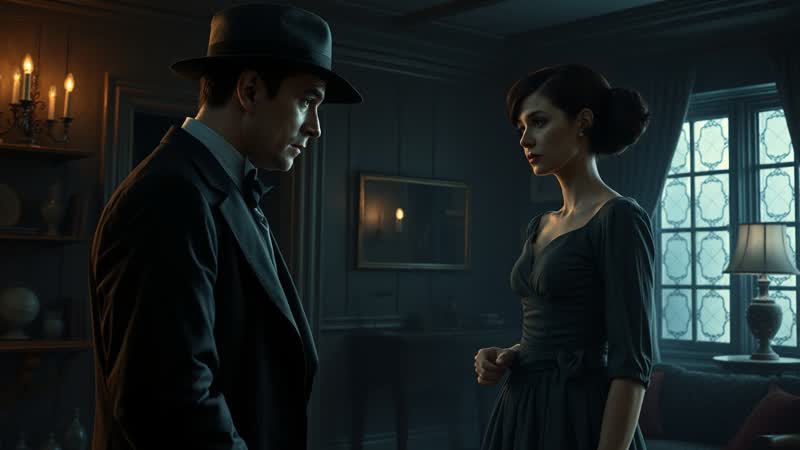
During police questioning, Lizzie's answers were strange and contradictory. First, she said she heard a groan or scream before entering the house. Two hours later, she said she heard nothing, and had entered the house without any suspicion. Everyone noted this contradiction. Sullivan and neighbor Mrs. Churchill were halfway up the stairs, their eyes level with the floor, when they saw Abby lying face down.
Most police officers did not like Lizzie's demeanor. Some said she was too calm and composed, which seemed suspicious to them. Marshal Hilliard told reporters that Lizzie seemed a 'very peculiar woman.' Officer Seaver believed this crime was the work of someone mentally disturbed. Judge Blaisdell said the real question was: 'how could a woman do this?' Yet Lizzie's clothes were never tested for bloodstains.
Police searched Lizzie's room, but it was only a cursory search. At trial, they admitted that because Lizzie was unwell, they did not conduct a full search. In the basement, police found two hatchets, two axes, and a hatchet-head with a broken handle. This hatchet-head was believed to be the actual murder weapon. The break in the handle looked very fresh, and the dust on it also appeared deliberately applied. However, no tool was ever immediately removed from the house.
In the basement, a pail was also found containing what appeared to be blood-stained cloths, which Lizzie attributed to her menstruation. This pail was never further examined. Sullivan expressed surprise that she hadn't noticed this pail while doing laundry that same week. In the search for poison, both bodies' stomachs were removed and tested, but no poison was found. Neighbors suspected Lizzie had tried to buy hydrocyanic acid from a druggist, but this was never proven.
Lizzie and Emma's friend Alice Russell stayed with them for several nights after the murders. On Sunday morning, she saw Lizzie holding a skirt. Lizzie said she was going to burn it because it had paint on it. On the night of August 4, the day of the murders, a police officer saw Lizzie and Alice Russell going into the cellar carrying a kerosene lamp and a pail. Both women came out of the cellar, then Lizzie went back in alone and appeared to bend over the sink. The officer could not see what she was actually doing.
On August 5, when John Morse left the house, hundreds of people surrounded him; police had to escort him back home. On August 6, police conducted a full search, checked the sisters' clothing, and seized the broken hatchet-head. That same evening, Lizzie was told she was now a suspect. The next morning, Alice Russell again saw Lizzie tearing up a dress. Was this the same dress worn on the day of the murders? This was never determined.
Chapter 6Inquest, Arrest, and Trial
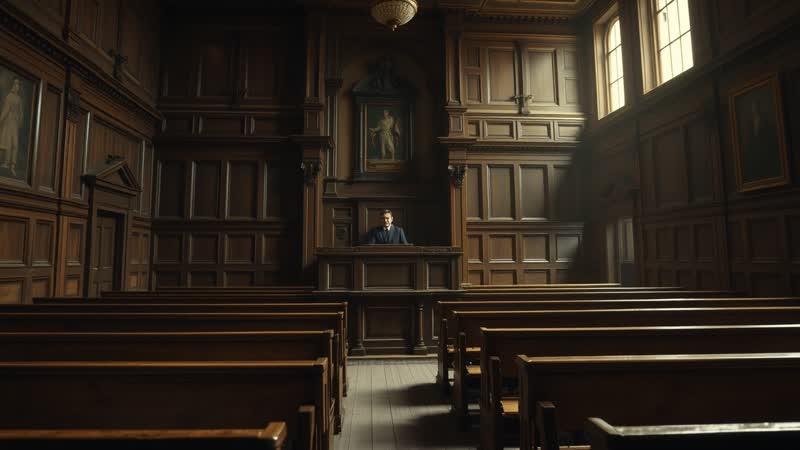
On August 8, Lizzie's inquest hearing began. The court denied her request to have the family attorney present, since by law the inquest was supposed to be private. She was being given morphine to calm her nerves, and this may be why her testimony was confused. She repeatedly refused to answer questions, even when the answer would have worked in her favor. Sometimes she said she was reading a magazine in the kitchen, sometimes that she was ironing in the dining room.
On August 11, Lizzie was given an arrest warrant and sent to jail. This inquest testimony was later ruled inadmissible at trial. Newspapers wrote that Lizzie's demeanor was 'cold and unaffected,' that she chewed her lips, and leaned toward her attorney Adams. The Boston Globe itself published a three-page report on this inquest. Some friends began saying this testimony had changed their opinion of her.
On November 7, the grand jury began hearing evidence, and on December 2, 1892, Lizzie was formally indicted. On June 5, 1893, Lizzie's trial began in New Bedford. The prosecution was led by Hosea Knowlton and William Henry Moody, who later became Justices of the U.S. Supreme Court. The defense included Andrew Jennings, Melvin Adams, and former Massachusetts Governor George Robinson, who personally led Lizzie's defense.
Just five days before the trial, on June 1, another axe-murder occurred in Fall River—Bertha Manchester was found dead in her kitchen. Jurors certainly took note of this similarity. Jose Correa de Mello was later found guilty of Manchester's murder, but it was established that he wasn't even in Fall River at the time of the Borden murders.
The matter of the hatchet-head came up repeatedly during the trial, but the prosecution could not prove it was the actual murder weapon. No bloodied clothing was ever found at the scene, but Alice Russell testified that she saw Lizzie burning a dress, which was said to be ruined by paint. The defense never challenged this statement.
Lizzie's whereabouts also remained disputed. Sullivan said she went upstairs at about 10:58, leaving Lizzie and her father downstairs. Lizzie said she was in the barn for twenty minutes to half an hour. Witness Hyman Lubinsky said he saw Lizzie leaving the barn at 11:03, and Charles Gardner confirmed the time. At 11:10, Lizzie called Sullivan downstairs, told her of the murders, and sent her to fetch the doctor.
Both bodies' heads were removed during autopsy. When, on June 5, 1893, these skulls were presented as evidence in the courtroom, Lizzie fainted at the sight of them. The judge excluded the evidence about the attempted purchase of prussic acid, saying it was too far removed in time from the murders. Justice Justin Dewey, whom Robinson had appointed as governor, gave the jury a lengthy summary that leaned in the defense's favor.
On June 20, 1893, the jury went to deliberate. Newspapers reported the verdict came in just 40 minutes, in a single vote—though some later accounts say it took an hour and a half. The jury found Lizzie not guilty. Leaving the courtroom, she told reporters: 'I am the happiest woman in the world.' This trial would later be compared to the famous cases of Bruno Hauptmann, Ethel and Julius Rosenberg, and O.J. Simpson—a milestone in America's legal history.
Chapter 7Who Really Swung the Axe?
The trial ended, but the question remained—if Lizzie didn't commit the murders, who did? To this day, experts have no confirmed answer. The very first theory concerns Lizzie herself. Writer Victoria Lincoln proposed in 1967 that she may have committed the murders while in a fugue state. A fugue state is a dissociative condition in which a person does not remember their own actions. According to this theory, Lizzie wasn't even conscious of what she had done.
The second major theory holds that Andrew Borden was physically and sexually abusive toward his daughter, and this anger led to the murders. Solid evidence for this claim is very scarce. But in 1892, a subject like incest wasn't openly discussed at all, and forensic methods of that era were also limited. This suspicion was hinted at in local newspapers of the time as well, and scholar Marcia Carlisle shed new light on this theory in a 1992 essay.
Then comes the most surprising theory. Mystery writer Evan Hunter, known by the pen name Ed McBain, presented a completely different story in his 1984 novel Lizzie. According to McBain's theory, Lizzie was caught in a tryst with maid Bridget Sullivan, and the murders happened to hide this secret. In a 1999 interview, McBain gave further detail—saying that Abby reacted with shock upon seeing the two, and Lizzie struck her with a candlestick.
After that, according to McBain, Lizzie told Andrew the truth upon his return, but his reaction was similar—and in anger, a hatchet was used. McBain also speculated that the hatchet was later hidden by Sullivan somewhere. Remember, this is only a novelist's speculation, not a proven fact.
In later years, rumors also spread that Lizzie was a lesbian. But no such speculation about Bridget Sullivan ever surfaced. Sullivan later moved to Butte, Montana, where she married, and died there in 1948. One account claims Sullivan told her sister before dying that she had changed her testimony in court to save Lizzie. But this claim is also disputed. Records show that Sullivan's death was reported by the County Hospital, not by any individual—which is why this story is considered doubtful.
Now let's talk about another important suspect—John Morse, Lizzie's maternal uncle, who had stayed at the Borden house the very night before the murders. Morse rarely visited the family. According to police, his alibi was so perfect and over-detailed that it aroused suspicion on its own. For some time, police kept John Morse as a suspect too.
Another strange theory concerns a man named William Borden, whom author Arnold Brown claimed was Andrew's illegitimate son. According to Brown, William tried to extract money from his biological father and failed. But researcher Leonard Rebello, after extensive research, proved that William was not actually Andrew's son at all.
The final major theory concerns the elder sister, Emma. Crime writer Frank Spiering claimed in his 1984 book Lizzie that Emma may have secretly come to the house. Emma's alibi placed her in Fairhaven, about 15 miles from Fall River. According to Spiering, she could have secretly returned, committed the murders, and gotten back to Fairhaven in time. But none of these theories has ever been proven in court. Lizzie Borden is still considered the prime suspect today, but the truth has been buried forever.
Chapter 8Maplecroft and a Quiet End
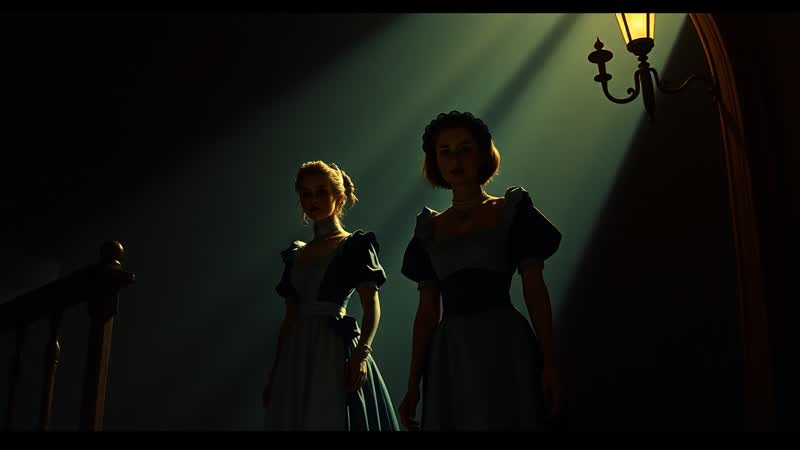
After the trial, Lizzie and Emma bought a large, modern house in Fall River's wealthiest neighborhood, The Hill District. They named the house themselves—Maplecroft. It was here that Lizzie changed her name to Lizbeth A. Borden. Maplecroft was staffed with live-in maids, a housekeeper, and a coachman.
Andrew's estate money eventually went to both sisters, because legally Abby's death was ruled to have occurred first, so the property first went to Andrew and then to the daughters. Abby's family also made a claim, and eventually a large settlement was paid to resolve the matter. But despite having money, Fall River society never accepted Lizzie. Even after her acquittal, she remained socially isolated.
In 1897, her name appeared in newspapers again, when she was accused of shoplifting in Providence, Rhode Island. In 1905, another major turning point occurred. Lizzie threw a party for actress Nance O'Neil, which led to a severe quarrel with Emma. After this quarrel, Emma left the house and never met her sister again. The two sisters, who had been together since childhood, were now separated forever. Emma moved to New Hampshire, while Lizzie remained alone at Maplecroft.
In her final years, she had gallbladder surgery and began falling ill. On June 1, 1927, at age 66, Lizzie Borden died of pneumonia in Fall River. Details of her burial were not publicized, and very few people attended the funeral. Remarkably, just nine days later, Emma also died, in a nursing home in New Hampshire. She was 76 and suffered from chronic nephritis.
At the time of her death, Lizzie's total wealth exceeded $250,000—roughly $6.2 million today. She owned a house, office buildings, shares, two cars, and a great deal of jewelry. In her will, she left $30,000 to Fall River's Animal Rescue League, and set aside $500 for the permanent maintenance of her father's grave. Close friends and relatives also received shares, some amounting to thousands of dollars. But the two sisters who had separated in life were reunited in death. Lizzie and Emma both never married, and were ultimately buried in the family plot at Fall River's Oak Grove Cemetery, alongside their father and stepmother.
Chapter 9The Legend That Won't Die
This case became immortalized in a popular skipping-rope rhyme, sung to the tune of the famous song Ta-ra-ra Boom-de-ay. But this rhyme is entirely inaccurate. In reality, Abby was struck 18 or 19 times, and Andrew only 11 times—not forty and forty-one. Despite this, Lizzie Borden's story became part of American popular culture—repeated again and again in films, plays, operas, ballets, and novels.
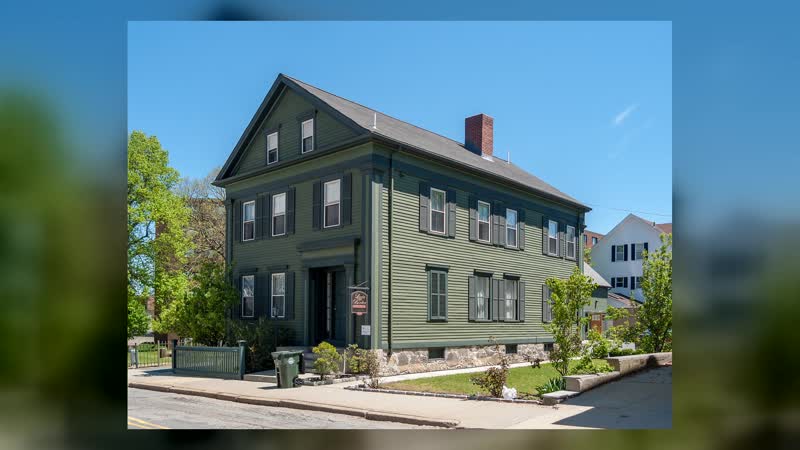
From Elizabeth Montgomery to Christina Ricci and Chloë Sevigny, many actresses have played Lizzie's role. And now, Netflix's series Monster is presenting this story anew once again. The Borden house today has become a museum and bed-and-breakfast, where people still come to spend the night in an 1890s atmosphere.
But the real question remains unanswered even today—what actually happened that morning in August 1892, at the house on Second Street? Lizzie Borden was acquitted, but history has never fully declared her innocent. Justice and suspicion, both remain alive together to this day.
Shorts
Lizzie Borden's Father Found Dead: The Morning That Shocked America
Premieres:
Lizzie Borden's Chilling Calm: Police Called Her 'Peculiar'
Premieres:
The Lizzie Borden Rhyme Is a Lie: Real Axe Count Revealed
Premieres:
Sources
- Lizzie Borden — Wikipedia (CC BY-SA 4.0)
- Fall River, Massachusetts — Wikipedia (CC BY-SA 4.0)
Photo credits
- Lizzie Borden by B.W. Clinedinst — B.W. Clinedinst, CC BY 3.0
- Lizzie Borden Trial Jury — O'Neil, New Bedford, Mass, Public domain
- Lizzie Borden 1890 — Unknown authorUnknown author, Public domain
- Borden House 92 Second St Fall River Massachusetts 1892 — 1892 image, Public domain
- Andrew Borden slain body 1892 — The Burns Archive. 1892 police photo., Public domain
- North Main Street, Fall River, MA — Unknown authorUnknown author, Public domain
- Lizzie Borden House (Bed Breakfast) (3535957840) — dbking from Washington, DC, CC BY 2.0
- Lizzie Borden House, Fall River, Massachusetts — Kenneth C. Zirkel, CC BY-SA 4.0
- Granite Mills, Fall River, MA — Unknown authorUnknown author, Public domain


Stock footage & photos
- By Анатолий on Pexels
- By Everett Bumstead on Pexels
- By Burak Bahadır Büyükkılınç on Pexels
- By cottonbro studio on Pexels
- By Ilya Klimenko on Pexels
- By cottonbro studio on Pexels
- By irenefilms on Pexels
- By Oğuzhan Kara on Pexels
- By KoolShooters on Pexels
- By cottonbro studio on Pexels
- By Kiwi and Camera on Pexels
- By H.Espinosa Films on Pexels
- By Nancy Zjaba on Pexels
- By Jonathan Ellis on Pexels
- By Mr Pixel on Pexels
- By LayG Traveller on Pexels
- By Sora Shimazaki on Pexels
- By Jim Baker on Pexels
- By Everett Bumstead on Pexels
- By MART PRODUCTION on Pexels
- By cottonbro studio on Pexels
- By Pavel Danilyuk on Pexels
- By cottonbro studio on Pexels
- By Pixabay on Pexels
- By Tech VideoStack on Pexels
This documentary is based on the sources above and was fact-checked before publishing. The narration voice, animated host and illustrations are AI-generated. Spotted a mistake? Tell us in the YouTube comments.