One Steel Bucket, One Blue Flash | Tokaimura Nuclear Accident True Story
🎬 The video premieres soon
On 30 September 1999, three technicians at a small fuel plant in Tokaimura, Japan, were rushing to finish a batch of uranium fuel. They skipped approved steps and poured uranyl nitrate by hand from steel buckets into a tank never built to hold it. Then came a blue flash, and a chain reaction that would not stop for about 20 hours. Hundreds of thousands of people were told to stay indoors, while two workers began a desperate fight for survival in hospital. This documentary follows the shortcuts, the missing alarm, the failed warnings, the human cost and the court cases that followed, and asks how a trusted industry let it happen.
Chapter 1The Blue Flash
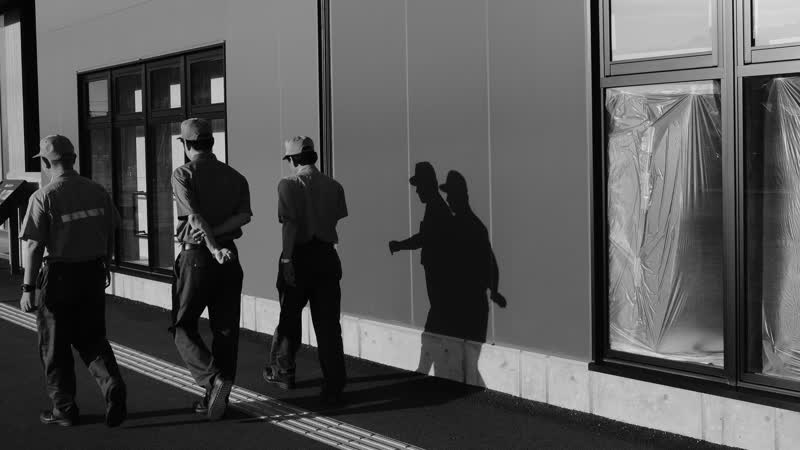
At about 10:35 on the morning of 30 September 1999, work was under way at the JCO fuel plant in the village of Tokaimura, Japan. Three technicians were working beside a precipitation tank, mixing solutions in stainless steel buckets. They were Hisashi Ouchi, Masato Shinohara and Yutaka Yokokawa. Then another bucket of uranyl nitrate solution was poured into the tank. It was the seventh bucket, and everything changed at that moment.
By then the tank held roughly 16 kg of uranium. A blue flash appeared, and gamma radiation alarms began to sound. Ouchi was leaning over the tank. Shinohara stood on a nearby platform. Yokokawa was sitting at a desk about four meters away. Inside the tank, uncontrolled nuclear fission, a self-sustaining chain reaction, had begun. According to the sources, it was Japan's worst civilian nuclear radiation accident before Fukushima.
Three questions hang over the story. Why were workers pouring uranium solution from steel buckets inside a nuclear facility? Was it an accidental mistake, or was there a bigger story behind it? Why was there no criticality accident alarm? And why could no one stop the chain reaction for about 20 hours?
This article follows the whole sequence: an earlier fire in 1997, the company's shortcuts, and the 83 days Ouchi spent in hospital. It also covers what investigators found, who was punished, and what Japan changed afterwards. To understand it, we have to start at the beginning.
Chapter 2A Village Built on Atoms
Japan has very few natural resources and has to rely on others for its energy. Nuclear power was seen as one answer to that problem, a way to reduce dependence on imports. Until the Fukushima nuclear disaster in 2011, nuclear power supplied about 30% of Japan's electricity. After that disaster, nuclear generation fell sharply. Sources say Japan imports 80% of its energy, so the pressure to produce its own has never gone away.
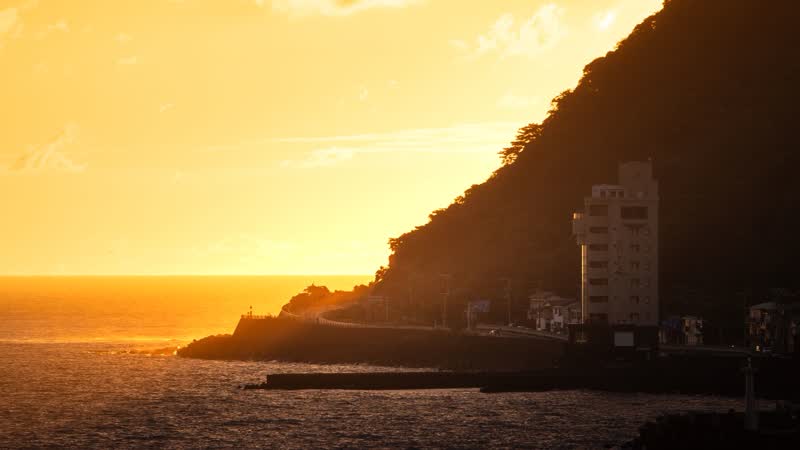
Tokaimura lies in Ibaraki Prefecture, about 70 miles from Tokyo. Its location and open land made it ideal for nuclear work, so several experimental reactors were built there first. Then the Tokai Nuclear Power Plant was built, the country's first commercial nuclear power station. Over time, dozens of companies and government institutes settled in the area. They were involved in nuclear research and experimentation. Some did manufacturing, some fuel fabrication and enrichment, and some handled nuclear waste disposal. A small village became a hub for many stages of the nuclear industry: research, fuel production and waste management.
One figure stands out. About a third of Tokai's population depended on jobs connected to the nuclear industry, so roughly one person in three earned a living from it. In such a place, safety is not only a technical question but a question for the whole community.
Two major accidents happened in this village, one on 11 March 1997 and one on 30 September 1999. Together they are known as the Tokaimura nuclear accidents. The first took place at PNC's radioactive waste bituminisation facility, where an experimental batch caught fire and then exploded. An initial summary says more than twenty people were exposed to radiation. The second happened at a separate JCO facility. Liquid uranium fuel for an experimental reactor was handled improperly, causing a criticality accident. It lasted about 20 hours and two workers died. Of the 436 people whose radiation doses were assessed, none exceeded the annual regulatory limit.
Later investigations pointed to three main causes: weak regulatory oversight, a lack of safety culture, and inadequate worker training and qualification. Lawsuits followed and new safety measures were introduced. But first we need to look at the earlier warning. How did a village so dependent on nuclear power come face to face with danger twice? The first answer lies in a fire in 1997.
Chapter 3The Warning: Fire and Lies in 1997
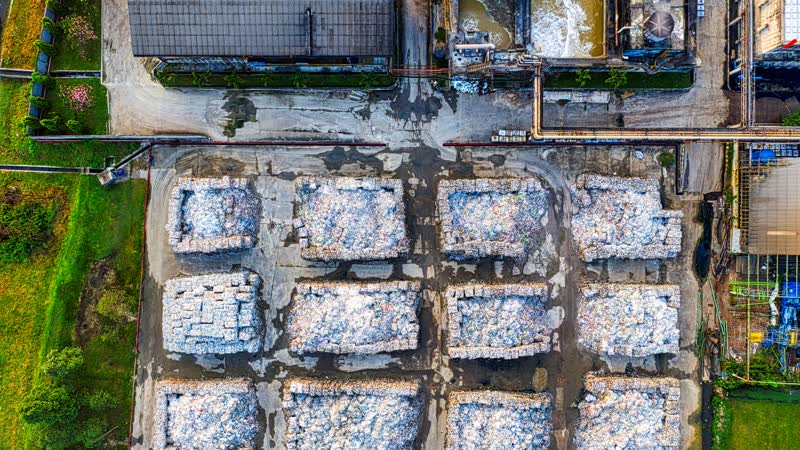
On 11 March 1997, Tokaimura saw its first serious nuclear accident, at the bituminization facility of PNC, the Power Reactor and Nuclear Fuel Development Corporation. It is also called the Dōnen accident, Dōnen being an abbreviation of PNC's full Japanese name. The plant sealed low-level liquid waste in molten asphalt, or bitumen, and stored the mixture in metal drums. On this day a new experiment was under way, testing a new waste-to-asphalt ratio that used 20% less asphalt than usual.
At 10:00 in the morning, a slow chemical reaction inside a new barrel set off the already hot material. The fire soon spread to several nearby barrels. The building's temperature controls were meant to keep the asphalt from reaching its ignition point, but they were not working properly. Workers could not put the fire out properly. Smoke and radiation alarms sounded and all staff had to leave the building. The fire had begun in the morning and could not be fully controlled.
By evening the situation took a new turn. At 8 p.m. people were preparing to re-enter the building when flammable gases that had built up exploded. The blast broke windows and doors, and smoke and radiation escaped through them into the surrounding area. The problem was no longer confined to the building. The government's Science and Technology Agency called it the worst nuclear accident in the country's history to that point, and it was rated Level 3 on the International Nuclear Event Scale. Thirty-seven people nearby were exposed to trace amounts of radiation. The introduction to the source says more than twenty people, while the detailed account gives 37. A week later, weather officials recorded unusually high caesium levels 40 km southwest of the plant. An aerial survey also showed that the building's roof was broken, and this damage let radiation keep escaping.
Then came the cover-up. PNC management ordered two workers to report a false timeline of events up to the evacuation, so that the lack of supervision could be hidden. Dōnen's leadership also did not inform the STA of the fire immediately, a delay attributed to their own internal investigation. As a result, emergency teams were slower to deploy and people were exposed to radiation for longer. Authorities first reported a 20% increase in radiation around the plant, but the real increase later turned out to be ten times higher.
Tokai residents were angry. They demanded criminal prosecution of PNC officials, a change of company leadership and the closure of the plant. Prime Minister Ryutaro Hashimoto also criticized the delay, which had let radiation keep affecting the local area. After public pressure the facility was shut down. It reopened in November 2000, but as a nuclear fuel reprocessing plant. Three failings came up again and again in this accident: lack of oversight, late reporting, and attempts to hide information. Had the lessons been learned? Only about four miles away, at another plant, an even bigger accident was coming in about two and a half years. There, the work was being done with steel buckets.
Chapter 4The Plant and Its Shortcuts
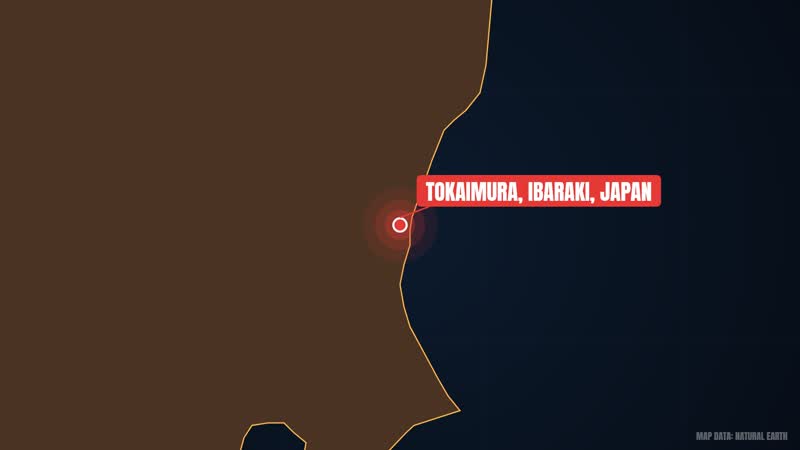
The second plant belonged to JCO, a subsidiary of Sumitomo Metal Mining Company. It stood in Tokaimura, about four miles from the PNC facility. There, uranium hexafluoride was converted into enriched uranium dioxide fuel, the first step in making fuel rods for power plants and research reactors. So how good was safety at this site? According to the sources, there were several serious gaps.
First, there was no criticality accident alarm at all, because the licensing board had wrongly concluded that a criticality accident could not happen there. Second, the site was not included in the National Plan for the Prevention of Nuclear Disasters, so without a disaster plan, informing nearby residents was delayed. Third, the regulator did not carry out regular inspections. No one checked whether production methods were actually being carried out correctly.
The correct procedure was as follows. Uranium oxide powder was added in small batches to a special dissolving tank, where nitric acid turned it into uranyl nitrate. The solution then went carefully to a buffer tank, which was deliberately tall and narrow so that fission activity could not reach criticality. Next came the precipitation tank, where ammonia was added. This produced a solid product and separated out remaining contaminants. In the correct procedure, the uranyl nitrate was held in the buffer tank and then pumped slowly into the precipitation tank, only 2.4 kg at a time.
But the real story was about money and pressure. The company's income had fallen, layoffs had taken place, and experienced staff were few. Under this pressure, JCO decided to make a fuel of a different enrichment. This fuel was made only rarely, and for it the company used a procedure the regulator had never approved. That unapproved process skipped several important safety steps. The danger had moved from paper onto the factory floor. JCO said it had not submitted the procedure to the regulator because it knew it would not be approved, and then the fuel could not have been made at all.
The fuel being made that day was for the Joyo experimental fast breeder reactor. It was JCO's first batch in three years, so work was infrequent and experience was low. No appropriate qualification or training was required for the process either.
Now the buckets. Instead of using the pump, the technicians poured uranyl nitrate by hand from buckets directly into the precipitation tank. This was not the normal method. Surprisingly, the workers were following the instructions in JCO's operating manual, but they did not know the STA had never approved the method. Later court proceedings brought out more. In 1995 a JCO safety committee had approved the use of steel buckets. A manual from 1996 was also distributed, widely circulated but not authorized, and it proposed buckets for preparing the solution. The sources differ slightly here: one side calls the 1996 JCO Operating Manual the standard for correct procedures, while another refers to an unauthorized manual. According to the STA report, JCO's management had allowed these dangerous methods since 1993 in order to shorten the conversion process.
There was another factor. The company had had no accident for more than 15 years, and according to the sources this left staff complacent about their daily duties. Communication between engineers and workers was also weak, and the sources say this is why reporting was poor when the accident happened. So everything was in place in one location: no alarm, no plan, no inspection, no training, and pressure to take shortcuts. All that was left was to wait for one morning.
Chapter 5Thirty September, 1999
On the morning of 30 September 1999, three technicians were at work in JCO's conversion building: Hisashi Ouchi, Masato Shinohara and Yutaka Yokokawa. Ouchi was 35, Shinohara was 40, and their supervisor Yokokawa was 54. That day the three were speeding up the final stages of fuel production because of shipping needs, since the fuel had to go out on time. To save time and for convenience, the team began mixing chemicals in stainless steel buckets. In the correct method, a buffer tank and pump were involved. Here both were bypassed, and the solution went into the tank by hand, bucket after bucket.
One, two, three... with each bucket the amount of uranium in the tank grew. Then came the seventh bucket. It held uranyl nitrate with an enrichment of 18.8% 235U. The tank now contained about 16 kg of uranium, roughly seven times the legal limit set by the STA. The shape of the tank played an important part here. The buffer tank was tall and narrow, but the precipitation tank was wide and cylindrical, a shape that is favorable for criticality.
At about 10:35 the precipitation tank reached critical mass. At that moment uncontrolled fission, a self-sustaining chain reaction, began. Ouchi's body was leaning over the tank. Shinohara was standing on a platform helping to pour the solution. Yokokawa was sitting at a desk four meters away. All three saw a blue flash. Some think it may have been Cherenkov radiation. At the same moment the gamma radiation alarms went off. For several hours afterwards the chain reactions inside the tank continued.
According to one source, a blue flash has been seen in many criticality accidents. One explanation is that ions and molecules in the air give off light as they return to their normal state. Another says that if radiation passes through the eye, it can produce Cherenkov light. The sources add that the similarity in color is only a coincidence.
Ouchi and Shinohara at once felt pain, nausea and difficulty breathing. Both went toward the decontamination room, where Ouchi vomited. Ouchi had received the most radiation. Soon he had trouble walking and understanding speech, and then he lost consciousness. Most alarming of all, the three had no idea of the effects of the accident or of the rules for reporting it.
A worker in the next building learned of the injured colleagues. One man had lost consciousness and came round about 70 minutes later. That worker called for emergency medical help, and an ambulance took them to a nearby hospital. Meanwhile fission products had contaminated the fuel reprocessing building and the area around the facility. Emergency service workers arrived and led the remaining plant workers out of the facility's muster zones.
The situation was no longer limited to three people. According to reports, 56 other people at the JCO plant were also exposed to radiation. There was also word that workers at a nearby construction site had been exposed. It was Japan's worst civilian nuclear radiation accident before Fukushima. But the hardest question was still unanswered: how could the reaction be stopped?
Chapter 6Twenty Hours to Stop a Chain Reaction
The problem was that the chain reaction was continuing inside the tank. JCO had no emergency plan and no way to speak to the public, which led to confusion and panic. Authorities told local people not to harvest crops or drink well water. At midday plant workers and nearby residents were told to evacuate. People living close to the conversion building were at the greatest risk. Evacuation began five hours after criticality started. Within a 350-meter radius, about 161 people from 39 households were moved out. Twelve hours later, a bigger announcement followed. About 300,000 residents around the facility were told to stay indoors and stop agricultural production. The restriction was lifted the next afternoon. Thousands of families spent about a day at home in uncertainty.
The question remained: how would the reaction stop? A little science helps. Criticality occurs when enough fissile material gathers that a chain reaction sustains itself. Each fission releases about 2.5 neutrons. For a stable chain reaction, 1.5 of these have to escape or be absorbed so that no further fission occurs. When reactivity goes past the limit, a very large burst of energy occurs, called a prompt-critical spike. Each fission releases about 200 MeV of energy. Could this produce an explosion like a nuclear bomb? No. According to one source, the design features needed for a bomb cannot come about by chance. In some cases heat expands the material, so the reaction may settle at a lower power or even stop temporarily. Here, though, human intervention was needed to end the reaction.
The next morning workers drained water from the cooling jacket around the tank. The water was acting as a neutron reflector, and removing it weakened the chain reaction. Then a boric acid solution was added to the precipitation tank. Boron was chosen because it absorbs neutrons very well. This made all the material sub-critical. The accident thus ran out of control for about 20 hours. By comparison, a 1962 process accident at Hanford Works lasted 37.5 hours, which is the record.
The danger was not over, though. Even after the plant was sealed, radioactive gas levels in the area stayed high. Finally, on 12 October, it was discovered that a rooftop ventilation fan had been left running, and it was switched off. About 15 days later, sandbags and other shielding were placed at the facility to protect against the remaining gamma radiation. To estimate neutron flux, an unusual request was made: people in the area were asked to lend gold if they had any.
Screening then began. Authorities checked people living within about 10 kilometers of the facility, and roughly 10,000 medical check-ups took place over the next 10 days. Figures vary from source to source. One says 39 workers were confirmed exposed, another at least 667 people, and another more than 600.
Environmental testing followed as well. The STA and Ibaraki Prefecture took samples of tap water, well water, rain, vegetables, seawater and milk within 10 kilometers. Some vegetation showed low levels of radioactivity. Nothing was found in milk, water or the sea. This is a summary of the reports from that time.
Draining the cooling jacket water and adding boric acid solution were the two actions that stopped the chain reaction. But by then three technicians had been exposed to severe radiation, and they paid the heaviest price. Next, we look at how the 83 days in hospital went.
Chapter 7Eighty-Three Days: The Fight to Save Ouchi
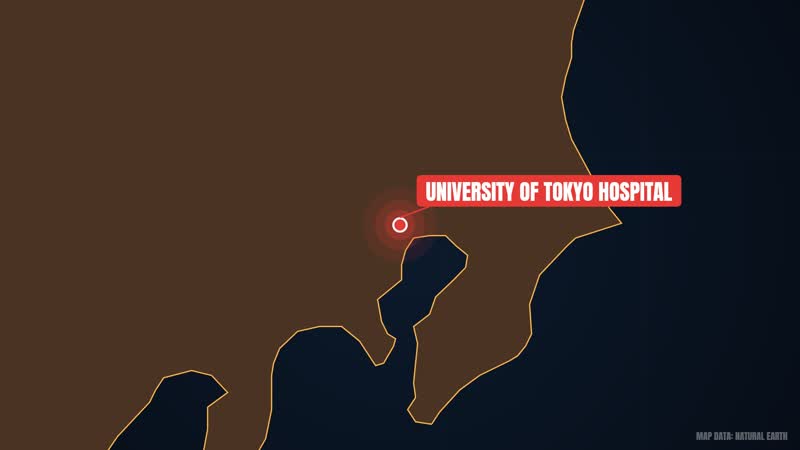
The story now moves inside the hospital. According to STA radiation tests, Ouchi received 17 Sv, Shinohara 10 Sv and Yokokawa 3 Sv. Hisashi Ouchi, aged 35, was treated at the University of Tokyo Hospital, where he stayed for a full 83 days. Large parts of his body had severe radiation burns. His internal organs were badly damaged too, and his white blood cell count had fallen to nearly zero. When the body's defense system fails, the danger rises. Ouchi had no functioning immune system, so the risk of infection in hospital was very high. For that reason he was placed in a special radiation ward. The aim was to keep the risk of infection as low as possible, because the body could no longer protect itself.
A micrograph of his chromosomes was then taken, and the result was shocking. None of his chromosomes could be identified. It was a glimpse of how deep the damage went.
To support his immune system, doctors tried peripheral blood stem cell transplantation, a completely new method of treatment at the time. The stem cells came from Ouchi's sister. After the transplant his white blood cell count rose temporarily. Some hope arose, but it did not last long, because the other injuries kept getting worse.
Doctors tried many other approaches. Cultured skin grafts were applied repeatedly, and painkillers, broad-spectrum antibiotics and granulocyte colony-stimulating factor were given. But none of these efforts produced measurable success. Some small areas of skin and mucous membranes did improve, but his overall condition kept worsening.
A hard question now arose. According to the sources, the medical staff began to wonder privately whether treatment should continue, since it was not working and Ouchi was in pain. Two months after the accident Ouchi had a cardiac arrest. He was revived but afterwards remained unresponsive. At the family's wish doctors continued treatment, although the sources say it was clear he could not survive. How hard must that decision have been for a family? On 19 December the family agreed to a do-not-resuscitate order. His wife had hoped Ouchi would live at least until 1 January, the start of the year 2000. But his condition turned into multiple organ failure. Hisashi Ouchi died on 21 December 1999, aged 35.
Now to the second technician. Masato Shinohara, aged 40, was also transferred to the same hospital. What happened to him? He was given radical cancer treatments, several skin grafts were successful, and umbilical cord blood was transfused to boost his stem cells. But in February 2000 he had to be put on a ventilator. Finally, on 27 April 2000, Shinohara also died, of lung and kidney failure, aged 40. Two technicians thus died in two different months after this one accident.
And the third man? He was their supervisor, Yutaka Yokokawa, aged 54. He was treated at the National Institute of Radiological Sciences (NIRS) in Chiba. He had received a dose of 3 Sv. Three months later he was discharged with minor radiation sickness. But his story did not end there. In October 2000 he was charged with negligence.
The 2023 Japanese miniseries The Days, about the Fukushima disaster, includes a flashback scene of Ouchi's hospital stay, so the story is still remembered today. The three men received different doses, and had different outcomes. But one question remains: who was responsible for all this? The next section looks for the answer.
Chapter 8Who Was to Blame?
So who was to blame? First, what official rating did the accident receive? It was given Level 4 on the INES scale. But it was called an irradiation accident, not a contamination accident, which meant the danger outside the facility was considered smaller. In environmental testing, some vegetation showed low levels of radioactivity, while nothing was found in milk, water or the sea. Official investigations said that the public and the environment were not harmed. But the sources do not agree on how many people were exposed. One says 436 people's doses were evaluated and none exceeded the annual limit. Another says at least 667 people were exposed to excess radiation.
Now the causes. According to the International Atomic Energy Agency (IAEA), the cause was human error and serious breaches of safety principles. Investigations found several failings: careless handling of material, inexperienced technicians, weak supervision, and outdated safety procedures on the operating floor. Also, the company had had no incident for more than 15 years, and according to the sources this made employees complacent about their daily duties. Poor management of operation manuals, inadequate training of technicians and engineers, and lack of communication between engineers and workers were also among the causes.
The regulator's role was also in question. There was no criticality alarm, the site was not part of the disaster plan, and routine inspections were not carried out.
Then came the legal story. In late March 2000 the STA revoked JCO's operating credentials. JCO became the first Japanese plant operator to be punished under law for the improper use of radiation. The company's president then resigned. In October 2000 six JCO officials were charged with professional negligence. The accusation was that they had not properly trained the technicians and had knowingly ignored safety procedures. In April 2001 six employees, including the then head of the production department, pleaded guilty to negligence resulting in death. Yokokawa was among those arrested. JCO's president also entered a guilty plea on behalf of the company.
During the trial, an important point emerged that changed the direction of the story. The jury was told that in 1995 a JCO safety committee had approved the use of steel buckets. So the bucket was not a sudden invention. In addition, a widely distributed unauthorized manual from 1996 also proposed buckets for preparing the solution. According to the STA report, JCO management had permitted these dangerous methods since 1993 to shorten the conversion process, although they went against approved procedures. So how much were the workers to blame? The sources say they followed the instructions in the JCO manual, but did not know that the STA had not approved it.
For those affected, JCO set up advisory booths in October 1999 to handle claims and questions. By July 2000, more than 7,000 claims had been filed and settled. In September 2000 JCO agreed to pay 121 million dollars for 6,875 claims. These came from people exposed to radiation and from affected agricultural and service businesses. All residents who lived within 350 meters and were evacuated received compensation, provided they agreed not to sue the company in the future.
Finally, the limits of INES. The scale is assigned well after an accident, because assessing the severity of damage involves interpretation. One study called it inconsistent. Some critics say INES is a public relations tool that mixes up magnitude and intensity. For this reason David Smythe proposed an alternative scale called NAMS. So did anything change after this accident?
Chapter 9What Changed, What Remains
In response to the accident, Japan created special laws. These made operational safety procedures and quarterly inspections mandatory, focusing on the conduct of workers and leadership. Safety education and quality assurance at all nuclear facilities also became mandatory. From 2000, the atomic and nuclear commissions began regular investigations of facilities, and work on emergency preparedness continued. In 2012 the report of the Fukushima Nuclear Accident Independent Investigation Commission said that the overconfidence of the regulator and industry, and failures of governance, may well apply to Tokaimura too.
As of June 2024, no confirmed criticality accident had occurred since 1999. Suspected criticalities are mentioned at Fukushima in 2011 and Nyonoksa in 2019. But the energy question remains. Japan imports 80% of its energy. In 2014 the government made a Strategic Energy Plan that called nuclear an important power source. The accident also strengthened antinuclear movements in Japan. Even today there is a tension between the need for energy and the safety of people.
The lesson is simple. When shortcuts and weak oversight combine, an ordinary task, a single bucket, can become a great danger. Who do you think was most responsible? Tell us in the comments.
Shorts
One Steel Bucket, One Blue Flash: Tokaimura 1999
Premieres:
Fire at 10 AM, Explosion at 8 PM: Tokaimura 1997
Premieres:
20 Hours to Stop a Chain Reaction in Tokaimura
Premieres:
Sources
- Tokaimura nuclear accidents — Wikipedia (CC BY-SA 4.0)
- Criticality accident — Wikipedia (CC BY-SA 4.0)
- International Nuclear and Radiological Event Scale — Wikipedia (CC BY-SA 4.0)
Photo credits
- HD.15.058 (11840039684) — ENERGY.GOV, Public domain
- Cyclotron with glowing beam — Unknown, Public domain


Stock footage & photos
- By Md Amir Umar on Pexels
- By Mak_ jp on Pexels
- By Jose Manuel Gonzalez Lupiañez Photography on Pexels
- By cottonbro studio on Pexels
- By Pavel Danilyuk on Pexels
- By Messiedo Xadinho on Pexels
- By Engin Akyurt on Pexels
- By Tima Miroshnichenko on Pexels
- By Julien on Pexels
- By Toàn BDS on Pexels
- By Marek Piwnicki on Pexels
- By Yeşim Çolak on Pexels
- By Tom Fisk on Pexels
- By Sergei Starostin on Pexels
- By Arndt-Peter Bergfeld on Pexels
- By DeeVisuals on Pexels
- By FD Visualzz on Pexels
- By Change C.C on Pexels
- By Paolo Rossa on Pexels
- By Francis Desjardins on Pexels
- By Andrey Kirievskiy on Pexels
- By cottonbro studio on Pexels
- By pickarick on Pexels
- By Pixabay on Pexels
- By Tom Fisk on Pexels
- By Yan Krukau on Pexels
- By Mikael Blomkvist on Pexels
- By Rasa Kasparaviciene on Pexels
- By Videas Cl on Pexels
- By Abasiakan on Pexels
- By Horst Dreisbach on Pexels
- By Lukas Hartmann on Pexels
- By 女子 正真 on Pexels
- By Faruk Tokluoğlu on Pexels
- By Olavi Anttila on Pexels
- By Tom Fisk on Pexels
- By RDNE Stock project on Pexels
- By Ron Lach on Pexels
- By Callan Wang on Pexels
- By Luanda Bauma primo on Pexels
- By Werner Pfennig on Pexels
- By K on Pexels
- By Towfiqu barbhuiya on Pexels
- By Robert So on Pexels
- By K on Pexels
- By Mathias Reding on Pexels
- By RDNE Stock project on Pexels
- By Artem Podrez on Pexels
- By Mark Stebnicki on Pexels
- By Jan van der Wolf on Pexels
- By Ron Lach on Pexels
- By Tara Winstead on Pexels
- By Matvey Star on Pexels
- By Paul Cruz on Pexels
- By Jakub Zerdzicki on Pexels
- By Andrei Ciubotariu on Pexels
- By Mikhail Nilov on Pexels
- By ELEVATE on Pexels
- By Stepan SK on Pexels
- By RDNE Stock project on Pexels
- By Joachim Schnürle on Pexels
- By Long Canon on Pexels
- By EqualStock IN on Pexels
- By EqualStock IN on Pexels
- By Altaf Shah on Pexels
- By Iban Lopez Luna on Pexels
- By Kenneth Surillo on Pexels
- By Mikhail Nilov on Pexels
- By KoolShooters on Pexels
- By Clem Onojeghuo on Pexels
- By IP Creative on Pexels
- By Michelangelo Buonarroti on Pexels
- By cottonbro studio on Pexels
- By Chris D on Pexels
- By Google DeepMind on Pexels
- By https://kaboompics.com/ on Pexels
- By Pixabay on Pexels
- By Soulful Pizza on Pexels
- By RDNE Stock project on Pexels
- By Анастасия Грачева on Pexels
- By Евгений Рмр on Pexels
- By Purvesh Photography on Pexels
- By Ferdinand F Eman on Pexels
- By Mico Medel on Pexels
- By Cheng on Pexels
- By Mehmet Turgut Kirkgoz on Pexels
- By kazuyoshi sakamoto on Pexels
- By RDNE Stock project on Pexels
- By Nicola Narracci on Pexels
- By Nicola Narracci on Pexels
- By Mahmoud Ramadan on Pexels
- By Kindel Media on Pexels
- By ANTONI SHKRABA production on Pexels
- By Alexander Wittke on Pexels
- By Artem Podrez on Pexels
- By Tima Miroshnichenko on Pexels
- By Alexander Grigorian on Pexels
- By Helena Jankovičová Kováčová on Pexels
- By Serena Koi on Pexels
- By Pavel Danilyuk on Pexels
- By cottonbro studio on Pexels
- By Mikhail Nilov on Pexels
- By Shabran Niami on Pexels
- By Tetrakis Sphericon on Pexels
- By Jo McNamara on Pexels
- By Tima Miroshnichenko on Pexels
- By Yuri Shkoda on Pexels
- By Marek Piwnicki on Pexels
- By Mikhail Nilov on Pexels
- By SR Raju on Pexels
- By 27 1 on Pexels
- By RDNE Stock project on Pexels
- By Los Muertos Crew on Pexels
- By RDNE Stock project on Pexels
- By Orange Ocean on Pexels
- By cottonbro studio on Pexels
- By Iban Lopez Luna on Pexels
- By Кайрат Сатдиков on Pexels
- By ANTONI SHKRABA production on Pexels
- By yuki kiki on Pexels
- By Zulfugar Karimov on Pexels
- By Zakir Rushanly on Pexels
- By K on Pexels
- By PUWOOK Kwak on Pexels
- By Destiny Edor on Pexels
- By cottonbro studio on Pexels
- By EqualStock IN on Pexels
- By Glen Zi 加侖子 on Pexels
- By Suzy Hazelwood on Pexels
- By Andrey Kirievskiy on Pexels
- By Christian Wasserfallen on Pexels
- By KATRIN BOLOVTSOVA on Pexels
- By Qdysk qdysk on Pexels
- By Michael Orshan on Pexels
- By Hugo Sykes on Pexels
- By Tima Miroshnichenko on Pexels
- By Mehmet Turgut Kirkgoz on Pexels
- By Miguel Á. Padriñán on Pexels
- By Coverr on Pexels
- By Chen Te on Pexels
- By Pavel Danilyuk on Pexels
- By Caleb Oquendo on Pexels
- By Joseph Eulo on Pexels
- By Paparazzi Ratzfatzzi on Pexels
- By MITSUKI SAWA on Pexels
This documentary is based on the sources above and was fact-checked before publishing. The narration voice, animated host and illustrations are AI-generated. Spotted a mistake? Tell us in the YouTube comments.