Hijacker vs Pilot: The 1990 Guangzhou Runway Disaster | True Story
🎬 The video premieres soon
On the morning of 2 October 1990, a Xiamen Airlines Boeing 737 took off on a short domestic flight. Minutes later a 21-year-old passenger burst into the cockpit, claiming he carried explosives and demanding to be flown to Taiwan. For about 40 minutes the plane circled Guangzhou while the airport below was shut down and other aircraft waited on the ground. This documentary reconstructs the hijacking minute by minute, from the hijacker's background and the pilot's impossible position to the decisions made by the authorities. It examines what was said on the radio, what was done and not done, and the questions the official investigation left unanswered. A story of fear, fuel, and a runway where three aircraft were caught in the same disaster.
Chapter 1The Runway Erupts
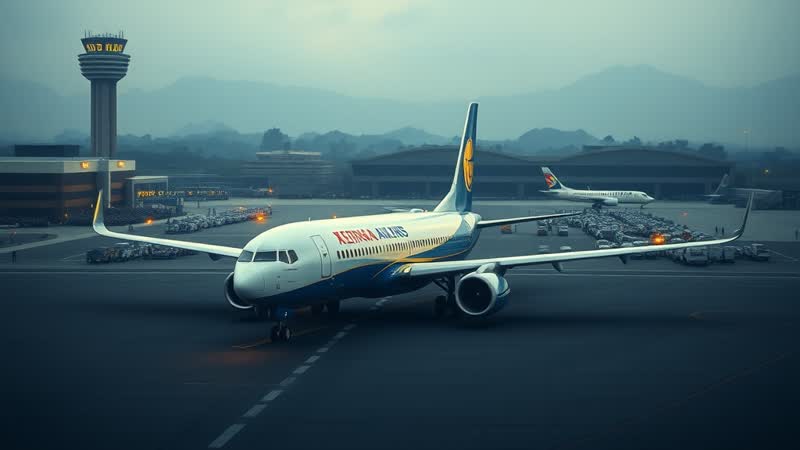
At 9:04 on the morning of 2 October 1990, a passenger jet landed on the runway at Guangzhou's Baiyun Airport. It was a Xiamen Airlines Boeing 737. Within moments it left the runway and veered toward the apron, where two other aircraft were parked. It first struck a parked Boeing 707, which suffered only minor damage. Then it hit a Boeing 757 that was waiting to depart. After that collision, the 737 flipped over.
The disaster killed 128 people, and it was the deadliest aircraft hijacking before 9/11. One important point needs to be made at the outset: the figure of 128 includes the hijacker himself, Jiang Xiaofeng. The dead included 75 passengers and 7 crew members from the Xiamen Airlines 737, while 46 passengers on the 757 also lost their lives.
Three questions run through this story. Why did a hijacked plane have to land at Baiyun, and how did it end up turning toward the apron? According to the sources, fuel was running very low. Second, the plane circled in the sky for about 40 minutes, so why were passengers on nearby aircraft not evacuated? And the heaviest question of all: in the final moments, who was actually flying the plane, the pilot or the hijacker?
Today we look at the story of three aircraft, one hijacker and one captain, in the light of the sources. Let's begin.
Chapter 2Three Aircraft, One Apron
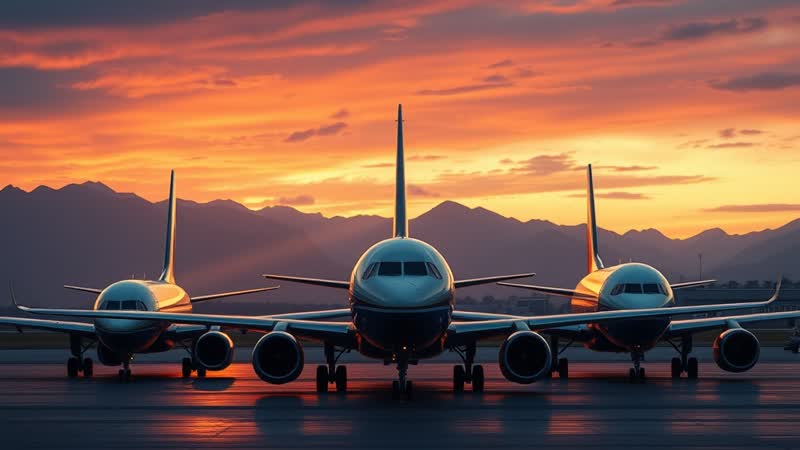
To understand the story, we first need to meet the three aircraft whose paths collided at Baiyun Airport that morning. The first was Xiamen Airlines Flight 8301, a Boeing 737-247 with registration B-2510 and serial number 23189/1072. This aircraft already had a history tied to a hijacking. On 12 May 1988, Zhang Qingguo and Long Guiyun hijacked it with knives. It flew to Taiwan's Taichung Ching-Chuan-Kang Airport, becoming the first aircraft hijacked from mainland China to Taiwan. On 2 October it left Xiamen Gaoqi International Airport for the old Guangzhou Baiyun Airport, carrying 93 passengers and 9 crew members.
The second aircraft was China Southwest Airlines Flight 4305, a Boeing 707-3J6B with registration B-2402, which first flew in 1973. In 1983 it was transferred from CAAC's Beijing Regional Administration to the Shanghai Regional Administration, and in 1985 it was given to the Chengdu Regional Administration. It had also been the target of an attempted hijacking on 3 November 1989, while flying from Harbin to Guangzhou. On the morning of the disaster it had arrived at Baiyun from Chengdu Shuangliu Airport. All passengers had disembarked, the crew had left, and only one person remained aboard to clean the plane. He would later become its only injured person.
The third was CAAC Flight 3523, a Boeing 757-21B with registration B-2812 and serial number 24758/282. It was the newest of the three, having made its first flight in 1990. It was due to fly to Shanghai Hongqiao International Airport, and 110 passengers and 12 crew members were already on board. It was sitting on the apron waiting to depart.
The airport itself deserves a look. The old Baiyun Airport opened in 1932, and as Guangzhou grew, expansion became hard. It was surrounded by buildings and hills, so it could not be enlarged to meet rising passenger demand. Baiyun means white cloud in Chinese, and the name comes from Baiyun Mountain, which lay near the old airport. The new Baiyun Airport opened on 5 August 2004 and the old one closed. But in 1990 this cramped airport, hemmed in by hills, was everything.
So there were three aircraft and three different stories: one already hijacked once, one the target of an attempted hijacking, and one brand new. On the morning of 2 October 1990 their paths were about to meet in one place, and the cause was a single passenger.
Chapter 3The Man in Seat 16D
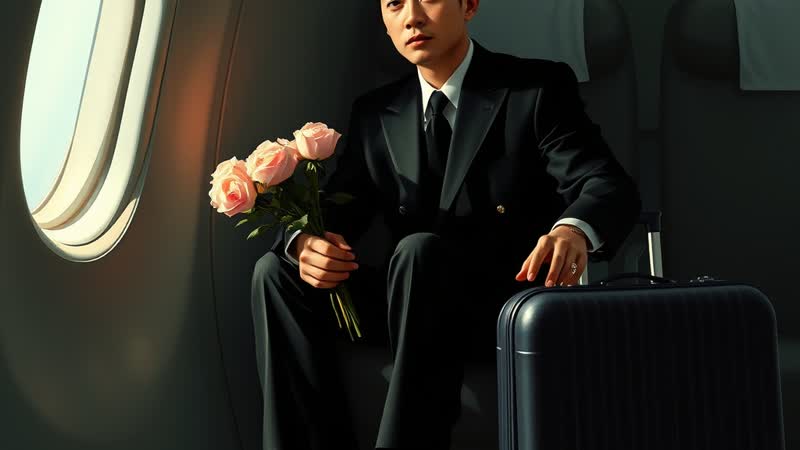
Now let's meet the man in seat 16D of the 737. His name was Jiang Xiaofeng, and he was just 21 years old. He was born on 11 August 1969 in Linli County, Hunan. In 1990 he worked as a purchasing agent for a company. His past was not clean. In September 1988 he had been arrested on a theft charge. Then on 13 July 1990 he ran off with 17,000 RMB that he had been given to buy goods for the company. The police had been looking for him ever since, so when he boarded the plane he was a wanted man.
On 29 September, Jiang checked into a hotel near the border at Xiamen. The next day he booked a seat on this flight. At around 6 a.m. on 2 October he checked out of the hotel and headed for the airport. He was seen wearing a black suit and black dress shoes, carrying a black suitcase and some plastic roses. It is a strange picture: formal clothes, a suitcase and fake flowers. The sources do not say what the flowers were for. Jiang boarded last, and his seat was 16D. Boarding for Flight 8301 began at 6:15, and the plane took off from Xiamen on schedule at 6:57, so the journey started on time.
The key question is why Jiang was doing all this. According to the sources, he wanted political asylum in Taiwan. But he was also wanted by the police and had run off with company money, so it is hard to say anything definitive about his real motives.
Jiang was not the only one whose eyes were on Taiwan. On 12 May 1988, this same 737, B-2510, had already been hijacked to Taiwan. According to a general review of aircraft hijacking, China saw incidents in which hijackers wanted political asylum in Taiwan. The same review says that between 1993 and 2003 the most hijackings occurred in 1993, and attributes this to those same cases in China. That is some years after Jiang's case, but it helps explain the background.
Airlines around the world generally followed a principle of total compliance, meaning they would meet the hijacker's demands and land the plane safely. Jiang sat in seat 16D, his suitcase in the overhead compartment, the plane in the air. The question was when he would stand up. At around 7:20, he did. In the next chapter we look at what happened behind the cockpit door, and at the claim of seven kilograms.
Chapter 4Seven Kilograms of Threat
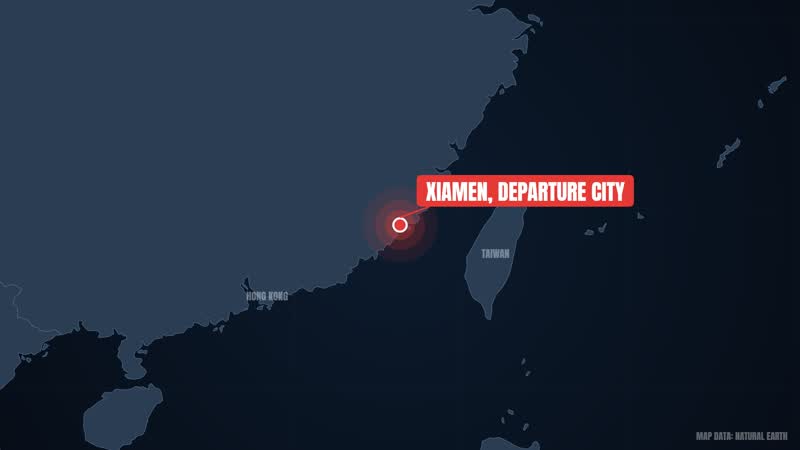
Boarding for Xiamen Airlines Flight 8301 began at 6:15 a.m. The plane was to fly from Xiamen Gaoqi International Airport to the old Baiyun Airport in Guangzhou, with 93 passengers and 9 crew members aboard. It took off at exactly 6:57, on time. On the surface it was an ordinary morning.
At around 7:20, a young man rose from seat 16D. It was Jiang Xiaofeng. He held a black plastic box about the size of a cigarette pack. He ran straight to the cockpit and pounded on the door. Then the door opened, because according to the sources it was not locked at the time. Worth remembering here: in America, the FAA had ordered in 1964 that cockpit doors on commercial aircraft be kept locked during flight. On Flight 8301 the door opened. The man who got in had no explosive material on his body, according to a later autopsy.
Inside the cockpit he showed some wires and claimed to have 7 kilograms of explosives. His demand was clear: the plane must be flown to Taoyuan in Taiwan. If the demand was not met, he threatened that everyone would die together. He ordered everyone except Captain Cen Longyu out of the cockpit, and the captain complied and cleared it. Now only two people were inside: 21-year-old Jiang and Captain Cen Longyu. Back in the cabin, the passengers and the rest of the crew waited.
One important detail is that sound from the cockpit was reaching the control tower through the radio communication system, so people on the ground knew what was happening. Once the hijacking was confirmed, the Central South Regional Bureau of the Civil Aviation Administration authorized the plane to land at any airport, domestic or international. Guangzhou Baiyun International Airport was also closed, and every takeoff and landing was halted. Was the whole airport truly empty by then?
Meanwhile, flight attendants told the passengers in the cabin that the plane had been hijacked. After that every moment grew heavier. Twenty minutes later, with the hijacker's permission, a crew member drew a curtain, and more than 20 passengers from the front rows moved to the back. According to survivors, the crew wanted to know whether Jiang's suitcase really held explosives. They conferred, and then a female flight attendant took the suitcase down from the overhead compartment. But it was locked and in the end was not opened. Had it been opened, perhaps something would have been learned, but that is only a guess. The fact is that the crew had no reliable way of judging the danger.
Captain Cen Longyu was now alone with a man threatening to set off a bomb. No one knew what the next decision would be. The question was how far the road to Taiwan was and how much fuel the plane had. That question would soon become the biggest of all. After the door opened at 7:20, a struggle of nearly two hours began. Where did the plane go, and how did it land? That is what we look at next.
Chapter 5Circling Above Guangzhou
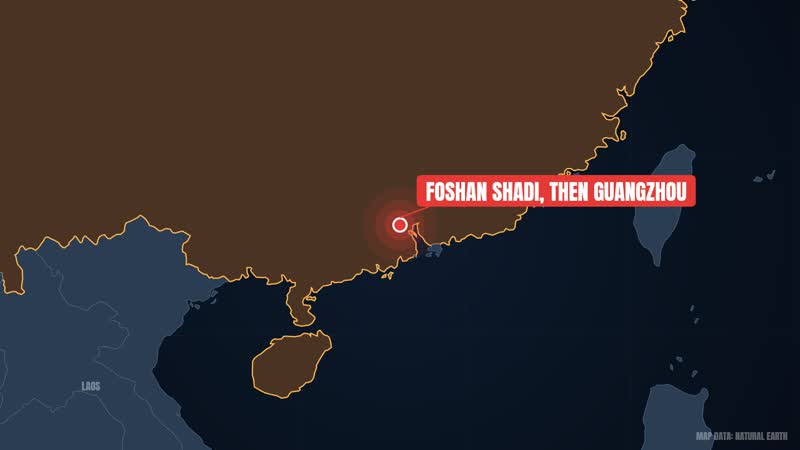
As soon as the plane entered Guangdong airspace, it first circled over Foshan Shadi Airport. Then it turned toward Guangzhou. Over Guangzhou it began circling in a holding pattern above Baiyun Airport at an altitude of roughly 300 meters. Below was the same apron where two aircraft stood parked.
At 8:34 the captain told Guangzhou tower that fuel was low. He asked for permission to refuel at Hong Kong's Kai Tak, and then for Taiwan. The Guangzhou Civil Aviation Administration and the control tower approved the request. But Jiang flatly refused to land in Hong Kong. He threatened to blow up the plane if it was landed there. After that there was no further contact with the flight, and the radio went silent. All the tower had left was a plane circling in the sky, and questions.
The hardest question for the tower was where to land the plane. Fuel was running down on one side, and the hijacker's threat stood on the other. The captain kept circling over Guangzhou and trying to persuade Jiang. In the end fuel fell to a dangerous level and he had to land. Reports from the Xinhua News Agency did not say why the pilot did not meet Jiang's demand. That silence still leaves a question.
Now consider a report from The New York Times. According to it, officials tried to convince the hijacker that the plane was landing at an international airport. The report says the pilot was in fact being directed to land at Baiyun Airport rather than going to Taiwan. This is a newspaper report, so it should be treated as such. At least according to this report, the decision was that the plane would land at Baiyun.
Then the question arises: what about the aircraft on the apron? CAAC Flight 3523 already had 110 passengers and 12 crew aboard, waiting to depart for Shanghai Hongqiao. The crew of that 757 had heard the hijacking situation over the cockpit radio, so they were aware of it. According to a source, this is why all 12 crew members of the 757 survived. But the question remains about the 110 passengers sitting in the cabin. The preliminary report of 10 October did not explain why passengers on nearby aircraft were not evacuated during the 40 minutes of circling. Our sources mention 40 minutes of circling, while nearly two hours passed from the hijack to the landing. The sources do not explain this difference.
According to our other source, there is no single set of rules for a hijacking. Air traffic controllers are expected to use their best judgment. The same source says controllers are expected to keep communication to a minimum and to clear a runway for a possible landing. These are general principles. So at around 9:04 the plane was running out of time. What was about to happen in the next minutes that would join three aircraft together?
Chapter 6Four Minutes Past Nine
At 9:04 Flight 8301 touched down on the runway at Baiyun Airport. The wheels met the ground, and for a moment it seemed the greatest danger had passed. The plane taxied for about 1,080 meters. Then, according to the sources, Jiang seized control of the plane from the pilot. The aircraft moved off the runway to the right and headed toward the apron, the same apron where two aircraft were already parked.
Then came a strange moment. The plane's nose rose and it lifted off the ground again briefly. During this, the plane's tail struck a ground service vehicle. This was the first stage of the larger crash. The first major collision was with China Southwest Airlines Flight 4305, the Boeing 707, registration B-2402, which had just arrived from Chengdu. Only one person was aboard the 707, a man who had stayed to clean. The rest of the crew had gone and the passengers had disembarked. The 707 suffered only minor damage in the collision. According to a source, the nose of the hijacked 737 was cut off and the pilot in the cockpit was lightly injured.
The 737 did not stop. It kept going, and in front of it stood CAAC Flight 3523, the Boeing 757 waiting to leave for Shanghai. This was the plane with 110 passengers and 12 crew on board, and the 737 was heading straight for it. The 737 struck the upper fuselage of the 757. The force of the impact broke the 757 into two pieces, and its left engine fell away. This 757 had first flown in 1990 and was the newest of the three.
The 737 still had not stopped. After going another 300 meters east, it fell to the ground, skidded and broke into four large pieces. According to one source, the plane also flipped over. The sources give very little detail about these moments. Consider the irony: Jiang wanted to go to Taiwan in search of political asylum, but his journey ended on the apron in Guangzhou. After this, all three aircraft caught fire. The apron at Baiyun Airport, a normal morning scene minutes earlier, had become an emergency scene.
Let's put the sequence in order of time: takeoff at 6:57, hijack at around 7:20, the fuel report at 8:34 and landing at 9:04. After landing came about 1,080 meters of taxiing, then the collision with the 757, and then a further 300 meters. Three aircraft were affected in a very short span. Keep in mind that both Jiang and Captain Cen Longyu were in the 737 cockpit, and later the remains of both were found in the cockpit wreckage. The history of this aircraft, B-2510, was already tied to hijacking. On 12 May 1988 it had been hijacked to Taiwan, and now its own journey was ending.
So the question is the same as before: who really had control of the plane at that moment? The sources do not give details of what happened in the cockpit in the final minutes.
One more important point is that this was the Boeing 757's first hull loss and first fatal accident. In total 128 people died, including the hijacker Jiang, and it was the deadliest hijacking before the September 11 attacks. The autopsy later confirmed that Jiang's body carried no explosive material. Yet the price of that claim turned out to be enormous. Firefighters nearby went into action. How decisive were the next minutes? We see that in the next chapter.
Chapter 7Fire, Rescue and the Human Toll
Firefighters nearby moved into action immediately. All three aircraft were on fire, and every second counted. According to the official statement, the firefighters brought the fire under control in 12 seconds and put it out completely within two minutes. Through these efforts 54 passengers were rescued. This figure also comes from official accounts. According to official statements the fire was brought under control very quickly, and 54 passengers were rescued during that time. This is an important human side of the chapter. But the figures of 12 seconds and two minutes come from official accounts. The sources we were given contain no independent confirmation, so it is better to treat them with caution.
Now the human toll. The Xiamen Airlines 737 carried 9 crew members and 93 passengers, 102 people in all. Of these, 7 crew members and 75 passengers died, so most of those aboard did not survive. The 75 passengers included 30 Taiwanese, 4 from Hong Kong, 1 from Macau and 1 American. Behind every number was a whole family.
Now the 757. Of the 110 passengers on CAAC Flight 3523, 46 died, while all 12 crew members survived. Most of the 46 died immediately. Another 5 died of their injuries after being taken to hospital. Why did the 12 crew members survive? According to a source, they had been listening to the hijacking situation on the cockpit radio before the collision. That is the reason given. The 707 suffered the least. Only one crew member was injured, the one who had stayed on the plane to clean.
One source says 5 Hong Kong and 2 Macau passengers also died. This detail does not agree with the other figures. So the most solid figure is the one found again and again: 128 deaths in total, including the hijacker Jiang.
But the most painful part of the disaster involved tourists from Taiwan. All 10 members of one tour group died. In total 30 Taiwanese passengers were killed. It was the deadliest incident for Taiwanese tourists since mainland China opened to visits in the late 1980s. Those who died were not only from China. Passengers from the United States, Sweden, Japan, Taiwan, Hong Kong and Macau were also affected by the tragedy. A Swedish businessman was among the few who survived. Every such story reminds us how many nationalities the tragedy reached.
The day is described as the deadliest aviation incident of 1990. In terms of hijackings, it was the worst disaster before 9/11. What happened at the airport afterward? Guangzhou's emergency rescue team completed the clearing of the wreckage, which took more than ten hours after the crash. The next day the airport reopened. The fires on the aircraft were out, but the fire of the questions raised that morning was only about to flare up.
Chapter 8What Went Wrong?
At 2:10 on the afternoon of the crash, Premier Li Peng left Beijing for Guangzhou. He viewed the scene and visited the injured in hospital. The central government soon set up an investigation team. A local task force was also formed to handle the aftermath, led by Chen Kaizhi.
The biggest question: what was found in the cockpit? The remains of Captain Cen Longyu and Jiang Xiaofeng were found in the cockpit wreckage. Jiang had claimed to have 7 kilograms of explosives, but the autopsy showed that no such material was on his body. On 10 October, officials released preliminary findings. They admitted that there had been procedural failures in how the hijacking was handled. It was announced that a number of lower-level employees of the airport and the airlines concerned would be dismissed. Yet big questions remained. The report did not answer one basic question: why were passengers on nearby aircraft not evacuated during the 40 minutes of circling?
Now let's analyze the causes. The first is the unlocked cockpit door. According to the sources, Jiang pounded on the door and opened it because it was not locked. According to another source, the FAA made a rule in 1964 that cockpit doors on commercial aircraft be kept locked during flight. That was an American rule.
The second was the principle of total compliance. Airlines taught crews to meet a hijacker's demands, since the aim was to land safely and leave the matter to security forces. Whether this principle was fully applied on Flight 8301, the sources do not make clear. Xinhua also did not say why the pilot did not meet Jiang's demand.
The third is possible deception. According to The New York Times, officials tried to make the hijacker believe the plane was landing at an international airport. The fourth was the fuel shortage. According to the sources, the plane finally had to land because fuel had fallen to a dangerous level. The fifth concerns the apron. The airport was closed, yet the 757 stayed there with its passengers. The report did not answer this.
One more piece of context: between 1993 and 2003 the most hijackings occurred in 1993, and the source attributes this to cases in China. These were cases in which hijackers wanted political asylum in Taiwan. Jiang's story was a terrible chapter in that larger trend. So the question that remains is whether anything changed after this tragedy. In the next chapter we look at the results and the lessons.
Chapter 9What Changed, and Your Part
When the disaster happened, the Asian Games were under way in Beijing. Officials feared that further bombings or hijackings could affect the event. As a result, security at airports across the country was tightened markedly. The aim was to prevent such incidents from happening again. The most important change was in thinking. Previously crews and passengers had been encouraged to confront hijackers, but now the priority was the safety of passengers and the aircraft.
All three aircraft were declared total losses. The CAAC 757 was insured with a Guangzhou insurance company, which paid US$55.599 million. At the time, that was roughly 290 million RMB. It was also the first hull loss and first fatal accident in the history of the Boeing 757.
Today only a few traces of the disaster remain: an engine, a tire and a left landing gear. These parts are on public display in an aviation museum located east of Guangzhou Baiyun International Airport. The old airport, which opened in 1932, closed on 5 August 2004 and the new one opened.
Some questions remain open. Why were nearby aircraft not evacuated during the 40 minutes of circling? The report did not answer this. What are the lessons? One is that clear rules and strong preparation save lives in a crisis. Another is that in such decisions the safety of passengers must come first.
And what is your part? Remember the 128 people, keep asking questions, and pass on stories like this without spreading rumors. What do you think was the biggest mistake? Tell us in the comments, like the video and don't forget to subscribe to the channel.
Shorts
The Unlocked Cockpit Door: Flight 8301's 7 kg Threat
Premieres:
Landed Safely, Then Everything Went Wrong at Baiyun Airport
Premieres:
Did the Hijacker Really Have 7 kg of Explosives?
Premieres:
Sources
- 1990 Guangzhou Baiyun airport collisions — Wikipedia (CC BY-SA 4.0)
- Aircraft hijacking — Wikipedia (CC BY-SA 4.0)
- Guangzhou Baiyun International Airport — Wikipedia (CC BY-SA 4.0)
Photo credits
- CAAC - Boeing 737-247 - B-2510 — Jahhem aerofly, CC0
- CAAC - Boeing 707-320B - B-2402 - Guilin — Dennis HKG, CC BY 2.0
- Aviacionavion — Turkmenistan.airlines.frontview.arp.jpg: elfuser derivative work: Elfuser (talk), Public domain
- Hijacking Sign at National Airport — Warren K. Leffler, Public domain
- New Canton Airport under construction 20020829 ISS005-E-11582 — NASA, Public domain
- Guangzhou Baiyun International Airport Control Tower — Jacky Cheung, CC BY-SA 4.0
- Baiyuan Airport CAAC Chart — Civil Aviation Administration of China, Public domain


Stock footage & photos
- By Salva F. Ayala on Pexels
- By Hampie on Pexels
- By Everett Bumstead on Pexels
- By Pixabay on Pexels
- By ArtHouse Studio on Pexels
- By Alireza Akhlaghi on Pexels
- By Lukáš Vaňátko on Pexels
- By cottonbro studio on Pexels
- By Pixabay on Pexels
- By Camilo Calderón on Pexels
- By K on Pexels
- By Mohsin Ahmad Khan on Pexels
- By Luis Quintero on Pexels
- By K on Pexels
- By Erik Mclean on Pexels
- By cottonbro studio on Pexels
- By Everett Bumstead on Pexels
- By Alexandr Shorban on Pexels
- By Pixabay on Pexels
- By Jorge Pantaleon on Pexels
- By Alexandr Shorban on Pexels
- By Joerg Mangelsen on Pexels
- By Sean P. Twomey on Pexels
- By emirkhan bal on Pexels
- By Joerg Mangelsen on Pexels
- By ranjeet . on Pexels
- By Somogro Bangladesh on Pexels
- By Alan W on Pexels
- By Marina Leonova on Pexels
- By K on Pexels
- By Serena Xu on Pexels
- By J.D. Books on Pexels
- By Ruslan Masharipov on Pexels
- By Vind 🌙 on Pexels
- By Pavel Danilyuk on Pexels
- By Drinu Cutajar on Pexels
- By Dan Wright on Pexels
- By Altaf Shah on Pexels
- By Ann H on Pexels
- By Nikita Grishin on Pexels
- By Abdulvahap Demir on Pexels
- By K on Pexels
- By Tom Fisk on Pexels
- By Andrew Seto on Pexels
- By Oğuzhan Kara on Pexels
- By RDNE Stock project on Pexels
- By Soly Moses on Pexels
- By Earth Photart on Pexels
- By betül nur akyürek on Pexels
- By K. on Pexels
This documentary is based on the sources above and was fact-checked before publishing. The narration voice, animated host and illustrations are AI-generated. Spotted a mistake? Tell us in the YouTube comments.