Atlantis: The Secret First Flight That Started It All | True Story

🎬 The video premieres soon
On October 3, 1985, a brand-new space shuttle left Florida on a mission nobody was allowed to talk about. Atlantis was the fourth shuttle built, finished in about half the time of Columbia, and its very first job was a classified Department of Defense flight. Months later the Challenger tragedy changed everything. Yet Atlantis went on to send Magellan to Venus and Galileo to Jupiter, dock with the Russian station Mir, and haul the key pieces of the International Space Station into orbit. It also took astronauts to repair the Hubble Space Telescope. This is the full story of the shuttle with the secret start and the final flight of the program.
Chapter 1The Launch Nobody Could Describe
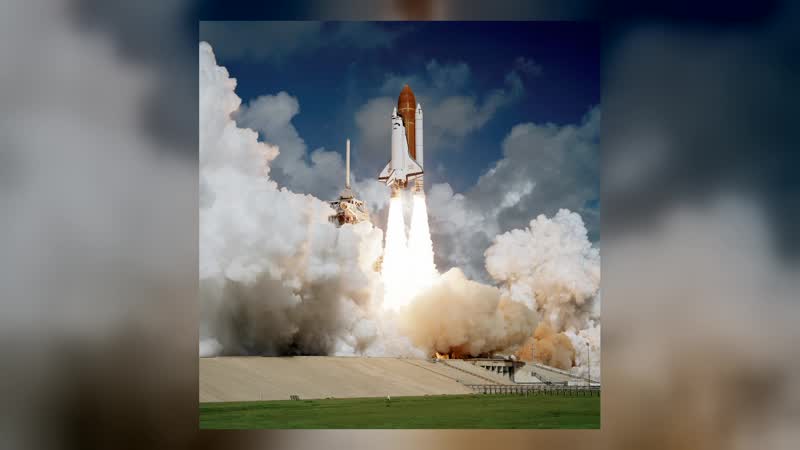
On 3 October 1985, a shuttle stood ready at Launch Pad 39A at Kennedy Space Center in Florida, waiting to head for the sky. The countdown was running, but at the last moment a small fault appeared. A prevalve controller was giving a false "on" indication. Because of this, the launch was delayed by 22 minutes and 30 seconds. At last, at 15:15:30 UTC, Atlantis made its first flight. But what was this mission carrying? That was never openly stated, because the cargo was classified and the details only came out through reports.
Now let us jump ahead. On 21 July 2011, at the same Kennedy Space Center, the same orbiter made its final landing. In the years between, Atlantis completed 33 missions, circled the Earth 4,848 times and traveled about 126 million miles. That distance is more than 525 times the distance from the Earth to the Moon. Just think: a single spacecraft covering such a journey.
So the question is, what was that secret cargo? How did Atlantis stay in the story during the era of the Challenger accident? And there is a third question: how did a ship that began with a secret military mission end up among the builders of a space station? Friends, today we will go through the whole story from start to finish. So let us restart the countdown.
Chapter 2Built in Columbia's Shadow
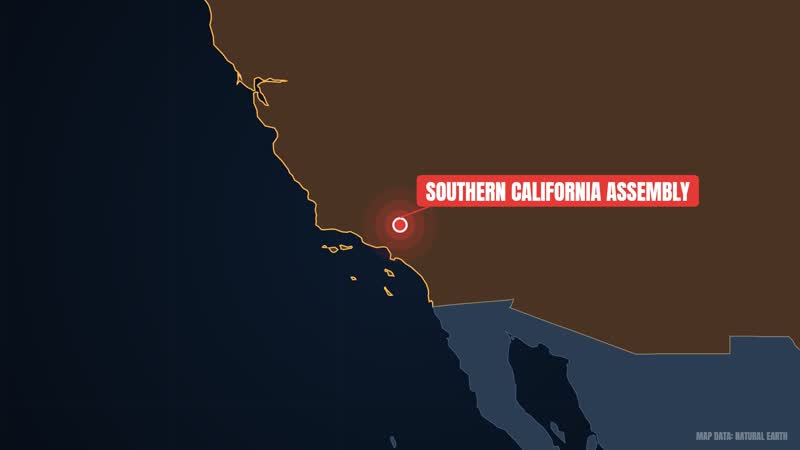
Every story has a beginning. Atlantis's official name is Orbiter Vehicle OV-104, and this retired shuttle orbiter is owned by NASA. The Space Shuttle program made its first flight in April 1981, so Atlantis arrived when the system had already been flying for four years. It was built by a company called Rockwell International in Southern California. In April 1985 it was delivered to Kennedy Space Center in Florida.
Atlantis was the fourth operational shuttle and the second-to-last one built, meaning only one more orbiter was completed after it. In total, five orbiters were built for the whole Space Shuttle program. It was a partially reusable spacecraft that rose like a rocket and landed like a glider. Challenger was the second orbiter built, and Atlantis was among those that came after it. In this way the whole fleet was slowly being completed.
The speed of Atlantis's construction was also remarkable. According to the record, it was completed in about half the time it took to build Space Shuttle Columbia. When it rolled out of the assembly plant at Palmdale, it weighed 68,635 kilograms (151,314 pounds), including its three main engines. That was about 3.2 tonnes (3.5 short tons) lighter than Columbia. In space, every kilogram matters. This weight figure is from the time of rollout; in later years the orbiter went through many changes with modifications.
Now consider its size. Atlantis was 37.2 meters (122 feet) long and 17.2 meters (56 feet) tall, with a wingspan of 23.7 meters, roughly 78 feet. The whole orbiter was built to circle the Earth. Three Space Shuttle Main Engines at the rear provided thrust during launch, and once in space the smaller OMS engines took over. At launch the orbiter was attached to an external tank and two solid rocket boosters. These boosters will prove very important later in the story.
Atlantis had one more special feature. Along with Challenger, it was one of only two orbiters equipped to carry the Shuttle-Centaur booster. And the name? Atlantis takes its name from the sea. It was named after the research vessel RV Atlantis, a two-masted sailing ship. From 1930 to 1966 it was the main research vessel of the Woods Hole Oceanographic Institution. So one ship did research at sea, and another with the same name was about to head into space.
Now an important point. Atlantis's first flight was STS-51-J, which ran from 3 October to 7 October 1985. Until then, the orbiter's structure was only a promise. The question was what job it would be given on its very first flight. The answer was not an ordinary science mission. It was a Department of Defense mission, and in the next chapter we will look inside it.
Chapter 3Mission 51-J: A Secret on Day One
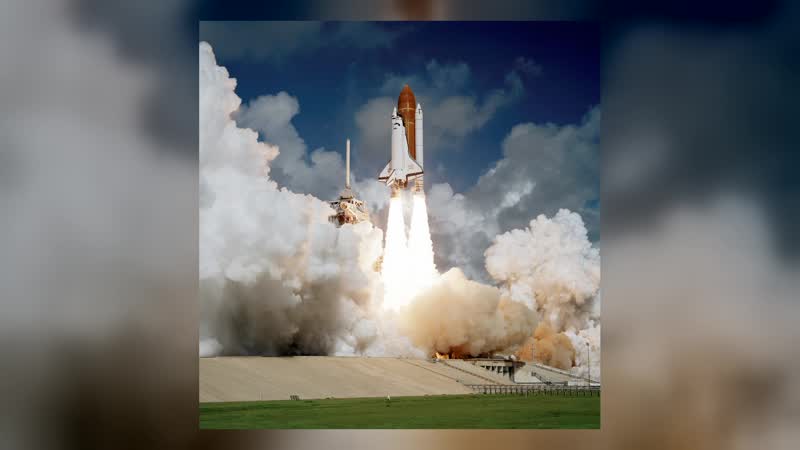
In the last chapter we looked at the structure of Atlantis. Now it is time for its first flight, called STS-51-J. This was NASA's 21st Space Shuttle mission and also Atlantis's maiden flight, the first real test for the new vehicle. The launch took place from Pad 39A at Kennedy Space Center on 3 October 1985 at 15:15:30 UTC, which was 11:15:30 EDT local time. As mentioned above, the launch was 22 minutes and 30 seconds late. The cause was a false "on" indication from a controller linked to the main engine's liquid hydrogen prevalve.
The real point was the nature of the mission. It was the second Space Shuttle flight dedicated entirely to a US Department of Defense payload. The first such flight was STS-51-C. So on its very first trip, Atlantis carried a mission whose details were kept secret. What was inside? The cargo was classified, but according to reports, two DSCS-III satellites, USA-11 and USA-12, were released into space. DSCS stands for Defense Satellite Communications System. These were communications satellites that used X-band frequencies, 8/7 GHz. They were taken to geostationary orbits using the Inertial Upper Stage, or IUS. In geostationary orbit, a satellite appears to stay fixed over one part of the Earth.
Each DSCS-III satellite had a design life of ten years, but sources say many DSCS satellites lasted far longer than expected. A caution is needed here: because the cargo was classified, these details rest on reports, and the full truth of the mission remains partly hidden.
Now to the crew. The mission commander was Karol Bobko and the pilot was Ronald Grabe. Both were connected to New York City. The mission insignia pays tribute to the Statue of Liberty and its ideals, and it was designed by Atlantis's first crew themselves. The Statue of Liberty is a symbol of New York, so for Bobko and Grabe it also carried personal meaning. There was another reason too. The designers did not want the patch to emphasize that the mission was classified, as had happened with the earlier patch.
During the mission Bobko also set a record. He became the first astronaut to fly on three different shuttle orbiters. And even more unusually, he is the only astronaut to have flown on the maiden voyages of two different orbiters.
The mission was declared a success. On 7 October 1985, Atlantis landed on Runway 23 at Edwards Air Force Base in California. Landing time was 17:00:08 UTC, or 13:00:08 EDT. The whole flight lasted 4 days, 1 hour, 44 minutes and 38 seconds. So Atlantis's first flight lasted only a little over four days, but it laid the foundation of a history that continued until 2011.
One more interesting point: according to later research, all but one of the 1985 flights had O-ring erosion, and that one flight was STS-51-J. This detail will become very important in the next chapter. Only 50 days later, Atlantis was about to fly again. And then a turning point would come that shook the whole program. What happened? Let us find out in the next part.
Chapter 4Fifty Days, Then Silence
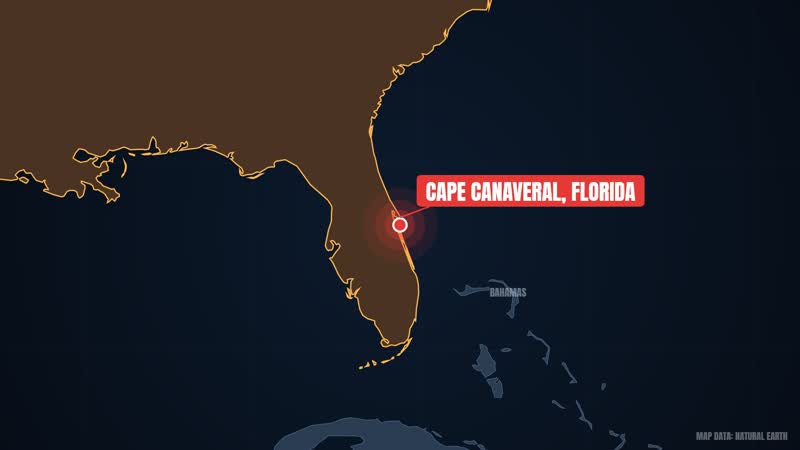
After STS-51-J, Atlantis did not get much time to rest. In November 1985 it was back on the launch pad, and the mission was named STS-61-B. This launch came only 50 days later. Among the five shuttles, that was the shortest turnaround time, meaning the shortest gap from one mission to the next. It was also the shuttle's second night launch. Rodolfo Neri Vela flew on this flight, the only Mexican to have gone into space. The program was moving fast, and NASA's projected launch schedule was 24 flights a year.
But then 1986 arrived. On 28 January 1986, Space Shuttle Challenger lifted off from Kennedy Space Center. The mission was STS-51-L, with seven crew members. Just 73 seconds after launch, Challenger broke apart. This happened at about 46,000 feet over the Atlantic Ocean, and all seven crew members died. It was the first fatal accident in flight of an American spacecraft. We remember these seven people with respect.
The cause was the failure of the primary and secondary O-ring seals in a joint of the right solid rocket booster. These rubber rings were meant to hold back hot gas. That morning was record cold. The air temperature at launch was 36 °F, and the cold had stiffened the rubber O-rings. Engineers at Morton Thiokol were already worried. They said there was not enough data on how the seals would work below 53 °F. There was a debate in a night teleconference. In the end, Morton Thiokol's management said the evidence was inconclusive, and a recommendation to proceed with the launch was given.
The Rogers Commission was formed on 6 February, and its members included names like Neil Armstrong, Sally Ride and Richard Feynman. Over four months, more than 160 people were interviewed. The report of 6 June 1986 said the field joint's design was more sensitive to temperature and pressure than it should have been. The Commission criticized both NASA and Morton Thiokol for disregarding evidence of the danger in the SRB joints. After this, NASA created a new Office of Safety, Reliability, and Quality Assurance, whose head reported directly to the NASA administrator.
The boosters were redesigned. The new joint included a capture feature that reduced joint rotation, and heaters were added to keep the O-rings warm. There were changes for the crew too. Astronauts now wore pressure suits during ascent and reentry, and a new orbiter named Endeavour was approved to replace Challenger. The entire shuttle fleet stayed on the ground for two years and eight months, that is 32 months, while investigation, redesign and restructuring went on.
On 29 September 1988, Discovery lifted off on STS-26. Five experienced astronauts were aboard, and they wore pressure suits during ascent and reentry. The mission was a test of the new boosters and it succeeded. The program was moving again. But what lay ahead for Atlantis?
Atlantis's story did not end here. From 1988 to 1992 it was used for ten flights, and two of them sent probes toward the planets. But one flight made Atlantis the most damaged shuttle of all. That was STS-27. The next part tells its whole story.
Chapter 5Close Call: The Tiles of STS-27
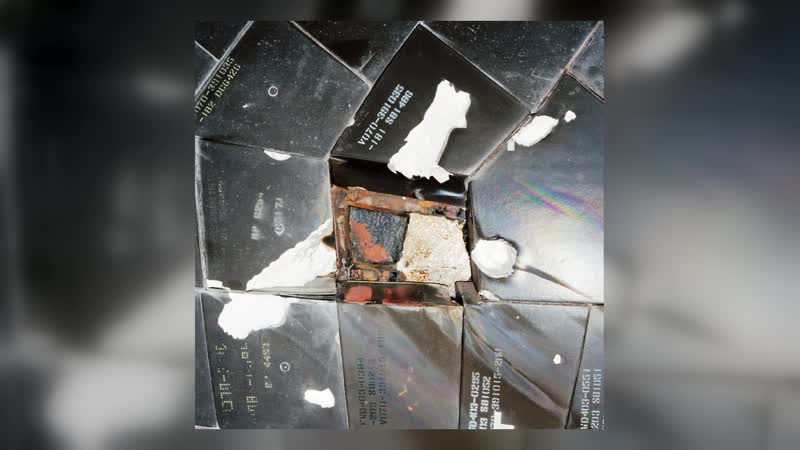
In 1988 Atlantis set out on the STS-27 mission. During launch, an event occurred that changed the course of the whole mission. A piece of insulation separated from the right solid rocket booster and struck the underside of the orbiter directly. The impact seriously damaged more than 700 tiles, and one tile was missing entirely. These tiles protect the orbiter from the intense heat of reentry.
The crew was told to use the remote manipulator system to inspect the underside of the right wing. The inspection showed considerable tile damage. The problem was that the mission was classified. Mission control was sent only images that were encrypted, and their quality was extremely poor. People in mission control described the damage as "lights and shadows." The crew was told to continue the mission as normal. This decision angered several crew members. Those who had seen the damage under the wing were being told to carry on as usual.
At last Atlantis landed. After landing, it was the most heavily damaged of all the shuttles that had landed successfully. So how did the crew survive? According to the record, the crew's survival is attributed to a steel L-band antenna plate located exactly where the tile went missing. A steel plate was in the very spot where the tile was lost, and that plate is credited with saving the crew.
Now let us turn to Columbia. It is said that a similar situation later led to its destruction. The difference is that there the damage was to delicate reinforced carbon-carbon. On 1 February 2003, Columbia broke apart during reentry on STS-107, and seven crew members died. The cause was bipod foam that separated from the external tank during launch and struck the orbiter's left wing.
Here the same pattern appears again. NASA had seen many foam strikes before, but they were not considered a possible danger to astronauts. Before Challenger, the risk of O-ring erosion had been accepted, and before Columbia, the risk of foam strikes. Both times the risk was not treated as a major problem. According to the Rogers Commission, NASA accepted the O-ring erosion risk but never examined what effect it could have on mission safety. Both accidents also involved schedule pressure: at the time of Challenger, the goal of more flights, and at the time of Columbia, the launch schedule for assembly of the International Space Station.
The Columbia Accident Investigation Board wrote that "NASA's response to the Rogers Commission did not meet the Commission's intent." In other words, the real spirit of Rogers's recommendations had not been fulfilled. It said the institutional failure causes of Challenger "have not been fixed," and that NASA had not set up a "truly independent" safety office. Diane Vaughan argued in her 1996 book that NASA's structure and mission created an environment of risk acceptance, not just program management alone.
So STS-27 is not only a story of damage but also a lesson. Brushing off a warning sign as "lights and shadows" can prove costly. But Atlantis's story does not end with this close call. Next we see how it sent probes toward the planets and how its bond with Hubble formed.
Chapter 6Probes, Observatories and a Telescope
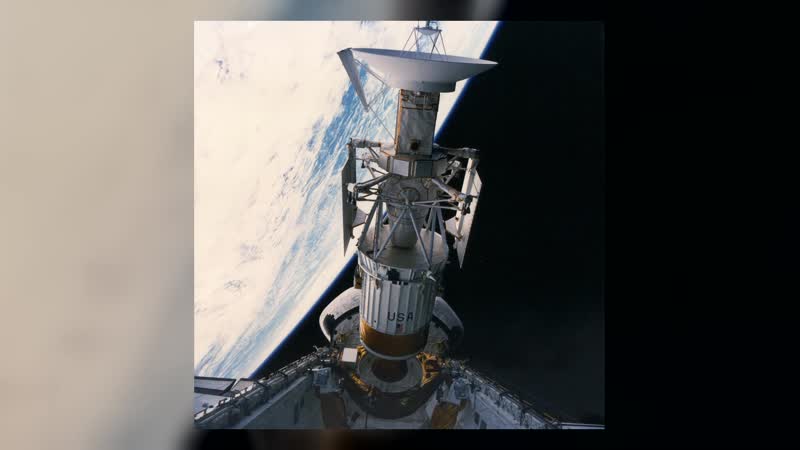
In 1989 Atlantis flew two missions that opened the way to other planets. In both, it released probes into space. The first was STS-30, which sent Magellan toward Venus. With this, Atlantis became the first Space Shuttle to launch an interplanetary probe. The second mission was STS-34, which sent Galileo toward Jupiter. So in a single year Atlantis paved the way to both Venus and Jupiter.
Then in 1991, on STS-37, Atlantis deployed the Compton Gamma Ray Observatory. This observatory was built to view the universe through gamma rays. Compton was part of NASA's Great Observatories program, in which Hubble sees visible light, Compton gamma rays, Chandra X-rays and Spitzer infrared bands.
Now let us talk about Hubble, because Atlantis was to have a special bond with it. The idea of Hubble is very old, with roots going back to 1946. That year astronomer Lyman Spitzer wrote a paper arguing that an observatory placed in space would escape the turbulence of Earth's atmosphere. At that time, ground-based telescopes were limited to a resolution of 0.5 to 1 arcsecond, whereas a space telescope with a 2.5-meter mirror could theoretically reach 0.05 arcsecond. Nancy Grace Roman is called the "Mother of Hubble." She gave public lectures, became program scientist, and in the 1970s kept writing testimony to Congress for funding.
The road was not easy. In 1974 Congress cut the funding, the mirror was reduced from 3 meters to 2.4 meters, and the European Space Agency joined as a partner. Hubble was to be launched in 1983, but technical delays, budget problems and the 1986 Challenger disaster pushed it back. It reached space in 1990 on STS-31. But a big problem emerged. Hubble's main mirror had been ground incorrectly, causing spherical aberration and affecting the telescope's capability. The mirror was supposed to be polished to an accuracy of 10 nanometers, but an error remained. In 1993 the STS-61 mission corrected the optics.
Hubble is the only telescope designed to be maintained in space by astronauts. Five shuttle missions repaired and upgraded its systems. The fifth servicing mission had been cancelled on safety grounds after the Columbia accident. When NASA administrator Michael Griffin approved it, it was completed in 2009. And this mission fell to Atlantis.
In May 2009, on STS-125, a crew of seven headed to Hubble. This was Servicing Mission 4. During the mission the crew performed five spacewalks totaling 37 hours. They installed new cameras, batteries, a gyroscope and other components. This mission is described as the last shuttle mission not to rendezvous with the ISS, and after it Atlantis's flights went to the ISS. Mike Massimino became the first person to use Twitter in space, and this happened in May 2009 on this very mission. Hubble completed 30 years of operation in April 2020 and is estimated to be able to keep working until 2030 to 2040.
But another big chapter of Atlantis's story begins in 1995, when it docked with the Russian space station Mir. That chapter comes in the next part.
Chapter 7Mir, the Space Station and a Few Strange Problems
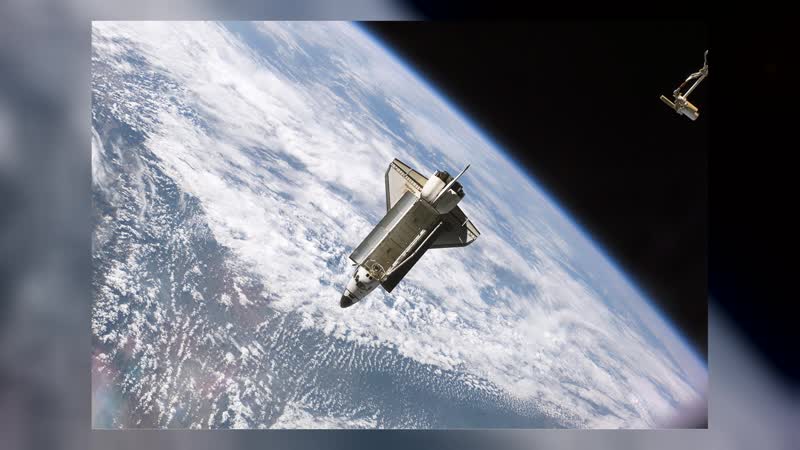
In 1995, with STS-71, a new era began for Atlantis. It docked with the Russian space station Mir, and this series ran for seven consecutive flights. STS-71 was a first in many ways. It was America's 100th crewed space flight and the first docking of the shuttle with Mir. On this mission the shuttle crew was exchanged in orbit for the first time. When Atlantis and Mir were joined, they were the largest spacecraft in orbit at that time. Some crew members made only one-way trips: Budarin and Solovyev launched only on Atlantis, and Dezhurov and Strekalov returned only on it.
After this, Atlantis's next big task was building the International Space Station. It delivered several key parts of the station. In February 2001, STS-98 delivered the Destiny module, the primary operating facility for American research payloads on the ISS. On the same mission, the third spacewalk, by Robert Curbeam and Thomas Jones, lasted five hours and 25 minutes and became NASA's 100th spacewalk. In July 2001, STS-104 installed the Quest Joint Airlock, after which crews could go outside for repairs in EMU or Orlan suits.
After the Columbia accident, Atlantis's first flight was STS-115 in September 2006. It delivered the P3/P4 truss segments and solar arrays to the ISS. In June 2007, STS-117 became Atlantis's longest mission, lasting about 14 days. It attached the S3/S4 truss and included four spacewalks. In February 2008, STS-122 delivered the Columbus laboratory, the European Space Agency's largest single component on the ISS.
In October 1992, Atlantis's first major overhaul, OMDP-1, began. Over 20 months it received 165 modifications, including a drag chute and more than 800 new heat tiles. On 5 November 1997 it arrived at Palmdale again. By September 1998, OMDP-2 had brought 130 modifications, such as glass cockpit displays and GPS in place of TACAN.
But friends, not everything was smooth. In 2007 NASA said that Atlantis's 24 helium and nitrogen gas tanks were past their designed life. These composite overwrapped pressure vessels were built for ten years, then given another ten years of approval. That period ended in 2005. By NASA's older estimates, these tanks would leak before bursting, but new tests showed they might burst before leaking. A new manufacturer could not qualify before 2010. So the tanks were kept at 80 percent pressure at most during the countdown.
After STS-125, a strange thing was found. A work light knob had become stuck between a forward interior window and the dashboard. It was thought that the orbiter expanded in flight and shrank on the ground, jamming the knob. In the worst case, Atlantis might have to retire. On 29 June 2009 the orbiter was pressurized to 17 psi so it would expand slightly. Then the knob was frozen with dry ice and successfully removed.
In the shuttle workforce, Atlantis was known for having more problems during launch preparation. Some people nicknamed it "Britney." Even so, one record belongs to it. According to launch director Mike Leinbach, its interim problem reports from STS-125 to STS-129 numbered only 54. In May 2010 he said that from STS-129 to STS-132 the count was only 46. So was there one last mission left for it?
Chapter 8The Last Flight and What Remains
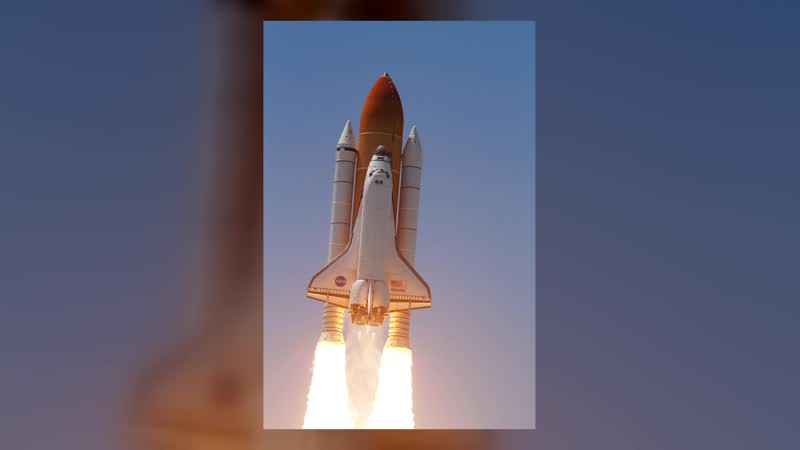
The story is at its final turn. NASA had initially planned to take Atlantis out of service in 2008, because its third major overhaul was approaching. The shuttle fleet's retirement was so near that the overhaul was judged uneconomical. Atlantis was to become a source of spare parts for Discovery and Endeavour. But by 2010 the flight schedule was very full, so the overhaul interval was extended. Atlantis was swapped in for one flight each of Discovery and Endeavour. STS-132 was to be Atlantis's last flight.
But the shuttle program was extended into 2011, and Atlantis was chosen once more. STS-134 was thought to be the last flight, but in October 2010 STS-135 was approved. It took advantage of the preparations for the STS-335 launch on need mission. On 8 July 2011, Atlantis set out on its 33rd mission and the final mission of the entire shuttle program, STS-135. It was Atlantis's last flight. On 21 July 2011 Atlantis landed for the last time at Kennedy Space Center. With this, the shuttle program that began in 1981 had completed its final mission.
By its last journey, Atlantis had orbited the Earth 4,848 times and covered about 126 million miles, or 203 million km. That is more than 525 times the distance from the Earth to the Moon. Think of it: one vehicle made this journey over 33 missions. In those 33 missions, 207 people flew with Atlantis. Of them, only 146 launched on it and also landed on it.
Where would Atlantis go after retirement? On 12 April 2011 Charles Bolden announced that it would stay at Kennedy Space Center. He called Atlantis his old friend. The announcement came at a celebration of the 30th anniversary of the shuttle's first flight. Ground was broken for its exhibit in 2012, and it opened at the Kennedy Space Center Visitor Complex on 29 June 2013. There Atlantis is displayed tilted at 43.21 degrees, with its payload bay doors open, as if it were circling the Earth in orbit. That angle is a tribute to the countdown that came before every shuttle launch. Behind it, a multi-story projection shows the Earth turning.
Atlantis's story is not only about technology but also about lessons. After Challenger, the Rogers Commission criticized NASA's organizational culture and decision-making. Engineers' warnings had been ignored, and NASA later created a separate Office of Safety, Reliability, and Quality Assurance. Then in 2003, after the Columbia accident, the investigation board said NASA had not learned many lessons from Challenger. Foam strikes had not been treated as a danger. STS-27 also left a question: when images are poor and there is doubt, is it enough to call it "lights and shadows" and move on?
Now the final question. STS-51-J's cargo was classified, and according to reports it included two DSCS-III satellites, USA-11 and USA-12. But sources describe this as classified and reported only, so we cannot say the full truth with certainty. So friends, that was the story of Atlantis, from a secret first flight to the last shuttle mission. If you liked the video, please like it, subscribe to the channel, and share your thoughts in the comments.
Shorts
Atlantis's First Flight: A Secret Cargo Never Fully Revealed
Premieres:
The Missing Tile: How Atlantis Barely Survived STS-27
Premieres:
When Atlantis Docked With Mir: The Largest Spacecraft in Orbit
Premieres:
Sources
- Space Shuttle Atlantis — Wikipedia (CC BY-SA 4.0)
- STS-51-J — Wikipedia (CC BY-SA 4.0)
- Space Shuttle Challenger disaster — Wikipedia (CC BY-SA 4.0)
- Hubble Space Telescope — Wikipedia (CC BY-SA 4.0)
Photo credits
- Space Shuttle diagram — NASA/MSFC, Public domain
- Space Shuttle Placement Announcement - 201104120001HQ — Bill Ingalls, Public domain
- Space Shuttle Atlantis launches on STS-132 — NASA/Kenny Allen, Public domain
- STS51J First Flight of Atlantis — NASA, Public domain
- STS125 crew portrait1 — NASA, Public domain
- STS115 Atlantis undock ISS — NASA, Public domain
- STS-27metalmelt — NASA, Public domain
- STS-135 landing cropped — Bill Ingalls, Public domain
- STS-135 begins takeoff — Bill Ingalls, Public domain
- STS-125 May 17 EVA — NASA, Public domain
- STS-125 Atlantis Liftoff — NASA., Public domain
- Magellan deploy — NASA, Public domain
- Hubble 2009 close-up 2 — NASA, Public domain


Stock footage & photos
- By Kindel Media on Pexels
- By Pixabay on Pexels
- By Kiwi and Camera on Pexels
- By Damiano Crognali on Pexels
- By KATRIN BOLOVTSOVA on Pexels
- By cottonbro studio on Pexels
- By Adis Resic on Pexels
- By Zelch Csaba on Pexels
- By Adis Resic on Pexels
- By Adis Resic on Pexels
- By Adis Resic on Pexels
- By Adis Resic on Pexels
- By Pixabay on Pexels
- By Pixabay on Pexels
- By Pixabay on Pexels
- By Scenegraph Studios on Pexels
- By Kindel Media on Pexels
- By Kindel Media on Pexels
- By Pixabay on Pexels
- By Pixabay on Pexels
- By TP Motion on Pexels
- By TP Motion on Pexels
- By Pawel Film on Pexels
- By EqualStock IN on Pexels
- By Emrul Kausar Emon on Pexels
- By Emrul Kausar Emon on Pexels
- By Toàn BDS on Pexels
- By João Pavese on Pexels
- By Tima Miroshnichenko on Pexels
- By Tima Miroshnichenko on Pexels
- By Advancer Drones on Pexels
- By hadi shafegh on Pexels
- By Edward Ng on Pexels
- By Joerg Mangelsen on Pexels
- By Mohsin Ahmad Khan on Pexels
- By Camilo Calderón on Pexels
- By HumanoideVFX on Pexels
- By Pixabay on Pexels
- By Kindel Media on Pexels
- By Adis Resic on Pexels
- By Daniel Narinian on Pexels
- By Lars H Knudsen on Pexels
- By Tatiana Tzviatkova on Pexels
- By Boris Ivas on Pexels
- By Pavel Danilyuk on Pexels
- By Pavel Danilyuk on Pexels
- By Vincuk Konan on Pexels
- By https://kaboompics.com/ on Pexels
- By K on Pexels
- By Andretti Brown on Pexels
- By Kindel Media on Pexels
- By Kindel Media on Pexels
- By Kindel Media on Pexels
- By Pixabay on Pexels
- By Kiwi and Camera on Pexels
- By Kiwi and Camera on Pexels
- By Jomin Thach on Pexels
- By Kostiantyn Zavhorodnii on Pexels
- By https://kaboompics.com/ on Pexels
- By Dziana Hasanbekava on Pexels
- By Adis Resic on Pexels
- By Adis Resic on Pexels
- By Matthias Groeneveld on Pexels
- By Matthias Groeneveld on Pexels
- By Colin Jones on Pexels
- By Adis Resic on Pexels
- By TREEDEO.ST on Pexels
- By Adis Resic on Pexels
- By utopia 36 on Pexels
- By utopia 36 on Pexels
- By Dimitri Baret on Pexels
- By Matthis Volquardsen on Pexels
- By Coverr on Pexels
- By RDNE Stock project on Pexels
- By RDNE Stock project on Pexels
- By Aghyad Najjar on Pexels
- By Amina Filkins on Pexels
- By Jean Pablo Silva on Pexels
- By Jorge Pantaleon on Pexels
- By mg shotz on Pexels
- By Pixabay on Pexels
- By Adis Resic on Pexels
- By Artem Podrez on Pexels
- By cottonbro studio on Pexels
- By Pixabay on Pexels
- By Armend Istrefi on Pexels
- By Vinay on Pexels
- By CESAR A RAMIREZ VALLEJO TRAPHITHO on Pexels
- By Pixabay on Pexels
- By Kindel Media on Pexels
- By Pixabay on Pexels
- By Joerg Hartmann on Pexels
- By Hazael Corona on Pexels
- By Jorge Pantaleon on Pexels
- By Kiwi and Camera on Pexels
- By Kiwi and Camera on Pexels
- By Shafiq 🇺🇸 on Pexels
- By Mario Spencer on Pexels
- By Syed Shahzaib on Pexels
- By K on Pexels
- By SHOX ART on Pexels
- By Geun Goh on Pexels
- By ANTONI SHKRABA production on Pexels
- By ArtHouse Studio on Pexels
- By MART PRODUCTION on Pexels
- By MART PRODUCTION on Pexels
- By Mikhail Nilov on Pexels
- By Mikhail Nilov on Pexels
- By https://kaboompics.com/ on Pexels
- By Mikhail Nilov on Pexels
- By Phát Trương on Pexels
- By MART PRODUCTION on Pexels
- By Jason H Austin on Pexels
- By Tima Miroshnichenko on Pexels
- By K on Pexels
- By Tima Miroshnichenko on Pexels
- By Mikhail Nilov on Pexels
- By cottonbro studio on Pexels
- By hadi shafegh on Pexels
- By Rafael Minguet Delgado on Pexels
- By Kindel Media on Pexels
- By Pixabay on Pexels
- By Big Bag Films on Pexels
- By Hassan Ehsan on Pexels
- By Pixabay on Pexels
- By Kindel Media on Pexels
- By Tom Fisk on Pexels
- By Larkkid Dung on Pexels
- By Kindel Media on Pexels
- By Kindel Media on Pexels
- By Kindel Media on Pexels
- By K on Pexels
- By SHOX ART on Pexels
- By Pavel Danilyuk on Pexels
- By Usman AbdulrasheedGambo on Pexels
- By Nino Souza on Pexels
- By Kiwi and Camera on Pexels
- By Kiwi and Camera on Pexels
- By Arnold Hazisllari on Pexels
- By Video Kickstarter on Pexels
- By Mikhail Nilov on Pexels
- By Hampie on Pexels
- By Roberto Chavez on Pexels
- By ArtHouse Studio on Pexels
- By ArtHouse Studio on Pexels
- By Adis Resic on Pexels
- By Pixabay on Pexels
- By Kindel Media on Pexels
- By MART PRODUCTION on Pexels
- By KoolShooters on Pexels
- By Gustavo Fring on Pexels
- By cottonbro studio on Pexels
- By Vlada Karpovich on Pexels
- By Mikhail Nilov on Pexels
- By https://kaboompics.com/ on Pexels
- By Ranjeet Chauhan on Pexels
- By Pixabay on Pexels
- By https://kaboompics.com/ on Pexels
- By Altaf Shah on Pexels
- By MART PRODUCTION on Pexels
- By Matthias Groeneveld on Pexels
- By Dmytro Glazunov on Pexels
- By Adis Resic on Pexels
- By 3D Render on Pexels
- By Crime Lab on Pexels
- By Endiae Genius on Pexels
- By emirkhan bal on Pexels
- By Crime Lab on Pexels
- By Adis Resic on Pexels
- By Adis Resic on Pexels
- By Nicola Narracci on Pexels
- By Frank Cone on Pexels
- By Batuhan Özmen on Pexels
- By 雷神的 星天地 on Pexels
- By Sabrile Soto on Pexels
- By Matheus Bertelli on Pexels
- By Max Medyk on Pexels
- By Nino Souza on Pexels
- By K on Pexels
- By In Old News LLC on Pexels
- By SpaceX on Pexels
- By RDNE Stock project on Pexels
- By CESAR CASANOVA on Pexels
- By Ivan S on Pexels
- By Mikhail Nilov on Pexels
- By Pixabay on Pexels
- By T Leish on Pexels
- By Werner Pfennig on Pexels
- By Werner Pfennig on Pexels
- By Nicola Narracci on Pexels
- By Zelch Csaba on Pexels
- By RDNE Stock project on Pexels
- By Adis Resic on Pexels
- By Adis Resic on Pexels
- By Adis Resic on Pexels
- By Adis Resic on Pexels
- By Adis Resic on Pexels
- By Adis Resic on Pexels
- By RDNE Stock project on Pexels
- By RDNE Stock project on Pexels
- By Scenegraph Studios on Pexels
- By Adis Resic on Pexels
- By cottonbro studio on Pexels
- By Tima Miroshnichenko on Pexels
- By T Leish on Pexels
- By Adis Resic on Pexels
- By cottonbro studio on Pexels
- By Mikhail Nilov on Pexels
- By K on Pexels
- By Kindel Media on Pexels
- By Mikhail Nilov on Pexels
- By Artem Podrez on Pexels
- By Midtrack - on Pexels
- By Luis Quintero on Pexels
- By Travelling Tourist on Pexels
- By Jonathan Rosero on Pexels
- By Val А on Pexels
- By Videas Cl on Pexels
- By Bonus Studio on Pexels
- By Pavel Danilyuk on Pexels
- By Dominik Zítka on Pexels
- By john mckenna on Pexels
- By Pixabay on Pexels
- By Adis Resic on Pexels
- By cottonbro studio on Pexels
- By cottonbro studio on Pexels
- By Joerg Mangelsen on Pexels
- By Özgür Sürmeli on Pexels
- By Nino Souza on Pexels
- By Kiwi and Camera on Pexels
- By Kindel Media on Pexels
- By Kindel Media on Pexels
- By Advancer Drones on Pexels
- By Adis Resic on Pexels
- By Artem Podrez on Pexels
- By cottonbro studio on Pexels
- By Afonso Oliveira on Pexels
- By Sergei Starostin on Pexels
- By utopia 36 on Pexels
- By Kiwi and Camera on Pexels
- By Los Muertos Crew on Pexels
- By Adis Resic on Pexels
- By Adis Resic on Pexels
- By Jul L. G. on Pexels
- By Asko on Pexels
- By RDNE Stock project on Pexels
- By RDNE Stock project on Pexels
- By Pavel Danilyuk on Pexels
- By Mikhail Nilov on Pexels
- By Charlotte May on Pexels
- By Necip Duman on Pexels
- By VARAN NM on Pexels
- By Raziuddin Farooqi on Pexels
- By cottonbro studio on Pexels
- By cottonbro studio on Pexels
- By Thirdman on Pexels
- By Gustavo Fring on Pexels
- By KoolShooters on Pexels
- By Ron Lach on Pexels
- By RDNE Stock project on Pexels
- By Nino Souza on Pexels
- By Kampus Production on Pexels
- By https://kaboompics.com/ on Pexels
- By Adis Resic on Pexels
- By Adis Resic on Pexels
- By Ünal Karabiber on Pexels
This documentary is based on the sources above and was fact-checked before publishing. The narration voice, animated host and illustrations are AI-generated. Spotted a mistake? Tell us in the YouTube comments.