The Beep That Shook the World | Sputnik 1 True Story
🎬 The video premieres soon
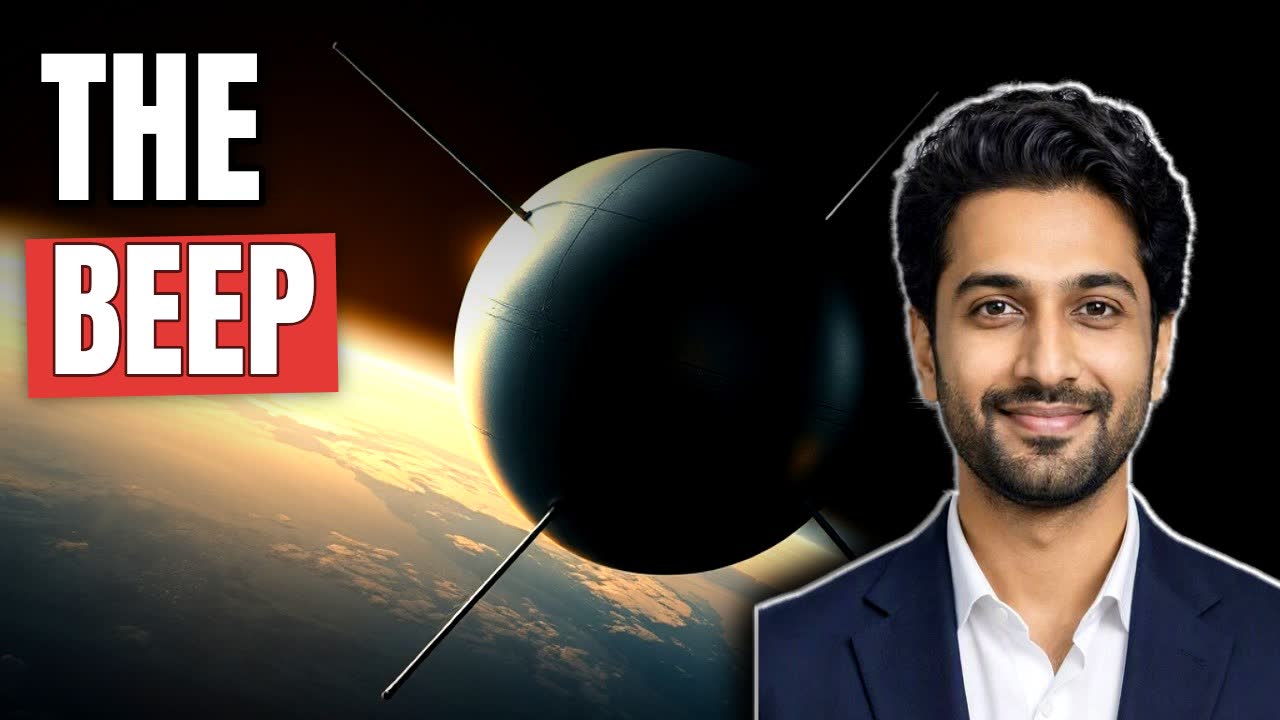
On 4 October 1957, a polished metal ball no bigger than a beach ball slipped into orbit and sent one simple sound across the planet: beep, beep, beep. It weighed 83.6 kg, was built in under a month, and nearly failed on launch night. How did a hurried Soviet project beat the United States into space? Why did a tiny radio transmitter spark fear, panic and a political crisis in the West? And how did one satellite change schools, science funding, and even the way we find our location today? Using documented history, this film follows the secret designers, the failed rocket tests, the tense launch, and the shock that began the Space Race.
Chapter 1The Beep Over the Steppe
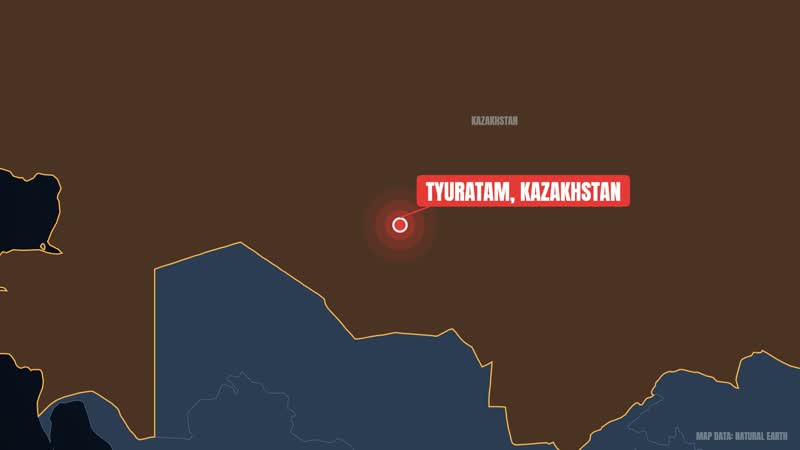
It was the night of 4 October 1957. On the Tyuratam launch range in the vast steppe of Kazakhstan, an enormous rocket stood ready. At 19:28:34 UTC it lifted off, though at the launch site the date had already turned to 5 October. High above, a shiny metal sphere separated from the rocket. It was called Sputnik 1, and its diameter was just 58 centimeters.
Some 19.9 seconds after the engine shut down, the satellite separated and its transmitter switched on. On the ground, a station picked up a beep, beep, beep. Junior Engineer-Lieutenant V.G. Borisov heard the sound at station IP-1. Reception lasted only two minutes before the satellite dropped below the horizon.
After the launch, the designers, engineers and technicians went to a mobile radio station. They waited about 90 minutes to be sure the satellite had completed a full orbit. Then Sergei Korolev called Soviet leader Nikita Khrushchev. That one call was about to open a new chapter in world history.
The journey began with a proposal in 1954 and ended with a beep heard by radio operators around the world. How was such a small object built so quickly? Why did panic spread across Western countries? And what changed in the world afterward?
Chapter 2A Dream Called Object D
Every great story begins with an idea, and Sputnik's began not with a grand declaration but with an official proposal. Sources disagree on the date. One says that on 17 December 1954 Sergei Korolev presented a satellite plan to Dimitri Ustinov, the Minister of the Defense Industry. Another says that on 26 May 1954, six days after he was given leadership of the R-7 program, Korolev proposed launching a satellite with the R-7. The plan came with a report by Mikhail Tikhonravov reviewing similar projects abroad. Tikhonravov argued that launching an orbital satellite was an unavoidable stage in the development of rocket technology.
Then came 29 July 1955. US President Dwight D. Eisenhower announced, through his press secretary, that America would launch a satellite during the International Geophysical Year. Just four days later, Soviet physicist Leonid Sedov announced that the Soviet Union would also launch an artificial satellite. On 8 August the Communist Party Politburo approved the proposal to build one. The talk was now turning into practical work.
On 30 August, Vasily Ryabikov, head of the State Commission for R-7 test launches, held a meeting. It was decided to build a three-stage version of the R-7 for satellite launches. On 30 January 1956 the Council of Ministers approved practical work on the satellite, which was named Object D. It was no small satellite. It was to weigh 1,000 to 1,400 kg and carry 200 to 300 kg of scientific instruments.
The work was divided among several organizations. The USSR Academy of Sciences was responsible for scientific leadership and instruments, while OKB-1 was to build the satellite. The preliminary design was completed in July 1956. The satellite was meant to measure atmospheric density, ion composition, solar wind, magnetic fields and cosmic rays. Because time was short, observations were planned for only 7 to 10 days, and very high orbital accuracy was not expected.
By the end of 1956 it was clear that Object D could not be ready on time. Building the scientific instruments was difficult, and the specific impulse of the R-7 engines turned out lower than planned: 304 seconds instead of the 309 to 310 seconds in the plan. The government pushed the launch back to April 1958. Object D later flew as Sputnik 3. But Korolev feared that America would launch first during such a delay. So what could be done?
Chapter 3The Rocket Born as a Missile
What would carry Sputnik into space? The answer lay in a rocket that was built not for satellites but as a missile. It was called the R-7, also known as 8K71. OKB-1 designed it as an intercontinental ballistic missile, or ICBM. Design work began in 1953, and on 20 May 1954 the Soviet government approved its development. It was the most powerful rocket in the world, built with more thrust than needed because engineers did not know how heavy a hydrogen bomb payload would be.
The design was unusual. Four strap-on boosters surrounded a central core, and each booster had its own propellant tanks. For the engines, Valentin Glushko's OKB-456 connected four combustion chambers to a single turbo pump, which both increased thrust and simplified the design. Each strap-on booster's RD-107 engine delivered 83 tons of thrust at sea level, while the central core's RD-108 engine delivered 75 tons.
Then came the launch pad problem. Standing a core and four boosters on a pad was almost impossible, and strong wind could topple the rocket before it was fueled. The solution was interesting: the pad was eliminated, and the entire rocket was hung in trusses that could bear both its weight and the force of the wind. A launch site was also needed. Kapustin Yar was inadequate, so Tyuratam in Kazakhstan was chosen. It later became the Baikonur Cosmodrome. The Council of Ministers approved the site on 12 February 1955, though it was not due to be completed until 1958, and military construction units began work there.
As for thrust, one source says the R-7 produced roughly 1,000,000 pounds-force, or 4,400,000 newtons, while US rockets of the time reached 150,000 pounds-force. Another source gives the Sputnik version a liftoff thrust of 3.90 MN and a weight of 272 tonnes, so the figures in the sources differ. As an ICBM the R-7 could strike at 8,000 km and could carry a warhead with a nominal yield of 3 megatons.
As a weapon, however, it was difficult. Preparation took about 20 hours, and because of the liquid oxygen it could not stay on alert for more than a day. That is why the plan for fifty launch pads shrank to six. For a satellite, though, the rocket was ideal. Would the test flights succeed?
Chapter 4Three Failures, Then Success
Did the test flights succeed? At first, the answer was no. The spring and summer of 1957 became a hard test for Korolev's team. The first launch took place on 15 May 1957. A fire broke out in a strap-on booster of R-7 number 5L right after liftoff. The rocket kept flying, but after 98 seconds the strap-on separated and the rocket crashed 400 km from the launch site. Another source says 88 seconds, so sources differ on this small detail, but the result was the same: failure.
For the second rocket, 8K71 number 6, there were three attempts on 10 and 11 June. An assembly defect kept the rocket from lifting off. Another source says that on 11 June an electrical short sent the rocket spinning out of control. The two accounts differ. Then on 12 July the third rocket flew. An electrical short caused the vernier engines to put the missile into an uncontrolled roll. At 33 seconds all the strap-ons separated, and the R-7 fell about 7 km from the pad.
Three attempts, three failures. These failures shook the spirits of Korolev and his colleagues, and both their position and their dream of a satellite were at risk. Then came 21 August. At 15:25 Moscow time the fourth rocket, 8K71 number 8, flew, and this time the flight succeeded. The rocket's core carried the dummy warhead to the required altitude and speed, a journey of 6,000 km, or about 3,700 miles. But on reentry the warhead broke up at 10 km altitude, so one big goal of the ICBM was not yet met.
For Soviet engineers it was a mixed result. The core worked, but warhead reentry was still an unsolved problem. On 27 August TASS announced the successful test of a multistage ICBM, but the American public and media did not give it much importance. On 7 September the fifth rocket, 8K71 number 9, also flew successfully, but the dummy was again destroyed during reentry. Militarily, a redesign was needed. Yet the rocket itself was considered reliable enough for a satellite launch.
Now Korolev had his chance. He persuaded the State Commission that the next R-7 should be used to carry the PS-1 satellite. The military preparation of the rocket was accepted as delayed so that PS-1 and PS-2 could fly. But what was the satellite itself like, and how was it built so quickly?
Chapter 5Object PS: Simple and Fast
The complexity of Object D was holding it back, and the rocket engines' specific impulse had also come out low. What did OKB-1 think of doing? It feared America would launch a satellite first, so it proposed a simple satellite weighing just 100 kg. The plan was to launch it in April or May 1957, before the IGY began. Instead of heavy scientific instruments, it would carry only a simple radio transmitter. It was called Object PS, for prosteishiy sputnik, or simple satellite. This design also let observers on the ground track it visually.
On 15 February 1957 the Council of Ministers approved it. Another source gives 25 January as the approval date, so the date is disputed. Permission was granted to launch two satellites, PS-1 and PS-2, on two R-7 rockets, on the condition that the R-7 complete at least two successful test flights. The satellite had four aims: simplicity and reliability, a spherical body to probe atmospheric density, a study of radio waves, and confirmation of pressurization. Mikhail Khomyakov was the chief constructor at OKB-1.
The satellite was a sphere 585 millimetres across, made of two hemispheres joined together and sealed with O-rings. The halves were held by 36 bolts, and the whole satellite weighed 83.6 kg. The outside was a highly polished aluminium-magnesium-titanium alloy. Power came from three silver-zinc batteries weighing 51 kg. Two powered the transmitters and one the temperature control. They were expected to last two weeks, but they worked for 22 days. Power switched on automatically as the satellite separated from the rocket.
Inside was a one-watt transmitter weighing 3.5 kg, operating at 20.005 and 40.002 MHz. The two frequencies took turns sending 0.3-second pulses. Temperature and pressure information was encoded in the length of the beeps. Analysis of the beeps was also used to estimate the electron density of the ionosphere. The satellite was filled with dry nitrogen at 1.3 atm. If the temperature rose above 36 degrees Celsius a fan switched on, and below 20 it switched off. If internal pressure fell below 130 kPa, a barometric switch changed the beep length, signaling a puncture or failure of the pressure vessel.
One source says Tikhonravov's group built the satellite in less than a month, with Korolev handling assembly himself. Testing at OKB-1 was led by Oleg Ivanovsky. The initial launch target date for PS-1 was 6 October. Then Korolev moved the launch up by two days, fearing America might launch its satellite first. Now everything depended on the launch pad.
Chapter 6Launch Night: Almost Aborted
On 22 September a modified R-7, named Sputnik and indexed 8K71PS, arrived at the proving ground, and preparation of PS-1 began. Compared with the military rockets, its weight was reduced from 280 to 272 tonnes. With PS-1 it was 29.167 metres long, with a liftoff thrust of 3.90 MN. PS-1 could not be controlled, only observed. Six observatories stood around the launch site, the nearest only 1 km from the pad. To track the satellite after separation, a nationwide Command-Measurement Complex was built, with seven far-flung stations including Tyuratam, Yeniseysk and Klyuchi.
Then the launch came. The Sputnik rocket lifted off from Site No.1 on 4 October 1957 at 19:28:34 UTC, when it was already 5 October at the site. The control system was set for an orbit of 223 by 1,450 km, with a period of 101.5 minutes. But the flight did not go as planned. According to sources, several engines did not fire on time, and the mission nearly aborted. The strap-ons separated at 116 seconds.
Another problem came about 16 seconds after launch. The booster's fuel regulator failed, and RP-1 burned faster than it should have, so engine thrust was 4% above nominal. Core stage cutoff was due at T+296 seconds, but the propellant ran out early. A sensor detected overspeed in the empty RP-1 turbopump, and thrust shut down a second early. At that point 375 kg of liquid oxygen remained.
At shutdown the core stage was at 223 km altitude and 7,780 m/s. The result was an orbit of 223 by 950 km, with the apogee about 500 km lower than planned. Inclination was 65.10 degrees and the period was 96.20 minutes. The apogee was low, but the satellite still reached orbit. Some 19.9 seconds after cutoff, PS-1 separated from the second stage and its transmitter switched on. Would anyone hear the signal?
At station IP-1, Junior Engineer-Lieutenant V.G. Borisov heard the beep-beep-beep, confirming successful deployment. Reception lasted two minutes, until PS-1 went below the horizon. The core stage of the rocket was also detected in a different orbit. After watching the launch, designers and engineers went to a mobile radio station and waited about 90 minutes to be sure the satellite had completed a full orbit. Then Korolev telephoned Soviet premier Khrushchev. During the first orbit, TASS announced that the first artificial Earth satellite had been created.
Interestingly, the 7.5-tonne core stage also reached orbit and was visible at first magnitude, while the small Sputnik was only sixth magnitude. What happened next?
Chapter 7The World Listens
How would the world hear the beep? The answer was simple: anyone with a short wave receiver could hear Sputnik. The Soviet Union asked amateur and professional radio operators to record the satellite's signal on tape. It came in at 20.005 and 40.002 MHz. In America, the American Radio Relay League advised listeners to tune to 20 megacycles and then move to slightly higher frequencies, where a beep, beep would be heard on every pass.
The first recording was made by RCA engineers in Riverhead, near Long Island. They then took the tape to Manhattan so the public could hear it on NBC radio. Meanwhile, Columbia University's ham radio station W2AEE also picked up the signal, and students at the university's FM station WKCR taped it. These students were the first to rebroadcast Sputnik's signal to the American public: a small university station at a great moment in history. On 5 October the Naval Research Laboratory recorded four crossings of Sputnik over America, and the White House said the launch was no surprise.
Then came the matter of eyesight. Under Operation Moonwatch, volunteers at 150 stations were alerted to watch the sky in the morning and evening twilight. A school observatory in Rodewisch, Saxony, made one of the first observations outside the Soviet Union. Canada's Newbrook Observatory took the first photograph in North America. In Britain, the Lovell Telescope at Jodrell Bank was the only telescope in the world able to track the booster rocket by radar.
Sputnik itself was polished but very small, at sixth magnitude. The bright object people often saw in the sky was the R-7's 26-metre core stage. Reflective panels had been fitted to this booster to make it more visible. It was a first-magnitude object, far brighter than the small satellite.
Science benefited too. Drag on Sputnik's orbit revealed the density of the upper atmosphere, and the propagation of its radio signals provided ionosphere data. The batteries were expected to last two weeks, but the signal lasted 22 days. They ran out on 26 October 1957, by which time 326 orbits had been completed. The signal fell silent, but Sputnik kept circling quietly. The R-7 core stage stayed in orbit until 2 December 1957, while Sputnik 1 stayed up for three months. On 4 January 1958 Sputnik 1 burned up in the atmosphere, having made 1,440 orbits and traveled about 70,000,000 km.
Then there is the story from Encino, California. On 8 December 1957 a man woke up and found something shiny in his yard: pieces of metal and plastic tubing. Were they part of Sputnik? To this day no one has been able to prove it. But the real stir was on the ground. What was happening in America?
Chapter 8The Sputnik Crisis
The fear and unease that spread through Western countries after Sputnik 1 is called the Sputnik crisis. Why did such a small satellite cause such an uproar? The first reason was weight. Sputnik weighed 184 pounds, or 83 kg, while America was planning to send up a satellite of only 21.5 pounds. Many American officials found the claim hard to believe. They estimated Soviet rocket thrust at 200,000 pounds-force, while American rockets gave 150,000. In reality the R-7's thrust was about 1,000,000 pounds-force, many times the American estimate. And the same rocket could also carry an ICBM.
Then the Soviet Union released no photograph of the satellite for five days, so Americans did not even know what it looked like. The media was sensational. In its first two days The New York Times called it a great victory of propaganda and prestige for Russian communism. According to education editor Fred Hechinger, hardly a week went by without several television programs debating education. America became a nation in shock. On 9 October 1957 Arthur C. Clarke said that on the day Sputnik circled the Earth, America became a second-rate power.
Five days later President Eisenhower said the satellite had not raised his apprehensions one iota. In his view the weight was not of great military significance. His confidence rested on secret reconnaissance: from U-2 spy plane photos and intercepts he knew the R-7's capabilities, but he could not reveal the secret. Congressman Gerald Ford was worried, while Admiral Rawson Bennett called it a hunk of iron. General James Gavin called it a technological Pearl Harbor. Then on 6 December 1957 the Vanguard TV-3 launch attempt failed on television, deepening American dismay.
But was the whole nation really alarmed? Samuel Lubell found no evidence of panic or hysteria in the public's reaction. In his view it was elite panic. In Britain the reaction was mixed: amazement and joy at the dawn of the Space Age, but also a reminder of the British Empire's declining influence. In Canada, scientists at the Chalk River Nuclear Laboratories tracked Sputnik's orbit and praised Soviet engineering. That interest later led to the Alouette 1 satellite program.
In Moscow, Khrushchev said our potential enemies were shaken with fear. Then he asked Korolev for another satellite for the anniversary of the October Revolution. Sputnik 2 launched on 3 November 1957, weighing six times as much as Sputnik 1. Khrushchev wanted it to coincide with the fortieth anniversary of the October Revolution. It carried the dog Laika, and there was no plan to bring her back. Had the Space Race begun?
Chapter 9What Changed: Lessons and Legacy
After Sputnik, America picked up speed. On 31 January 1958 Explorer 1, the first American satellite, was launched, built by the Army and JPL. In February 1958 Eisenhower authorized the creation of the Advanced Research Projects Agency, or ARPA, later renamed DARPA. On 29 July 1958 he signed the National Aeronautics and Space Act, and NASA came into being. This happened within a year of the launch.
Education was affected too. Congress passed the National Defense Education Act of 1958, giving low-interest loans to students studying mathematics and science. In 1953 the government spent 153 million dollars, of which 10 million went to colleges. By 1960 total funding had grown about sixfold. The National Science Foundation's 1959 budget was 134 million dollars, nearly 100 million more than the year before, and by 1968 it reached about 500 million. According to a University of Michigan poll, after the launch 26 percent of Americans thought Russian science was better. A year later that fell to 10 percent.
The fear of a missile gap became a big issue in the 1960 campaign. Kennedy promised 1,000 Minuteman missiles, far more than Soviet ICBMs. There was another effect. At Johns Hopkins APL, William Guier and George Weiffenbach heard Sputnik's signal and worked out the satellite's position using the Doppler effect. The next year they were asked the reverse question: if the satellite's position is known, where is the user? This led to the TRANSIT system, a forerunner of today's GPS.
Sputnik also inspired a whole generation. Alan Shepard and Deke Slayton wrote that watching Sputnik 1 cross the sky led them to choose a new career. And Sergei Korolev? In his lifetime he was known only as the glavny konstruktor, or chief designer. His name became public in 1966, after his death.
The phrase Sputnik moment is still used. It means one country makes a leap in technology and others respond by pushing harder in education and research to catch up. For example, in 2025 DeepSeek's R1 model was also called a Sputnik moment. Is every big piece of news a Sputnik moment? Some questions remain open. Were the fragments found in Encino from Sputnik or not? And was the Sputnik crisis public panic, or only elite panic?
So what is the lesson? A small sphere of 83.6 kg changed politics, science and education all at once. Which is today's Sputnik moment? If you enjoyed this story, like the video, subscribe to the channel, and tell us in the comments which story you would like to hear next.
Shorts
Three R-7 Failures Before the Sputnik Rocket Worked
Premieres:
The Sputnik Launch That Nearly Went Wrong
Premieres:
Why a Tiny Satellite Shook the Whole West
Premieres:
Sources
- Sputnik 1 — Wikipedia (CC BY-SA 4.0)
- Sputnik crisis — Wikipedia (CC BY-SA 4.0)
- R-7 Semyorka — Wikipedia (CC BY-SA 4.0)
- Sergei Korolev — Wikipedia (CC BY-SA 4.0)
- Space Race — Wikipedia (CC BY-SA 4.0)
Stock footage & photos
- By Atakan Seçgel on Pexels
- By Major &Wang on Pexels
- By Kindel Media on Pexels
- By Kindel Media on Pexels
- By Pixabay on Pexels
- By Nicola Narracci on Pexels
- By Axinte Films on Pexels
- By Axinte Films on Pexels
- By Mikhail Nilov on Pexels
- By Mikhail Nilov on Pexels
- By Jan DH on Pexels
- By Sururi Ballıdağ Director on Pexels
- By Yeşim Çolak on Pexels
- By KoolShooters on Pexels
- By utopia 36 on Pexels
- By utopia 36 on Pexels
- By Roy S. on Pexels
- By David Geghamyan on Pexels
- By cottonbro studio on Pexels
- By Leeloo The First on Pexels
- By https://kaboompics.com/ on Pexels
- By Miguel Á. Padriñán on Pexels
- By Miguel Á. Padriñán on Pexels
- By Monstera Production on Pexels
- By RDNE Stock project on Pexels
- By Tima Miroshnichenko on Pexels
- By John Hill on Pexels
- By D Goug on Pexels
- By TREEDEO.ST on Pexels
- By Mikhail Nilov on Pexels
- By RDNE Stock project on Pexels
- By HumanoideVFX on Pexels
- By Pixabay on Pexels
- By Polina Tankilevitch on Pexels
- By Mikhail Nilov on Pexels
- By Emrul Kausar Emon on Pexels
- By Emrul Kausar Emon on Pexels
- By Ivan S on Pexels
- By Mikhail Nilov on Pexels
- By Pixabay on Pexels
- By emirkhan bal on Pexels
- By Kindel Media on Pexels
- By Pixabay on Pexels
- By Pressmaster on Pexels
- By Atul Saini on Pexels
- By Plato Terentev on Pexels
- By I Am Sorin on Pexels
- By Kindel Media on Pexels
- By Pixabay on Pexels
- By K on Pexels
- By Tima Miroshnichenko on Pexels
- By https://kaboompics.com/ on Pexels
- By Vincuk Konan on Pexels
- By Pixabay on Pexels
- By Kindel Media on Pexels
- By Kindel Media on Pexels
- By Kindel Media on Pexels
- By Joerg Mangelsen on Pexels
- By Anastasia Shuraeva on Pexels
- By Pixabay on Pexels
- By Pixabay on Pexels
- By Sergey Guk on Pexels
- By Aliaksei Semirski on Pexels
- By aksinfo7 universe on Pexels
- By Parveen Sirswa on Pexels
- By Mikael Blomkvist on Pexels
- By Tom Shamberger on Pexels
- By Mumtaz Niazi on Pexels
- By Adis Resic on Pexels
- By Pixabay on Pexels
- By Pavel Danilyuk on Pexels
- By Pavel Danilyuk on Pexels
- By Dimitar Germanov on Pexels
- By Dimitar Germanov on Pexels
- By Kiwi and Camera on Pexels
- By Damiano Crognali on Pexels
- By Pixabay on Pexels
- By Kindel Media on Pexels
- By Pixabay on Pexels
- By Kindel Media on Pexels
- By Pixabay on Pexels
- By Kindel Media on Pexels
- By Athena Sandrini on Pexels
- By Темирлан Досанов on Pexels
- By Phát Trương on Pexels
- By KATRIN BOLOVTSOVA on Pexels
- By Özgür Sürmeli on Pexels
- By Özgür Sürmeli on Pexels
- By H.Espinosa Films on Pexels
- By cottonbro studio on Pexels
- By Kindel Media on Pexels
- By Pixabay on Pexels
- By K on Pexels
- By Dan Cristian Pădureț on Pexels
- By cottonbro studio on Pexels
- By cottonbro studio on Pexels
- By Adis Resic on Pexels
- By Adis Resic on Pexels
- By Joaquin Reyes Ramos on Pexels
- By Pressmaster on Pexels
- By ArtHouse Studio on Pexels
- By Gustavo Fring on Pexels
- By Everett Bumstead on Pexels
- By Everett Bumstead on Pexels
- By Max Avans on Pexels
- By Владимир Брызгин on Pexels
- By Edward Jenner on Pexels
- By Mikhail Nilov on Pexels
- By Werner Pfennig on Pexels
- By Werner Pfennig on Pexels
- By Sururi Ballıdağ Director on Pexels
- By Tima Miroshnichenko on Pexels
- By Gustavo Fring on Pexels
- By Tima Miroshnichenko on Pexels
- By Tima Miroshnichenko on Pexels
- By Tima Miroshnichenko on Pexels
- By Nuno Magalhães on Pexels
- By Matthias Groeneveld on Pexels
- By 雷神的 星天地 on Pexels
- By Borys Zaitsev on Pexels
- By Jorge Pantaleon on Pexels
- By LayG Traveller on Pexels
- By Kindel Media on Pexels
- By Kindel Media on Pexels
- By Zelch Csaba on Pexels
- By Adis Resic on Pexels
- By Nicola Narracci on Pexels
- By Tima Miroshnichenko on Pexels
- By Anastasia Shuraeva on Pexels
- By cottonbro studio on Pexels
- By Jakub Zerdzicki on Pexels
- By Tima Miroshnichenko on Pexels
- By José Alfredo Munguía Lira on Pexels
- By Tima Miroshnichenko on Pexels
- By ArtHouse Studio on Pexels
- By ArtHouse Studio on Pexels
- By khezez | خزاز on Pexels
- By Zed on Pexels
- By CESAR A RAMIREZ VALLEJO TRAPHITHO on Pexels
- By Coverr on Pexels
- By Eduardo Cano Photo Co. on Pexels
- By Bonus Studio on Pexels
- By Tima Miroshnichenko on Pexels
- By Emrul Kausar Emon on Pexels
- By Artem Podrez on Pexels
- By cottonbro studio on Pexels
- By Adis Resic on Pexels
- By Joel Dunn on Pexels
- By Wolfgang Weiser on Pexels
- By Wolfgang Weiser on Pexels
- By Liliana Drew on Pexels
- By Tom Fisk on Pexels
- By Simo Herold on Pexels
- By utopia 36 on Pexels
- By Mikhail Nilov on Pexels
- By Matthias Groeneveld on Pexels
- By Matthias Groeneveld on Pexels
- By Kiwi and Camera on Pexels
- By Kiwi and Camera on Pexels
- By Kiwi and Camera on Pexels
- By Pixabay on Pexels
- By Kindel Media on Pexels
- By Пронина Ольга on Pexels
- By Obada Abdullah on Pexels
- By Stephan Saloth on Pexels
- By Adis Resic on Pexels
- By Tima Miroshnichenko on Pexels
- By Dominik Zítka on Pexels
- By Adis Resic on Pexels
- By Colin Jones on Pexels
- By Adis Resic on Pexels
- By Tobias Wagner on Pexels
- By Pixabay on Pexels
- By TREEDEO.ST on Pexels
- By Adis Resic on Pexels
- By cottonbro studio on Pexels
- By Mikhail Nilov on Pexels
- By Axinte Films on Pexels
- By Caleb Minear on Pexels
- By khanhhoangminh on Pexels
- By Caleb Oquendo on Pexels
- By KoolShooters on Pexels
- By ROMAN ODINTSOV on Pexels
- By Stephen (Why Steve) Jacobs on Pexels
- By Postcard Pictures on Pexels
- By HaireKia on Pexels
- By KoolShooters on Pexels
- By Ron Lach on Pexels
- By Bigsly Media on Pexels
- By Milos Jevtic on Pexels
- By Chris D on Pexels
- By Ömer Derinyar on Pexels
- By Ron Lach on Pexels
- By emirkhan bal on Pexels
- By cottonbro studio on Pexels
- By Elchino portrait on Pexels
- By Elchino portrait on Pexels
- By Los Muertos Crew on Pexels
- By utopia 36 on Pexels
- By Andretti Brown on Pexels
- By K on Pexels
- By Raj Kumar Lamichhane on Pexels
- By Dubang chang on Pexels
- By utopia 36 on Pexels
- By RDNE Stock project on Pexels
- By Matthias Groeneveld on Pexels
- By changen chan on Pexels
- By Lance Alyas on Pexels
- By Roy S. on Pexels
- By Dr Photographer on Pexels
- By Nicola Narracci on Pexels
- By Pressmaster on Pexels
- By Pressmaster on Pexels
- By Colin Jones on Pexels
- By Jul L. G. on Pexels
- By T Honkamies on Pexels
- By Dasham Tudu on Pexels
- By Kindel Media on Pexels
- By Sammy Marrco on Pexels
- By Mr Pixel on Pexels
- By Michael Yakimelin on Pexels
- By J.S. McDuff on Pexels
- By J.S. McDuff on Pexels
- By cottonbro studio on Pexels
- By Kleison Leopoldino on Pexels
- By Werner Pfennig on Pexels
- By Mikhail Nilov on Pexels
- By Pixabay on Pexels
- By ROMAN ODINTSOV on Pexels
- By MART PRODUCTION on Pexels
- By MART PRODUCTION on Pexels
- By Everett Bumstead on Pexels
- By Everett Bumstead on Pexels
- By J.S. McDuff on Pexels
- By Ron Lach on Pexels
- By MART PRODUCTION on Pexels
- By cottonbro studio on Pexels
- By Werner Pfennig on Pexels
- By Werner Pfennig on Pexels
- By ROCCO STOPPOLONI on Pexels
- By Dave Planes on Pexels
- By K on Pexels
- By In Old News LLC on Pexels
- By Image Hunter on Pexels
- By Jozef Papp on Pexels
- By Edmond Dantès on Pexels
- By Edmond Dantès on Pexels
- By George Morina on Pexels
- By Altaf Shah on Pexels
- By Mikhail Nilov on Pexels
- By Artem Podrez on Pexels
- By Yar Northern on Pexels
- By Evgenij Mikhailov on Pexels
- By Kindel Media on Pexels
- By Kindel Media on Pexels
- By Kindel Media on Pexels
- By The Instagrapher on Pexels
- By Mikhail Nilov on Pexels
- By Kindel Media on Pexels
- By Pixabay on Pexels
- By Pavel Danilyuk on Pexels
- By Mikhail Nilov on Pexels
- By Vincuk Konan on Pexels
- By https://kaboompics.com/ on Pexels
- By Yan Krukau on Pexels
- By Yan Krukau on Pexels
- By TimePRO TV on Pexels
- By Mikhail Nilov on Pexels
- By Edward Jenner on Pexels
- By Monstera Production on Pexels
- By Monstera Production on Pexels
- By Edmond Dantès on Pexels
- By Edmond Dantès on Pexels
- By Luis Quintero on Pexels
- By Stefan on Pexels
- By Mike Bird on Pexels
- By Nothing Ahead on Pexels
- By Mikhail Nilov on Pexels
- By Mikhail Nilov on Pexels
- By Tima Miroshnichenko on Pexels
- By Tima Miroshnichenko on Pexels
- By cottonbro studio on Pexels
- By cottonbro studio on Pexels
- By MrColo on Pexels
- By Dima Krivoy on Pexels
- By Towfiqu barbhuiya on Pexels
- By ROMAN ODINTSOV on Pexels
- By 3D Render on Pexels
- By Adis Resic on Pexels
- By Jul L. G. on Pexels
- By Klaus on Pexels
- By David Ka on Pexels
This documentary is based on the sources above and was fact-checked before publishing. The narration voice, animated host and illustrations are AI-generated. Spotted a mistake? Tell us in the YouTube comments.