The Giant That Fell on the Way to India | R101 Airship True Story
🎬 The video premieres soon
In 1929 Britain completed the largest flying machine in the world to carry passengers and mail to India and the far corners of the Empire. R101 was the pride of a government programme, a floating hotel with a dining room, lounge and promenade decks. But behind the headlines were overweight engines, a cover that tore, gasbags that rubbed against the frame and a political deadline that would not wait. On the evening of 4 October 1930 it left Cardington with the Air Minister and the men who designed it, heading for Karachi. This documentary follows the story from the rival R100 and the Imperial Airship Scheme to the stormy night over France and the inquiry that followed, and asks whether it was bad luck, bad design or bad decisions.
Chapter 1The Night the Giant Fell
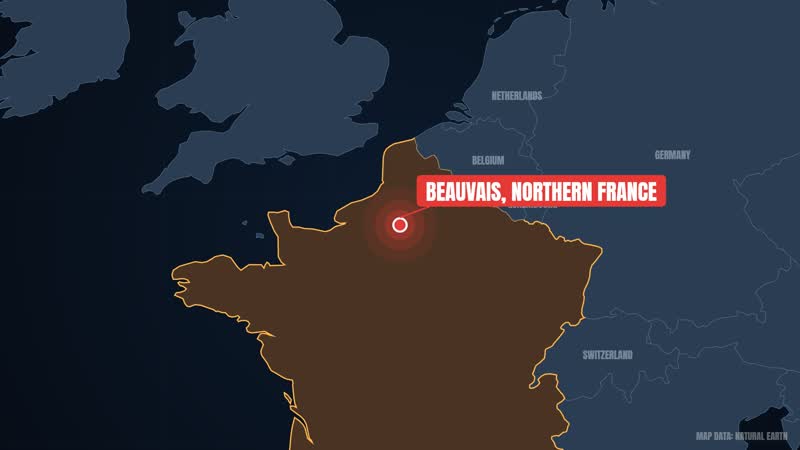
At about 02:07 on the night of 5 October 1930, a giant airship was flying through darkness and rain above the French city of Beauvais. Her name was R101. She was a British rigid airship, and when she was built she was the largest flying craft in the world. Suddenly she went into a dive. After a short while she recovered, but then a second dive began. Moments later, at the edge of a wood near Allonne, about 4 kilometres south-east of Beauvais, R101 hit the ground and caught fire at once.
There were 54 people on board. Forty-eight of them died, and only 6 survived. Among the dead was the Air Minister, Lord Thomson. The airship had been setting out on a journey to India.
This raises several questions. Why did the flight continue despite a worsening weather forecast? What actually happened to the gasbags? And was there a bigger question behind it all: did the demands of public policy play a part in the flight? The inquiry gave its own opinion on that too. This is not just the story of an accident. It is a story of politics, haste and engineering. Let us begin at the beginning.
Chapter 2An Empire Needs Wings
Britain had a problem. The distant parts of its Empire, such as India, Australia and Canada, were very far away. The heavier-than-air aircraft of the time could not fly such long distances, so it was decided that airships would carry passengers and mail there.
In 1922 the Burney Scheme appeared. It proposed that a special subsidiary of Vickers would run a civil airship programme with government help. The Air Ministry supported it, because it wanted more airships and a base in India. The Admiralty also offered to give up some light cruisers. But the government of Prime Minister Lloyd George decided it could not afford the cost, so the Burney Scheme went no further.
After the general election of 1923, Ramsay MacDonald's Labour government came to power. The new Air Minister, Lord Thomson, replaced the Burney Scheme with the Imperial Airship Scheme. Under it, two experimental airships would be built. R101 would be built under the Air Ministry's supervision, and R100 would be built by a Vickers subsidiary, the Airship Guarantee Company. R100's contract was at a fixed price. The two ships even got nicknames: R101 was called the 'Socialist Airship' and R100 the 'Capitalist Airship'. One thing was clear: this time the government itself would design and build one airship, while the other would be built by a private company.
Ships alone were not enough. A whole infrastructure was needed. Mooring masts had to be built at Cardington, Ismailia, Karachi and Montreal, and the meteorological network had to be improved as well.
An Air Ministry committee drew up the specifications. It included Squadron Leader Reginald Colmore and Lieutenant-Colonel V.C. Richmond, both with considerable airship experience. Each airship was to have a capacity of at least 5 million cubic feet. The structure was not to weigh more than 90 tons, which meant about 62 tons of disposable lift. There had to be room for 100 passengers and fuel tanks for 57 hours of flight. A cruise speed of 63 mph and a maximum speed of 70 mph were required. In wartime the airships might carry 200 troops, or perhaps even five parasite fighter aircraft.
It was a very ambitious plan. Could the two ships keep their promises? In the next part we look at the two teams and their rivalry.
Chapter 3Two Rival Airships
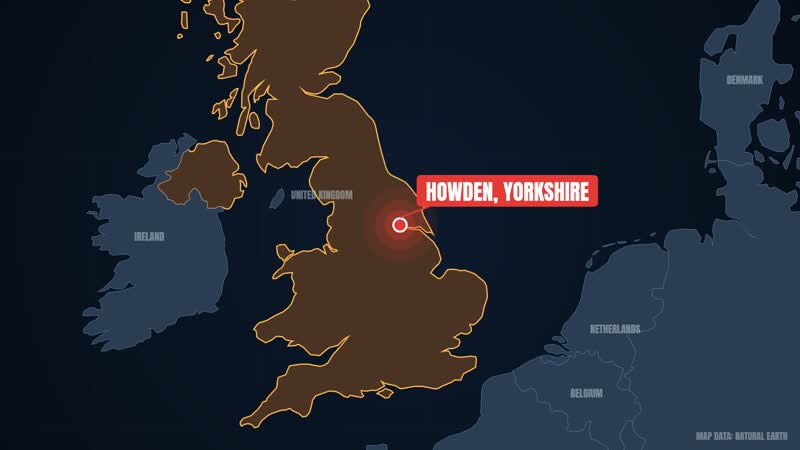
First, the Vickers team. R100 was being built at the old RNAS Air Station at Howden in Yorkshire, an isolated site about 25 miles from Hull. The team was led by Barnes Wallis, who later became famous for the bouncing bomb. An important colleague was Nevil Shute Norway. The Airship Guarantee Company's contract was at a fixed price. It was clear from the start that there would be a loss, so economies were made. For example, only about a dozen machine tools were used.
Skilled workers were hard to find at Howden. Most of the workforce were local people who first had to be trained. The shed had no heating and the roof leaked. In winter ice formed on the girders, and condensation corroded the duralumin structure.
On the other side, at Cardington in Bedfordshire, stood the Royal Airship Works. It had been built by Short Brothers during the First World War and was nationalised in 1919. After the R38 disaster, naval airship development had stopped, and the establishment was running on care and maintenance. Now it had to produce the government's own design.
The Director of Airship Development for the whole programme was Group Captain Peregrine Fellowes. His deputy was Colmore, and Richmond became Director of Design. Squadron Leader Michael Rope was his assistant, while Major G.H. Scott was responsible for operational matters and the design of the mooring masts.
In his 1954 book Slide Rule, Shute Norway described R100 as a practical and conservative design, and R101 as extravagant and overambitious. But that was not the whole picture. One purpose of having two teams was to test different approaches, and R101 was deliberately meant to push the limits of technology. Shute Norway himself later admitted that many of his criticisms of the R101 team were unfair. Airship historians still debate his account.
The planning was very optimistic. The plan was for R101's construction to begin in July 1925 and for a trial flight to India in January 1927. But experiments took so long that construction of R101 only began in early 1927. R100 was late too, and neither ship could fly until the end of 1929.
Chapter 4Built to Break Records
Now let us look at R101's design. Her basic structure was made mostly of stainless steel, whereas earlier airships had used lighter alloys such as duralumin. Cardington carried out the stress calculations, while Boulton and Paul designed the metalwork. The girders were made in Norwich and then brought to Cardington and joined with bolts. Before contracts were signed, a complete bay was built and put through loading tests. Individual girders were then tested until they broke.
R101's construction was to follow the National Physical Laboratory's research programme. Hilda Lyon worked on the aerodynamics, and found that a tear-drop shape produced the least drag. R101 and R100 had the same elongated shape. The innovation was that the ring frames were not braced with radial wires. They were stiff enough that they did not need them. But there was a drawback: the structure extended further forward inside the envelope, and this limited the size of the gasbags.
In late 1924 the Air Ministry Inspectorate introduced new safety rules. Under them, lifting loads had to be transmitted directly to the transverse frames so that stresses could be calculated. A new method had to be devised for this, and R101's patented 'parachute' gasbag harness was designed by Michael Rope. It proved unsatisfactory. The gasbags surged more than they should, especially in bad weather, and they chafed against the structure and developed holes.
For the cover, pre-doped linen panels were used, and reefing booms were fitted to increase their tension. But this pre-doped fabric was a problem from the start. Even before leaving the shed, panels began to split as the humidity changed.
The Air Ministry demanded heavy oil, or diesel, engines, because petrol was considered a fire risk in the heat of the India route. In the end five Beardmore Tornado engines were fitted. Each engine weighed 4,773 lb, more than double the early estimate. In addition, severe torsional resonance appeared in the crankshaft above 950 rpm, so the engine limit was set at 935 rpm.
The original design included 50 passenger cabins, a dining room for 60 people and a lounge of 5,500 square feet, with wicker furniture to save weight. On paper, then, it was a magnificent ship. But could it carry that weight all the way to India? The answer would come in the lift trials.
Chapter 5Too Heavy to Fly to India
On 11 July 1929 the long process of filling R101's hydrogen gasbags began, and it was completed on 21 September. Lift and trim trials were then carried out inside the shed. The results were disappointing. The design conference had estimated a gross lift of 151.8 tons and an airframe weight of 105 tons. In reality the lift was 148.46 tons and the weight 113.6 tons. The ship was also tail-heavy, because the tail surfaces were much heavier than estimated. In this state a flight to India was simply not possible. Heat was another problem. High temperatures reduce lift, and at Karachi an airship of R101's size was expected to lose up to 11 tons of lift.
Even so, on 12 October 1929 R101 was brought out of the shed. A ground party of 400 men walked her out, and the roads were full of cars. The first flight took place on 14 October. The ship reached London, passed over the Palace of Westminster and St Paul's Cathedral, and returned to Cardington after five hours 40 minutes. On 6 November First Officer Noël Atherstone wrote in his diary that these window-dressing stunts and joy-rides were wrong before an airworthiness certificate had been issued. The Air Ministry wanted favourable publicity, and this was affecting the flying programme. It was an example of political pressure on the project.
On 11 November the wind speed reached 83 mph, with gusts of 89 mph. The ship did better on the mast, but the movement of the gasbags caused trouble. According to Coxswain Hunt, the gasbags moved about four inches from side to side, and far more than that longitudinally. They chafed against the framework and tore in several places.
On 17 November R101 made an endurance flight. She passed over Edinburgh, the Irish Sea and Dublin, and returned to Cardington after 30 hours 41 minutes. A flight with 100 MPs was planned for 23 November, but the barometric pressure was low and R101 did not have enough lift for that many passengers. The flight was cancelled because of the weather.
The design team looked at the lift problem and found 3.16 tons of weight savings, including removing twelve double-berth cabins. Letting the gasbags out slack would give an extra 3.18 tons of lift. Michael Rope thought this unwise, since thousands of exposed fixings stuck out from the girders. Another proposal was to add an extra bay of 500,000 cubic feet, which would give nine tons of extra disposable lift. In December all these measures were approved.
But would strips of cloth and padding be enough to stop the danger? The year 1930 would answer that question.
Chapter 6Warnings Ignored
On 20 January 1930 Michael Rope and J. W. W. Dyer, head of the fabric section, saw serious deterioration in the cover, and it was decided to apply reinforcement bands. Rope's tests then brought even worse news. The cover's specified strength was 700 lb per foot run, but the samples showed at most 85 lb. On 2 June many small tears were found in the cover. On 23 June, when the ship came out of the shed, a split 140 feet long appeared in less than an hour. It was repaired on the mast and more bands were applied. The next day another small split appeared, but the decision to take part in the Hendon Air Show stood.
At the end of the 26 June proving flight R101 was 'flying heavy', and two tons of fuel oil had to be dropped before mooring. During this time Captain G. F. Meager, who was normally R100's first officer, replaced Atherstone. He was alarmed to see R101's heavy condition. Meager said that for the first time in an airship he felt 'the wind up'. For mooring, Irwin had to dump 10 tons of water and fuel oil.
News of the gasbags being let out slack reached Dr. Hugo Eckener. He feared that the gasbags would chafe against the structure, burst and lose gas. Through Willy von Meister he offered Lord Thomson technical help. Lord Thomson thanked him and explained that padding was being fitted, which in the British designers' opinion would be sufficient.
On 3 July the inspector F. W. McWade wrote to Lieutenant-Colonel Outram. He refused to extend the permit or recommend a Certificate of Airworthiness. His worry was that padding would not protect the gasbags from chafing. It lay tight against the girders, and with surging the padding could work loose.
From 29 June R101 was in the shed for the extension. The gasbags were completely overhauled, two engines were replaced, and most of the cover was renewed. R100's Canada flight was a success. According to Shute Norway, after this the R101 team had only two options: go to India or admit failure. The Air Ministry set the India flight for early October so that it would coincide with the Imperial Conference in London. Favourable publicity was also a goal.
On 1 October R101 made her only trial flight before leaving for India. It lasted 16 hours 51 minutes in almost ideal weather. Even so, on 2 October 1930 the Certificate of Airworthiness was issued, although full-speed trials had not been carried out. The Inspectorate expressed complete satisfaction. The certificate reached Captain Irwin on the day of departure.
But was the ship really ready? The story of the following night turns on this question.
Chapter 7Into the Storm
On the evening of 4 October 1930 people had gathered at Cardington. Light rain had begun and the wind was rising. R101 stood ready to depart. Her destination was Karachi, with a stop for fuel at Ismaïlia in Egypt along the way. The ship was commanded by Flight Lieutenant Carmichael Irwin. The passengers included Lord Thomson, Sir Sefton Brancker, Squadron Leader William Palstra and Reginald Colmore. Richmond and Michael Rope from the design side were also aboard.
The morning forecast had spoken of south to south-westerly winds of 20 to 30 mph. By afternoon conditions had worsened somewhat, but not enough to cancel the trip. At 18:36 GMT R101 detached from the mooring mast. Before departure, water ballast was dropped to bring the ship into trim.
At about 19:06 the engineer in the aft engine car reported a suspicious oil pressure reading. At 19:16 that engine was shut down, though apparently there was nothing wrong with it. With one engine off, speed fell by about 4 mph to 58.7 mph. Despite having flown 29 miles, the ship was only 8 miles from Cardington. At 20:01 a second report was sent from over Potters Bar. It mentioned the route via London, Paris and Narbonne, but not the engine trouble.
By now the rain had grown heavy. About 800 feet above the ground, the ship passed over Alexandra Palace and Shoreditch and reached Greenwich at 20:28. At 20:40 a new weather bulletin arrived, and it was bad. It forecast south-westerly winds of up to 50 mph, low cloud and rain for northern and central France. At 21:19, when the ship was near Hawkhurst, more detailed information was requested. It is possible that an alternative route was being considered. At 21:35 R101 crossed the English coast near Hastings.
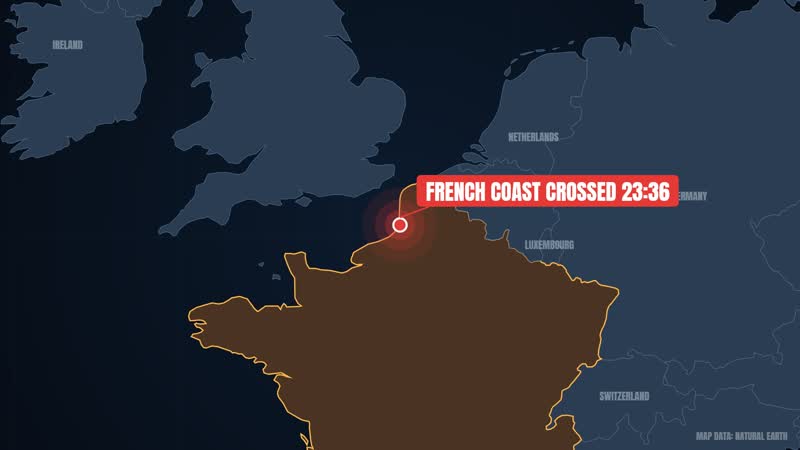
Later, by about 22:56, the wind had risen to about 44 mph, with strong gusts. At 23:36 R101 crossed the French coast near Point de St Quentin, about 20 miles east of the planned landfall. A new course was set for Orly, on the estimate that the wind was blowing from 245 degrees at 35 mph. That estimate proved incorrect. As a result R101's track stayed east of her intended course, instead of four miles west of Beauvais.
At about 01:00 the ship passed over Poix-de-Picardie, a conspicuous hill town. Navigation officer Squadron Leader Johnston would have seen the error clearly here, so the course was changed. The new route passed directly over the 770-foot Beauvais Ridge, an area notorious for turbulent winds.
The ship was now heading for that ridge. Outside were rain and strong wind, and the next hour would decide everything. What happened next?
Chapter 8The Final Minutes
At 02:00 the watch changed. Second Officer Maurice Steff took over command from Captain Irwin. According to the inquiry, the new crew may not have had time to get to know the ship's temperament. At this time R101 was 'flying heavy'. That means that to hold her height she was relying on the dynamic lift produced by her forward speed. The Board of Inquiry estimated that the ship was at least 1000 feet above the ground.
Then at about 02:07 everything suddenly changed. R101 went into a dive, from which she slowly recovered. By estimate, the ship dropped about 450 feet during this. Rigger S. Church was returning to the crew quarters. He was sent forward to release the forward emergency ballast bags, which were controlled on the spot. In this dive, foreman engineer A. H. Leech fell from his seat in the smoking room. Chief Electrician Arthur Disley, who had been dozing in the switch room, woke up.
When the ship recovered, Chief Coxswain G. W. Hunt woke Disley, then went toward the crew quarters and called out, 'We're down, lads.' At that moment the ship went into a second dive. Orders reached the engine cars to reduce speed to slow, that is 450 rpm. Engineer A. J. Cook, on duty in the left-hand midships engine car, had barely had time to answer when the ship hit the ground.
This happened at the edge of a wood outside Allonne, about 2.5 miles south-east of Beauvais. Fire broke out immediately. According to the inquiry's estimate, the speed at impact was about 13 mph, and the ship's nose was 15 to 25 degrees down. Why was the order to reduce speed given? That is still a matter of speculation. Doing so would reduce dynamic lift and make the nose drop.
Of the 54 people, 46 died at once. Church and Rigger W. G. Radcliffe died later in hospital at Beauvais. This brought the total dead to 48. Six people survived. Four of them were engineers who had been on duty in the engine cars outside the ship, and Cook was among these four. From inside the main cabin, only Leech and Disley survived.
Chapter 9Mourning, Inquiry and Theories
The dead were carried through Beauvais on artillery caissons, escorted by Spahi cavalry, while several thousand people watched. On 10 October a memorial service was held at St Paul's Cathedral, while the dead lay in state in Westminster Hall. About 90,000 people stood in line. The next day the funeral procession reached Euston station. The dead were then buried in a common grave in the cemetery of St Mary's Church in Cardington village.
The question now was what had happened. A Court of Inquiry was set up under Sir John Simon, with Moore-Brabazon and Professor Inglis also on it. The hearings began on 28 October. Evidence was heard over 10 days, including from Professor Bairstow and from Zeppelin's Dr. Hugo Eckener. The NPL then carried out wind tunnel tests on a model of R101. The final report was presented on 27 March 1931.
The inquiry looked especially at the gasbags, harnessing and valves, but investigated the cover's problems very little. It declined to accept long-term gas leakage or gas escaping through the valves as the cause. It also rejected structural failure of the airframe. The fracture of the rear part of the new extension was thought to have been caused by the impact or by later heat.
The inquiry concluded that a tear probably formed in the forward cover, causing one or more forward gasbags to fail. According to Professor Bairstow's evidence, this would make the ship so nose-heavy that the elevators could not cope.
The question of height arose. That same night in Frankfurt, the Graf Zeppelin's reading was 400 feet too high. In France a similar error would have kept R101 400 feet lower. The inquiry considered height, but not the question of altimeter correction. There was no way to correct it over France.
The cause of the fire could not be determined. In the inquiry's view, the most likely explanation was that a spark from the electrics ignited escaping hydrogen.
Finally the inquiry wrote that it was an inescapable conclusion that, had it not been for the demands of public policy, R101 would not have started for India on the evening of 4 October. But according to it, this was the result of the desire of all those involved to prove R101, and not of direct interference from above.
Chapter 10What Changed After R101
The R101 disaster effectively ended Britain's airship programme. In the period before the war, Britain did not take up an interest in dirigibles again. Its competitor R100 had been more successful, and had even made a trial flight to Canada and back. Even so, she was grounded immediately after the crash. R100 stood in a hangar at Cardington for more than a year while the future of the Imperial Airship programme was decided. In December 1931 she was broken up and sold for scrap. Her framework was smashed, flattened by a steamroller and cut into pieces. All of it sold for less than 600 pounds.
R101's wreckage was handled by the Sheffield company Thos W Ward Ltd, and the work continued until 1931. The company even made small dishes marked Metal from R101. The Zeppelin Company bought 5 tons of duralumin from the wreckage, so some of R101's metal went to the Zeppelin Company.
Now consider the numbers. R101 killed 48 people, more than the Hindenburg's 36. But the Dixmude in 1923 cost 52 lives and USS Akron in 1933 cost 73.
R101's reputation is still debated. Nevil Shute Norway's book Slide Rule was published in 1954, but airship historians do not agree on its accuracy. Barnes Wallis also strongly criticised the design. But according to sources, personal grudges may have been part of this too, so every account should be read with caution. On 27 November 2014, 84 years after the disaster, Baroness Smith of Basildon unveiled a memorial plaque to R101 in the Palace of Westminster.
So what is the lesson? According to the inquiry, everyone was eager to prove R101. Atherstone had already objected to the publicity flights. And some questions remain open. The real cause of the fire was never determined, and the failure of the gasbags was only the inquiry's most probable conclusion.
If you enjoyed this story, like the video, subscribe to the channel, and tell us which airship story you would like to see next.
Shorts
R101: The Two Dives Before the Final Crash
Premieres:
R101's Cover Split Open at the Mast
Premieres:
The Giant Airship That Was Too Heavy for India
Premieres:
Sources
- R101 — Wikipedia (CC BY-SA 4.0)
- R100 — Wikipedia (CC BY-SA 4.0)
- Hindenburg disaster — Wikipedia (CC BY-SA 4.0)
Stock footage & photos
- By HumanoideVFX on Pexels
- By Robin Godefridi on Pexels
- By Tom Fisk on Pexels
- By Berkalp Turper on Pexels
- By Åke Wall on Pexels
- By CESAR A RAMIREZ VALLEJO TRAPHITHO on Pexels
- By RDNE Stock project on Pexels
- By RDNE Stock project on Pexels
- By Giuseppe Paoletti on Pexels
- By Francesco Navarro on Pexels
- By utopia 36 on Pexels
- By utopia 36 on Pexels
- By Pixabay on Pexels
- By refilm. app on Pexels
- By emirkhan bal on Pexels
- By Zuzanna Musial on Pexels
- By Jozef Papp on Pexels
- By Gergely Meszárcsek on Pexels
- By Yaroslav Shuraev on Pexels
- By Tima Miroshnichenko on Pexels
- By CityXcape on Pexels
- By J.S. McDuff on Pexels
- By George Morina on Pexels
- By George Morina on Pexels
- By Michael Yakimelin on Pexels
- By K on Pexels
- By David Pickup | Advertising & Marketing 🇬🇧 on Pexels
- By David Pickup | Advertising & Marketing 🇬🇧 on Pexels
- By Адам Аушев on Pexels
- By Harvey Tan Villarino on Pexels
- By ArtHouse Studio on Pexels
- By ArtHouse Studio on Pexels
- By Toàn BDS on Pexels
- By Sururi Ballıdağ Director on Pexels
- By Luke Nomad on Pexels
- By Thirdman on Pexels
- By Kampus Production on Pexels
- By Adis Resic on Pexels
- By Israyosoy S. on Pexels
- By Alexandr Shorban on Pexels
- By K on Pexels
- By Jozef Papp on Pexels
- By Владимир Брызгин on Pexels
- By Jyoti Pur on Pexels
- By Pixabay on Pexels
- By Gustavo Fring on Pexels
- By Yaroslav Shuraev on Pexels
- By Cemrecan Yurtman on Pexels
- By Tima Miroshnichenko on Pexels
- By Saulo Nulo on Pexels
- By Md Amir Umar on Pexels
- By Dmytro Glazunov on Pexels
- By K on Pexels
- By Jean Pablo Silva on Pexels
- By Altaf Shah on Pexels
- By K on Pexels
- By K on Pexels
- By Edmond Dantès on Pexels
- By Max Medyk on Pexels
- By Joytirth Sonowal on Pexels
- By wd toro🇲🇨 on Pexels
- By KoolShooters on Pexels
- By K on Pexels
- By Pressmaster on Pexels
- By Lê Khắc Duy on Pexels
- By MART PRODUCTION on Pexels
- By Tima Miroshnichenko on Pexels
- By https://kaboompics.com/ on Pexels
- By Ranjeet Chauhan on Pexels
- By Earnest Stephens on Pexels
- By David Pickup | Advertising & Marketing 🇬🇧 on Pexels
- By Mikael Blomkvist on Pexels
- By Engin Altundağ on Pexels
- By Somen Sarkar on Pexels
- By K on Pexels
- By Tima Miroshnichenko on Pexels
- By Sergei Starostin on Pexels
- By AP Vibes on Pexels
- By Christopher Rodriguez on Pexels
- By Tima Miroshnichenko on Pexels
- By lgg pics on Pexels
- By lgg pics on Pexels
- By Evgenij Mikhailov on Pexels
- By Magda Ehlers on Pexels
- By Site Engine on Pexels
- By Tima Miroshnichenko on Pexels
- By Pressmaster on Pexels
- By Mikhail Nilov on Pexels
- By Yan Krukau on Pexels
- By Tima Miroshnichenko on Pexels
- By Tima Miroshnichenko on Pexels
- By Plato Terentev on Pexels
- By Vinay on Pexels
- By Ron Lach on Pexels
- By Pavel Danilyuk on Pexels
- By Nothing Ahead on Pexels
- By cottonbro studio on Pexels
- By Nadim Hossen on Pexels
- By Somogro Bangladesh on Pexels
- By Md Amir Umar on Pexels
- By Artem Podrez on Pexels
- By cottonbro studio on Pexels
- By Abdullah | 4K on Pexels
- By LayG Traveller on Pexels
- By Robin Godefridi on Pexels
- By Oğuzhan Kara on Pexels
- By Val А on Pexels
- By Tima Miroshnichenko on Pexels
- By Suraphat Nuea-on on Pexels
- By aksinfo7 universe on Pexels
- By md Jahangir alam on Pexels
- By Joolsmagools ®️ on Pexels
- By Dave Planes on Pexels
- By RDNE Stock project on Pexels
- By Nima Feshangchi on Pexels
- By Sajal Niraula on Pexels
- By Cheng on Pexels
- By cottonbro studio on Pexels
- By Azhaan Bashmil on Pexels
- By Andrey Kirievskiy on Pexels
- By Airam Dato-on on Pexels
- By Ruslan Sikunov on Pexels
- By Muzahid B-Mizan on Pexels
- By Nova lv on Pexels
- By Nova lv on Pexels
- By David Pickup | Advertising & Marketing 🇬🇧 on Pexels
- By Salva F. Ayala on Pexels
- By Pixabay on Pexels
- By The Six on Pexels
- By ANTONI SHKRABA production on Pexels
- By Gustavo Fring on Pexels
- By Athena Sandrini on Pexels
- By cottonbro studio on Pexels
- By Usman AbdulrasheedGambo on Pexels
- By CP Khanal on Pexels
- By Artem Podrez on Pexels
- By Miguel Á. Padriñán on Pexels
- By RECALL FROM THE FUTURE :) on Pexels
- By Nothing Ahead on Pexels
- By cottonbro studio on Pexels
- By aksinfo7 universe on Pexels
- By 杉原 桂 on Pexels
- By Sarvar Khasanov on Pexels
- By Sean P. Twomey on Pexels
- By Sean P. Twomey on Pexels
- By Pho Tomass on Pexels
- By Altaf Shah on Pexels
- By Nitin Khajotia on Pexels
- By Los Muertos Crew on Pexels
- By Ashok kumar Shah on Pexels
- By Ta Stevie on Pexels
- By Mikhail Nilov on Pexels
- By Pavel Danilyuk on Pexels
- By Kampus Production on Pexels
- By Kampus Production on Pexels
- By Ron Lach on Pexels
- By azhaan quraishi on Pexels
- By https://kaboompics.com/ on Pexels
- By RDNE Stock project on Pexels
- By Gustavo Fring on Pexels
- By Gustavo Fring on Pexels
- By Vitaliy Izonin on Pexels
- By Ünal Karabiber on Pexels
- By I Am Sorin on Pexels
- By Mikhail Nilov on Pexels
- By Werner Pfennig on Pexels
- By Dave Planes on Pexels
- By Omar Ramadan on Pexels
- By CoolPlaces4K JC on Pexels
- By Dhaval Pandit on Pexels
- By Bartosz on Pexels
- By LayG Traveller on Pexels
- By Travelling Tourist on Pexels
- By Midtrack - on Pexels
- By RDNE Stock project on Pexels
- By Mahdi Ojaghi on Pexels
- By Pixabay on Pexels
- By Pouya Lucky on Pexels
- By Clément Proust on Pexels
- By Clément Proust on Pexels
- By ESA on Pexels
- By K on Pexels
- By Dominik Zítka on Pexels
- By K on Pexels
- By Ricky Esquivel on Pexels
- By Khanh Hoang Minh 2 on Pexels
- By Khanh Hoang Minh 2 on Pexels
- By George Morina on Pexels
- By George Morina on Pexels
- By CESAR A RAMIREZ VALLEJO TRAPHITHO on Pexels
- By Lay-Z Owl on Pexels
- By Monstera Production on Pexels
- By Monstera Production on Pexels
- By Altaf Shah on Pexels
- By Piotr Wojnowski on Pexels
- By Altaf Shah on Pexels
- By Hatice Kübra Kısa on Pexels
- By Jean Marc Pampuch on Pexels
- By Tom Fisk on Pexels
- By Jozef Papp on Pexels
- By Dmitry Varennikov on Pexels
- By Alberto Escalona on Pexels
- By K on Pexels
- By Анатолий on Pexels
- By James Cover on Pexels
- By Zaheer Ahmad on Pexels
- By Glenn Langhorst on Pexels
- By willy one on Pexels
- By Nicolas Orand on Pexels
- By TP Motion on Pexels
- By Grigoriy Bunkov on Pexels
- By Magda Ehlers on Pexels
- By Logan Voss on Pexels
- By MART PRODUCTION on Pexels
- By RDNE Stock project on Pexels
- By RDNE Stock project on Pexels
- By Yaroslav Shuraev on Pexels
- By Yaroslav Shuraev on Pexels
- By Hakan Kayahan on Pexels
- By Manjula Sampath on Pexels
- By AP Vibes on Pexels
- By Hani ryad on Pexels
- By K on Pexels
- By Erik Mclean on Pexels
- By Ricky Esquivel on Pexels
- By Coverr on Pexels
- By Max Fischer on Pexels
- By Miguel Á. Padriñán on Pexels
- By Miguel Á. Padriñán on Pexels
- By Atahan Demir on Pexels
- By Tom Fisk on Pexels
- By Gül Işık on Pexels
- By Boyan Minchev on Pexels
- By MELQUIZEDEQUE ALMEIDA on Pexels
- By clara blasco on Pexels
- By JANILSON PEREIRA TRARBACH on Pexels
- By David Pickup | Advertising & Marketing 🇬🇧 on Pexels
- By David Pickup | Advertising & Marketing 🇬🇧 on Pexels
- By Mikhail Nilov on Pexels
- By KATRIN BOLOVTSOVA on Pexels
- By Pixabay on Pexels
- By Matias Luge on Pexels
- By Phát Trương on Pexels
- By MART PRODUCTION on Pexels
- By Val А on Pexels
- By SANTSCHi FILMS on Pexels
- By David Pickup | Advertising & Marketing 🇬🇧 on Pexels
- By Mikhail Nilov on Pexels
- By cottonbro studio on Pexels
- By Yan Krukau on Pexels
- By Luis Quintero on Pexels
- By Carson James Argenna on Pexels
- By Dominik Zítka on Pexels
- By Judas Isariot on Pexels
- By H.Espinosa Films on Pexels
- By cottonbro studio on Pexels
- By Attila Pergel on Pexels
- By gusat silviu on Pexels
- By Werner Pfennig on Pexels
- By Werner Pfennig on Pexels
- By Ojyrai Films on Pexels
- By Advancer Drones on Pexels
- By Adis Resic on Pexels
- By Adis Resic on Pexels
- By William Martin on Pexels
- By hadi shafegh on Pexels
- By Joshua Malic on Pexels
- By Suraphat Nuea-on on Pexels
- By Marketing Gourmet Lab on Pexels
- By Mike Sangma on Pexels
- By ArtHouse Studio on Pexels
- By Nitai Mondal on Pexels
- By K on Pexels
- By K on Pexels
- By Sosa Films on Pexels
- By MART PRODUCTION on Pexels
- By J.S. McDuff on Pexels
- By Nothing Ahead on Pexels
- By KoolShooters on Pexels
- By KATRIN BOLOVTSOVA on Pexels
- By MART PRODUCTION on Pexels
- By Martyn Day on Pexels
- By Martyn Day on Pexels
- By utopia 36 on Pexels
- By Somogro Bangladesh on Pexels
- By Sergei Skrynnik on Pexels
- By Florian Delée on Pexels
- By Mustafa Dönmez on Pexels
- By CESAR A RAMIREZ VALLEJO TRAPHITHO on Pexels
This documentary is based on the sources above and was fact-checked before publishing. The narration voice, animated host and illustrations are AI-generated. Spotted a mistake? Tell us in the YouTube comments.