Reactor on Fire: Windscale 1957 | Britain's Worst Nuclear Accident True Story
🎬 The video premieres soon
October 1957, on the coast of north-west England. A reactor built to make plutonium for Britain's atomic bomb is quietly burning, and nobody knows it. For almost two days, operators believe they are performing a routine heating of the graphite core. Then they open an inspection plug and see fuel glowing cherry red. What follows is a desperate fight: scaffolding poles, carbon dioxide, and finally a risky gamble with water that could have caused an explosion. Meanwhile, radioactive iodine drifts across Britain and Europe, and the government decides what the public should be told. This documentary follows the engineers, the mistakes, the courage and the secrecy behind the Windscale fire, and asks what really changed afterwards.
Chapter 1The Glow Behind the Reactor
On the night of 11 October 1957, Pile 1 at Windscale, on England's north-west coast, was engulfed in fire. By 01:30 the blaze was at its peak. Some 11 tons of uranium were burning, one thermocouple was reading 3,100 degrees centigrade, and the reactor's protective wall was in danger of collapsing.
Inside the building, people had already tried several approaches. Running the fans at full speed only fed the fire, and pumping in carbon dioxide had no effect. Tom Tuohy, wearing heavy protective clothing and a breathing mask, climbed an 80-foot ladder to stand on top of the reactor while the fire raged below. He suggested using water, but that carried real risk. Hot metal strips oxygen from water, and the leftover hydrogen could explode.
It was a moment of decision. If the water worked, all would be well. If it did not, the already weakened containment might rupture, and evacuating the surrounding area could come under consideration.
Why did the fire start? How was it finally stopped? And what did the government hide about the event? Behind the accident lay an official inquiry, a secret report, and decisions that staff had warned about beforehand. This article tells the whole story from the beginning, the story of the biggest nuclear accident in UK history.
Chapter 2Britain's Atomic Ambition
The story begins in 1938, when Otto Hahn and Fritz Strassmann discovered nuclear fission and Lise Meitner and Otto Frisch explained it. The discovery raised a new possibility: could an enormously powerful atomic bomb be built? During the Second World War, Frisch and Rudolf Peierls at the University of Birmingham calculated that just 1 to 10 kilograms of pure uranium-235 could carry the force of thousands of tons of dynamite.
In response, Britain launched an atomic bomb project called Tube Alloys. The August 1943 Quebec Agreement merged it with the American Manhattan Project. James Chadwick led the British part of the effort, built a close and successful partnership with the Americans, and kept the British contribution complete and substantial.
But when the war ended, everything changed. According to one account, the Special Relationship between Britain and America turned out to be not very special at all. Britain had assumed America would keep sharing the technology, but the 1946 McMahon Act officially ended the cooperation, and restricted data could not go to allies. The British government feared it might one day have to face an aggressor alone and could also lose its status as a great power.
Prime Minister Clement Attlee set up the Gen 75 Committee on 10 August 1945, informally called the Atomic Bomb Committee. On 1 November 1945 the Tube Alloys Directorate was handed to the Ministry of Supply. Lord Portal became Controller of atomic production, with direct access to the prime minister. Christopher Hinton was made responsible for building the new facilities, and John Cockcroft took charge of the Atomic Energy Research Establishment at Harwell. The programme included the Springfields uranium metal plant and the Windscale reactors. Hinton set up his headquarters at Risley on 4 February 1946.
In July 1946 the Chiefs of Staff recommended atomic weapons and estimated that 200 bombs would be needed by 1957. On 8 January 1947 the Gen 163 Committee approved going ahead. William Penney was put in charge of High Explosive Research, and in his words the test of a first-class power was the atomic bomb.
Then came the question: uranium-235 or plutonium? Scientists who had worked in America favoured plutonium. A uranium-235 bomb was estimated to need ten times more fissile material even for half the power, and the enrichment plant would cost ten times as much. The decision went to plutonium. So where would the reactors be built?
Chapter 3Building the Piles
The first plan was to cool the reactors with water, as in America's Hanford B Reactor. But that would have needed roughly 30 million imperial gallons of extremely pure water a day, otherwise the fuel tubes would corrode. Under Hanford's safety rules, a reactor had to sit 50 miles from any large town, and by those rules all of England and Wales would have been ruled out. A water-cooled reactor also carried the fear of losing its coolant. Hinton estimated that dropping the water design would cut costs by 40 percent. So air cooling was chosen.
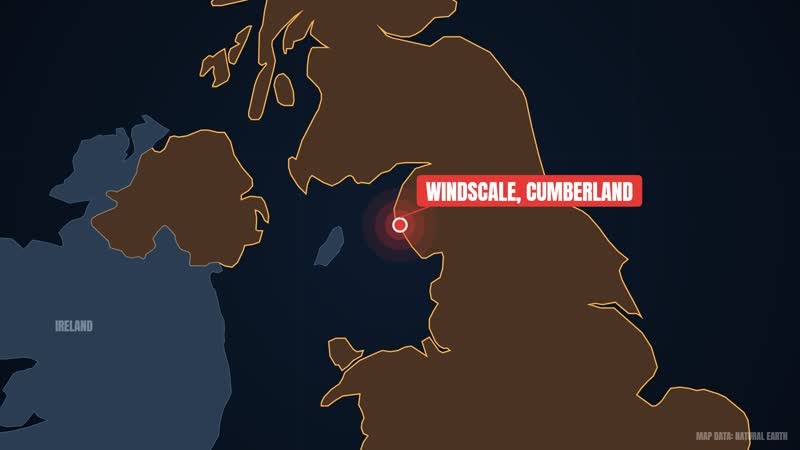
Work on the water design ended in April 1947. A former Royal Ordnance Factory site on the Cumberland coast was then selected and renamed Windscale. Construction began in September 1947. At its peak more than 5,000 workers were on site, and each reactor and its structure weighed 57,000 long tons. Each was built on a 10-foot-thick reinforced concrete slab, and the tolerances were kept extremely fine to stop the structure from shifting.
The graphite moderator had to be of the highest purity, because even ordinary contamination could affect the reactor. It was machined in a clean environment, and workers wore special clothing. The core was a large graphite block with 3,440 fuel channels. Each channel held a string of 21 finned aluminium cartridges, and each cartridge contained a uranium rod about 30 centimetres long. New rods were pushed in from the front, and spent ones fell out the back into a water channel.
The reactor's power was held in check by 24 boron steel control rods, with 16 fail-safe rods for emergencies. Cooling came from a tall chimney, about 120 metres high, that drew air through the core, along with blowers and shutdown fans. On John Cockcroft's orders, filters were fitted at the top of the chimneys. Workers jokingly called them Cockcroft's Follies, but later those same filters trapped a great deal of radioactive dust.
Pile 1 went critical in October 1950, though its performance was about 30 percent below the design. Pile 2 started in June 1951 and soon reached 90 percent power. On 28 March 1952 Tom Tuohy obtained Britain's first plutonium sample. In August, enough plutonium for a bomb was delivered to Aldermaston. On 3 October 1952, Operation Hurricane was successfully detonated at the Monte Bello Islands in Western Australia. But the reactors had a hidden weakness.
Chapter 4Cockcroft's Folly
The story of Cockcroft's filters began with a small objection. During construction, physicist Terence Price imagined a danger: if a fuel cartridge burst, the hot uranium could catch fire, and its fine oxide dust would rise up the chimney and escape. At a meeting Price proposed fitting filters to the chimneys. The idea was dismissed as too difficult, and it was not even recorded in the minutes.
Then Sir John Cockcroft sensed the danger himself. He had heard that particles of uranium oxide had been found at Oak Ridge, so he ordered the filters. The problem was that the first 70 feet of the chimneys had already been built. The filters could not go lower down, so they had to be built at the very top. About 200 tons of structural steel, bricks and concrete were hauled up to chimneys 400 feet tall. The filters delayed construction and raised the cost, which is why workers and engineers called them Cockcroft's Follies. Many people saw them as a waste of money and time.
Was that true? The answer came during the fire. The filters caught about 95 percent of the radioactive dust, and much of northern England was spared heavier contamination. Price later said that after the accident the word folly no longer seemed right.
But his other fears also proved correct. So many cartridges slipped past the water channel that it became routine. People went into the ductwork and used tongs to put them back into the water. Surveys in July and August 1955 found hot spots nearby. Thirteen cartridges that had fallen into the air duct were recovered, and some filters were also damaged. Then in January 1957 two cartridges jammed in the scanning gear. By July, strontium-90 in milk had reached two-thirds of the level acceptable for children. Frank Leslie surveyed contamination at Windscale and the nearby village, but this information was kept secret even from staff. One more silent danger remained.
Chapter 5The Hidden Energy in Graphite
Now to the hidden weakness itself. It was called Wigner energy, and it built up silently inside the graphite. Physicist Eugene Wigner had discovered that bombardment by neutrons damages the crystal structure of graphite, storing potential energy. That energy could be released suddenly in a sharp burst of heat. The Americans had warned that this could even set a reactor on fire. British scientists knew about it, but they had little experience of how graphite behaves.
On 7 May 1952 the core temperature of the shut-down Pile 2 suddenly began to rise. When the blowers were switched on, the pile cooled. In September 1952 Pile 1 heated up even though it was shut down, and smoke was seen rising from the core. Air could have fanned a fire, yet the blowers were run anyway. Later investigation found the smoke came from the lubricating oil in the blower bearings. The investigation also showed that these surges of heat were sudden releases of Wigner energy.
Operators were alarmed. But shutting the reactors down would have delayed the nuclear weapons programme by four years. So the only solution was to heat the core and release the energy deliberately, a process called annealing. Graphite softens above 250 degrees Celsius, and the Wigner dislocations slowly return to their natural state. Between August 1953 and July 1957, Pile 1 was annealed eight times and Pile 2 seven times. Peak temperatures ranged between 310 and 420 degrees. Each release was different, and over time getting the energy out became harder. The process was not routine, but it was necessary for the reactors to survive.
Monitoring was also incomplete. Assistant manager J. L. Phillips received only 66 thermocouples for the graphite from Risley, and just 20 for the fuel elements.
Then new pressure arrived. On 1 March 1955, Winston Churchill committed Britain to building a hydrogen bomb, and scientists were given a tough schedule. There was no time to build a new reactor, so enriched uranium and lithium-magnesium were added to Pile 1's fuel loads. These materials were highly flammable. Windscale staff pointed out the danger, but their objections were set aside. The cooling fins were then made smaller so the fuel would run hotter and production would rise. These changes created hot spots in the core that thermocouples placed according to the old design could not detect. Hinton left in despair.
Chapter 6The Ninth Heating
On 7 October 1957, Pile 1 reached 40,000 MWh, and it was time for a new Wigner release. The process had been carried out eight times before. This time, however, the irradiation period was longer, and parts of the core had not been annealed in the previous heating. The reactor was shut down at 01:13 on 7 October. The 66 thermocouples were checked, and at 7:25 in the evening the reactor went critical again. On the morning of 8 October, at 1.8 MW, two thermocouples showed 250 degrees Celsius. So control rods were inserted and the reactor was shut down until 04:00.
Then something odd happened. Temperatures fell across most of the core, but only channel 20/53 kept rising. It was concluded that energy was being released only in 20/53. On the morning of 8 October, physicist Ian Robertson decided on a second heating. Previously this had been done only when nearly all thermocouples showed falling temperatures. In 1954 and 1955 a 24-hour wait had been observed. The Penney Report later concluded that the basic cause of the accident was the second heating on 8 October, which was done too soon and too fast.
After the heating, the temperature of the whole core began to rise, and this was taken to be a successful Wigner release. That was a mistake. Heating continued until 9 October, and the graphite stayed at about 350 degrees Celsius. Channel 20/53 reached 405 degrees. The dampers were opened for a few minutes, and this was repeated three times. Temperatures fell elsewhere, but not in 20/53.
On 10 October, when the dampers were opened, radioactivity in the chimney was found to be elevated. A cartridge was thought to have burst, which had happened before. So the fan speed was increased to cool the pile. Operators did not know that the cartridge had not merely burst but had caught fire. As the fans sped up, airflow increased and the flames flared. The fire spread to neighbouring channels, and radioactivity in the chimney climbed rapidly.
Tom Hughes then suggested inspecting in person. In protective gear, he and another operator went to the charge face and removed an inspection plug. Hughes later said that in four channels the fuel was glowing deep red. According to one source, the fire had been burning for about 48 hours. The sources' timelines differ: one account says 48 hours, while another mentions glowing metal at around 4:30 on the evening of 10 October.
Chapter 7Fighting the Fire
Now the question was what to do with a burning reactor. First the operators ran the fans at full speed to blow out the flames. The result was the opposite. More air meant more oxygen, which gave the fire more fuel. Tom Hughes and his colleagues had already made a fire break. They pushed out the undamaged fuel cartridges around the fire. According to one source, about 120 channels were involved. The aim was to stop the fire spreading, and the surrounding channels were emptied for that purpose.
Tom Tuohy then made another suggestion: push the melted cartridges at the heart of the fire out the back with scaffolding poles so they would fall into the cooling pond. This proved impossible. The fuel rods would not budge, however hard people pushed. When the poles came out, their ends were glowing red, and one pole was dripping molten metal. Hughes realised this was molten irradiated uranium and that the radiation problem at the charge hoist had become severe. Meanwhile, the reactor's reinforced concrete containment had to stay below a certain temperature or it risked collapse.
Next came carbon dioxide. The site's new Calder Hall reactors had just received 25 tonnes of liquid carbon dioxide. It was brought to Pile 1's charge face, but getting a useful amount of gas to the fire was difficult. Tuohy called it a poor little tube. According to one timeline, carbon dioxide was fed into channel 20/56 at 4:30 on the morning of 11 October. It had no noticeable effect.
Time was running out. According to one source, at 1:30 on the night of 11 October the fire was at its peak with 11 tons of uranium burning, and a thermocouple read 3,100 degrees centigrade. The biological shield around the reactor was in serious danger of collapse. Tuohy then proposed using water. It was dangerous, because hot molten metal can strip oxygen from water and make hydrogen. That hydrogen could mix with incoming air and explode, cracking the weakened containment. But no other way could be seen.
About twelve fire hoses were brought to the charge face. Their nozzles were cut off, and the hoses were attached to scaffolding poles and inserted into channels about 1 metre above the centre of the fire. Tuohy climbed onto the reactor shielding once more and gave the order to open the water. As pressure rose, he listened at the inspection holes for any sign of hydrogen. According to one timeline, the hoses were opened at 8:55 on the morning of 11 October, and the flow was raised from 300 to 800 gallons per minute. Still the fire was not put out. The sources' timelines differ here too, so all we can say is that the water failed at first. What was the last resort?
Chapter 8The Last Gamble
The water had failed as well. Evacuating the area was now under discussion. At this moment Tom Tuohy made what workers called the last gamble. He ordered everyone out of the reactor building except himself and the fire chief. Then all the cooling and ventilating air flowing into the reactor was shut off. Consider the irony: the fire that air had fanned was now to be starved of air. It was both a risk and a hope.
Tuohy climbed the ladder several times. He saw that the flames rising from the discharge face were slowly dimming. During one inspection he found that the inspection plates, which were removed with a metal hook, were stuck in place. In his view the reason was that the fire was trying to draw air from every possible place to keep itself alive. Eventually a plate came off, and the fire in front of him was fading. In his words, first the flames went, then the light dimmed, then the glow faded. He kept looking again and again until he was sure the fire was out. Remarkably, Tuohy lived to the age of 90.
Now the timeline. According to one source, the shutdown fans were switched off at 10:10 on the morning of 11 October, after which the fire began to come under control. The water was not turned off right away. Two more hoses were added, and the flow reached 1,000 gallons per minute. On 12 October it was gradually reduced. According to one source, the water was shut off at 3:10 in the afternoon of 12 October, when the fire was out and the reactor cold. Another account says the water ran for a further 24 hours. When the hoses were later shut off, contaminated water ran out onto the forecourt in front.
The story of the fire was over, but the story of the reactor was not. Pile 1's reactor tank has stayed shut ever since. About 15 tons of uranium fuel remain inside it today. It was first feared that pyrophoric uranium hydride, formed by the water, could catch fire again. Later investigation ruled that out. Examination also showed the graphite had not caught fire at all. The damage was local, caused by nearby uranium fuel that had grown extremely hot.
Chapter 9Milk, Secrets and the Penney Report
The fire was out, but another question arose: what had escaped into the air? The figures differ between sources. According to one, about 740 terabecquerels of iodine-131 were released, while another estimates 600. Xenon-133 is about 12,000 terabecquerels in both. Estimates for caesium-137 range between 22 and 4.6 terabecquerels. One source gives 8.8 terabecquerels of polonium-210. For comparison, Chernobyl in 1986 released about 1,760,000 terabecquerels of iodine-131, so Windscale's release was far smaller. Compared with the 1979 Three Mile Island accident, Windscale released 25 times more xenon-135, but far less iodine, caesium and strontium.
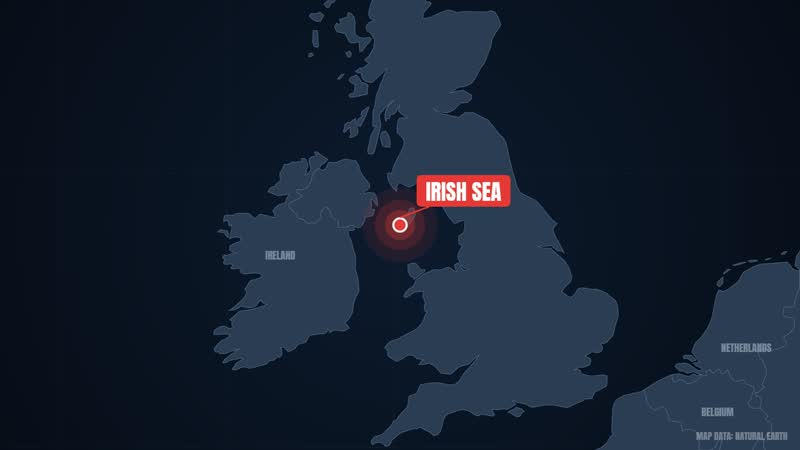
The greatest concern was iodine-131, because it can raise the risk of thyroid cancer, and children are considered especially vulnerable. Milk tests showed it was contaminated with iodine-131 to dangerous levels. So milk from an area of about 500 km2 was destroyed for about a month. It was diluted a thousand times and poured into the Irish Sea. One thing is clear: nobody was evacuated from the area.
Now the secret. Prime Minister Harold Macmillan ordered the reports to be heavily censored. He feared the damage to Britain's nuclear relationship with America. Earlier, in early 1957, another strontium-90 leak had also been hidden. The Penney Report was released in full only in 1988. Under Sir William Penney, the inquiry ran from 17 to 25 October 1957, and the report was presented on 26 October. Its first conclusion was that the basic cause was the second heating on 8 October, done too soon and too fast.
The report said the actions taken after the accident were prompt and efficient and that staff had shown a sense of duty. It also strongly criticised technical and organisational weaknesses. It called the heating an error of judgement as well. This was said of the very people who then risked their lives to stop the fire. Some feel their courage was never fully recognised. Tuohy never received any public recognition. He died on 12 March 2008.
Then the question of health. A 1983 report estimated about 33 long-term cancer deaths, which included polonium-210. The 1988 official report estimated about 100 deaths over 40 to 50 years, 90 non-fatal cancers and 10 hereditary defects. But epidemiological studies have not found such an increase. A 2010 study of cleanup workers found no notable long-term effects, and a 2024 study found no increase in thyroid cancer.
The rate of leukaemia was higher among children born in Seascale, about 2 km from Windscale. Some link this to Windscale. But according to one study, the rate in the rest of Cumbria was below the national average, so it considers the link weak. According to experts, one reason may be that older estimates of low-radiation risk were higher than necessary. Another may be that the decision to destroy the milk was effective.
Chapter 10What Changed, What Remains
It took about 31 years for the Penney Report to become fully public. It was released at the Public Record Office in January 1988. In 1989 a revised transcript also appeared, in which the old recordings were transcribed better. Pile 2 had not been damaged by the fire, but it too was judged unsafe and shut down. After this, no air-cooled reactor was ever built.
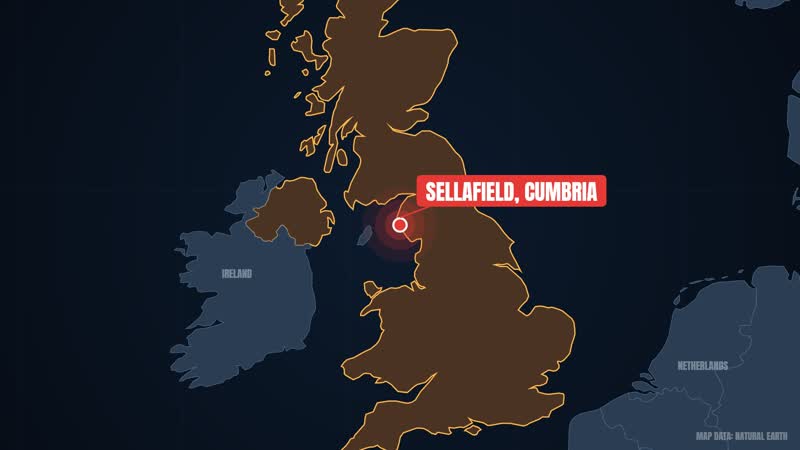
The site's name also changed. In 1981 the BNFL part began to be called Sellafield, while the UKAEA part kept the name Windscale. Decommissioning began in the 1980s. Today it is estimated that the work will continue beyond 2040. The Pile 2 chimney was partly taken down in 2001. Work to demolish the prominent chimneys began in 2013, from the top down, with great care. They could not simply be knocked down, so they were broken up in pieces with core drills. About 5,000 tonnes of rubble were brought down one ton at a time.
Pile 1 still holds about 15 tons of uranium, along with about 6,700 fire-damaged fuel elements and 1,700 isotope cartridges. Inspections showed the graphite had not caught fire. The damage was local, and the cause was uranium fuel that had grown extremely hot. According to plans, the fuel and isotopes were to be removed from the Windscale piles by 2030. But full decommissioning will continue beyond that.
So what is the lesson? Terence Price's fears were first rejected, yet the same filters proved useful during the fire by catching about 95 percent of the dust. The second lesson is secrecy. The government had the report heavily censored, and it took decades for the details to emerge. That is why opinion on the health effects has kept shifting.
Open questions remain. Estimates run to about 100 fatal cancers, yet studies have found no increase. Where does the truth lie? If you enjoyed the story, like the video, subscribe to the channel, and tell us in the comments what you think the biggest lesson is.
Shorts
The 'Folly' That Limited the Fallout
Premieres:
One Channel Kept Heating While the Reactor Cooled
Premieres:
The Last Gamble That Put Out Windscale's Fire
Premieres:
Sources
- Windscale fire — Wikipedia (CC BY-SA 4.0)
- Windscale Piles — Wikipedia (CC BY-SA 4.0)
- Sellafield — Wikipedia (CC BY-SA 4.0)
- Wigner effect — Wikipedia (CC BY-SA 4.0)
- Nuclear safety and security — Wikipedia (CC BY-SA 4.0)
Stock footage & photos
- By Matias Luge on Pexels
- By Khairul Onggon on Pexels
- By ESA on Pexels
- By Videas Cl on Pexels
- By Eduardo Cano Photo Co. on Pexels
- By WeStarMoney Rec on Pexels
- By cottonbro studio on Pexels
- By H.Espinosa Films on Pexels
- By Progga Media on Pexels
- By Dan Yonan on Pexels
- By Ivan Keyframe on Pexels
- By https://kaboompics.com/ on Pexels
- By utopia 36 on Pexels
- By utopia 36 on Pexels
- By cottonbro studio on Pexels
- By cottonbro studio on Pexels
- By Richard Multimedia on Pexels
- By Ivan S on Pexels
- By Mikhail Nilov on Pexels
- By ArtHouse Studio on Pexels
- By Yan Krukau on Pexels
- By Pressmaster on Pexels
- By EqualStock IN on Pexels
- By Md Amir Umar on Pexels
- By Kampus Production on Pexels
- By Kampus Production on Pexels
- By Alex Moisieiev on Pexels
- By TimePRO TV on Pexels
- By Casey Whalen on Pexels
- By In Old News LLC on Pexels
- By George Morina on Pexels
- By Altaf Shah on Pexels
- By Werner Pfennig on Pexels
- By Werner Pfennig on Pexels
- By Zulfugar Karimov on Pexels
- By Bhara Kahu Channel on Pexels
- By Tima Miroshnichenko on Pexels
- By Mikael Blomkvist on Pexels
- By Toàn BDS on Pexels
- By K on Pexels
- By Wikimedia Commons on Pexels
- By RDNE Stock project on Pexels
- By Pavel Danilyuk on Pexels
- By Artem Podrez on Pexels
- By cottonbro studio on Pexels
- By K on Pexels
- By K on Pexels
- By David Pickup | Advertising & Marketing 🇬🇧 on Pexels
- By Monsieur Sylvain on Pexels
- By Zulfugar Karimov on Pexels
- By K on Pexels
- By Tom Fisk on Pexels
- By ProLens on Pexels
- By Val А on Pexels
- By Sergei Starostin on Pexels
- By Clément Proust on Pexels
- By Piotr Wojnowski on Pexels
- By Declan Conor on Pexels
- By Sergei Starostin on Pexels
- By AMIT PANDEY on Pexels
- By SÀI GÒN CÔNG TY CP SẢN XUẤT - THƯƠNG MẠI on Pexels
- By RayneStorm Wayne on Pexels
- By Usman AbdulrasheedGambo on Pexels
- By Bhavesh Mariyappa on Pexels
- By Tima Miroshnichenko on Pexels
- By Sururi Ballıdağ Director on Pexels
- By K on Pexels
- By K on Pexels
- By RDNE Stock project on Pexels
- By RDNE Stock project on Pexels
- By Nuno Magalhães on Pexels
- By David Pickup | Advertising & Marketing 🇬🇧 on Pexels
- By Site Engine on Pexels
- By Site Engine on Pexels
- By Polina Tankilevitch on Pexels
- By Dominik Zítka on Pexels
- By P ADITHYA M NAIK on Pexels
- By Pixabay on Pexels
- By ANTONI SHKRABA production on Pexels
- By ArtHouse Studio on Pexels
- By K on Pexels
- By TREEDEO.ST on Pexels
- By Phát Trương on Pexels
- By KATRIN BOLOVTSOVA on Pexels
- By Edward Jenner on Pexels
- By Pressmaster on Pexels
- By Tom Fisk on Pexels
- By Thanh Văn on Pexels
- By max laurell on Pexels
- By 岳威 梁 on Pexels
- By Usman AbdulrasheedGambo on Pexels
- By CP Khanal on Pexels
- By Joerg Hartmann on Pexels
- By IslandHopper X on Pexels
- By K on Pexels
- By ROMAN ODINTSOV on Pexels
- By Magda Ehlers on Pexels
- By Magda Ehlers on Pexels
- By super tramp on Pexels
- By cottonbro studio on Pexels
- By Sururi Ballıdağ Director on Pexels
- By Los Muertos Crew on Pexels
- By cottonbro studio on Pexels
- By Dziana Hasanbekava on Pexels
- By Sergey Polyakov on Pexels
- By ArtHouse Studio on Pexels
- By Nicola Narracci on Pexels
- By Nicola Narracci on Pexels
- By Prakash Chavda on Pexels
- By aksinfo7 universe on Pexels
- By Videas Cl on Pexels
- By ranjeet . on Pexels
- By Tom Fisk on Pexels
- By Tatiana Kut on Pexels
- By Emre Vonal on Pexels
- By isgandar Ganbarov on Pexels
- By Kindel Media on Pexels
- By Antoni Shkraba on Pexels
- By L R.J. on Pexels
- By Ahila devi Manoharan on Pexels
- By K on Pexels
- By Sini Ko on Pexels
- By utopia 36 on Pexels
- By Videas Cl on Pexels
- By ArtHouse Studio on Pexels
- By abdo alshreef on Pexels
- By SÀI GÒN CÔNG TY CP SẢN XUẤT - THƯƠNG MẠI on Pexels
- By Dominik Zítka on Pexels
- By PureRaw: Camera & Film Grain on Pexels
- By George Morina on Pexels
- By George Morina on Pexels
- By Ivan S on Pexels
- By Artem Podrez on Pexels
- By K on Pexels
- By Monstera Production on Pexels
- By Artadya Gumelar on Pexels
- By Nino Souza on Pexels
- By Kiwi and Camera on Pexels
- By Damiano Crognali on Pexels
- By Kindel Media on Pexels
- By KoolShooters on Pexels
- By K on Pexels
- By Tima Miroshnichenko on Pexels
- By ArtHouse Studio on Pexels
- By Sini Ko on Pexels
- By Jakub Zerdzicki on Pexels
- By cottonbro studio on Pexels
- By Pixabay on Pexels
- By emirkhan bal on Pexels
- By ArtHouse Studio on Pexels
- By RDNE Stock project on Pexels
- By Oleg Avrakh on Pexels
- By Irina Obolonko on Pexels
- By Elements Interactive on Pexels
- By Anurag Raj on Pexels
- By Sergei Starostin on Pexels
- By Engin Akyurt on Pexels
- By Thanh Văn on Pexels
- By Efrem Efre on Pexels
- By Tom Fisk on Pexels
- By Bisan Subba on Pexels
- By JMT 35 on Pexels
- By Monsieur Sylvain on Pexels
- By Pressmaster on Pexels
- By Tima Miroshnichenko on Pexels
- By Tima Miroshnichenko on Pexels
- By ArtHouse Studio on Pexels
- By MART PRODUCTION on Pexels
- By MART PRODUCTION on Pexels
- By Joerg Mangelsen on Pexels
- By Charlie Mounsey on Pexels
- By Truy Nguyễn on Pexels
- By cottonbro studio on Pexels
- By Pressmaster on Pexels
- By Pressmaster on Pexels
- By K on Pexels
- By Mahidul Islam Nakib on Pexels
- By Mikael Blomkvist on Pexels
- By mostafa meraji on Pexels
- By aksinfo7 universe on Pexels
- By aksinfo7 universe on Pexels
- By ArtHouse Studio on Pexels
- By ArtHouse Studio on Pexels
- By Banco de Imagens SEL-DF on Pexels
- By Pixabay on Pexels
- By K on Pexels
- By Shutter Break on Pexels
- By Sergei Starostin on Pexels
- By Sergei Starostin on Pexels
- By abdo alshreef on Pexels
- By Kevin Krämer on Pexels
- By T Honkamies on Pexels
- By Rahul Sapra on Pexels
- By Bonus Studio on Pexels
- By Bonus Studio on Pexels
- By ArtHouse Studio on Pexels
- By ArtHouse Studio on Pexels
- By Monstera Production on Pexels
- By Caleb Oquendo on Pexels
- By Junia Mendes on Pexels
- By Dan Yonan on Pexels
- By khezez | خزاز on Pexels
- By Ron Lach on Pexels
- By Gabe Hollis on Pexels
- By Gabe Hollis on Pexels
- By Joerg Hartmann on Pexels
- By K on Pexels
- By Luis Alberto Garcia Garcia on Pexels
- By ArtHouse Studio on Pexels
- By Ron Lach on Pexels
- By RDNE Stock project on Pexels
- By K on Pexels
- By Magda Ehlers on Pexels
- By cottonbro studio on Pexels
- By Itai Perelman Nasich on Pexels
- By khezez | خزاز on Pexels
- By Grisha Grishkoff on Pexels
- By Gustavo Fring on Pexels
- By Charles Dewandeler on Pexels
- By Florian Delée on Pexels
- By Tima Miroshnichenko on Pexels
- By Tima Miroshnichenko on Pexels
- By emirkhan bal on Pexels
- By Horst Dreisbach on Pexels
- By K on Pexels
- By Hamza Awan on Pexels
- By Monsieur Sylvain on Pexels
- By Miguel Á. Padriñán on Pexels
- By vinod kashyap on Pexels
- By Sergei Starostin on Pexels
- By David Sze on Pexels
- By Waqas Ahmad Wicky on Pexels
- By KADO FUETA on Pexels
- By Artem Podrez on Pexels
- By Mikhail Nilov on Pexels
- By Graham Thorne on Pexels
- By Pachon in Motion on Pexels
- By Declan Conor on Pexels
- By K on Pexels
- By Tima Miroshnichenko on Pexels
- By Kiwi and Camera on Pexels
- By Kindel Media on Pexels
- By Monstera Production on Pexels
- By Teo Doulke on Pexels
- By K on Pexels
- By mygiguser on Pexels
- By K on Pexels
- By Anastasia Shuraeva on Pexels
- By RDNE Stock project on Pexels
- By Rathaphon Nanthapreecha on Pexels
- By Roberto Zepeda on Pexels
- By Pavel Danilyuk on Pexels
- By https://kaboompics.com/ on Pexels
- By KoolShooters on Pexels
- By KoolShooters on Pexels
- By Kindel Media on Pexels
- By Moe Magners on Pexels
- By Videas Cl on Pexels
- By cottonbro studio on Pexels
- By cottonbro studio on Pexels
- By https://kaboompics.com/ on Pexels
- By MART PRODUCTION on Pexels
- By RDNE Stock project on Pexels
- By Monstera Production on Pexels
- By Jakub Zerdzicki on Pexels
- By Jakub Zerdzicki on Pexels
- By Martyn Day on Pexels
- By Martyn Day on Pexels
- By Pavel Danilyuk on Pexels
- By Artem Podrez on Pexels
- By Artem Podrez on Pexels
- By David Pickup | Advertising & Marketing 🇬🇧 on Pexels
- By Hamzeh Dauod on Pexels
- By JIUN-JE LIN on Pexels
- By ArtHouse Studio on Pexels
- By Edward Jenner on Pexels
- By Pressmaster on Pexels
- By Ron Lach on Pexels
- By KoolShooters on Pexels
- By Tima Miroshnichenko on Pexels
- By Tima Miroshnichenko on Pexels
- By TimePRO TV on Pexels
- By K on Pexels
- By Peter Reese on Pexels
- By RAJU THAPA on Pexels
- By Martina Tomšič on Pexels
- By Martina Tomšič on Pexels
- By Airam Dato-on on Pexels
- By Nikhil Manan on Pexels
- By Gustavo Fring on Pexels
- By Pavel Danilyuk on Pexels
- By Pressmaster on Pexels
- By Michelangelo Buonarroti on Pexels
- By Egor Kunovsky on Pexels
- By K on Pexels
- By https://kaboompics.com/ on Pexels
- By Vincuk Konan on Pexels
- By cottonbro studio on Pexels
- By Pavel Danilyuk on Pexels
- By Sarowar Hussain on Pexels
- By ROMAN ODINTSOV on Pexels
This documentary is based on the sources above and was fact-checked before publishing. The narration voice, animated host and illustrations are AI-generated. Spotted a mistake? Tell us in the YouTube comments.