Sunk Before the King's Eyes: Raising the Mary Rose | True Story
🎬 The video premieres soon
On 19 July 1545, King Henry VIII watched his proudest warship, the Mary Rose, lead an attack on a French invasion fleet in the Solent. Moments later she heeled over and sank, taking most of her crew with her. Why did a ship that had served for 34 years founder so suddenly? Was it open gunports, a gust of wind, overloaded guns, an unruly crew, or French cannon fire? Then follow the incredible story of her rediscovery: 19th-century divers with gunpowder, a determined team of volunteers, and one of the most complex salvage operations in history, which lifted her from the seabed in 1982. Discover what her Tudor time capsule revealed.
Chapter 1The Ship That Vanished
On the evening of 19 July 1545, English and French warships faced each other in the waters of the Solent, and King Henry VIII watched from the shore. The Mary Rose, one of the largest ships in the English fleet, was leading an attack on the French galleys. She was part of Henry VIII's Tudor navy and had served for about 34 years.
Then something suddenly went wrong. The ship leaned sharply to one side, and water poured in through the open gunports. The crew could not recover. Anti-boarding netting had been spread above to keep the enemy out, but for many men it became a trap. Of at least 400 men aboard, fewer than 35 survived, which means more than 90 percent of the crew was lost.
So why did the Mary Rose sink? Was it a mistake, a design flaw, or enemy guns? And what became of the wreck, and how was she brought up from the sea on 11 October 1982? This article covers the Tudor navy, the ship's construction, her crew, the theories about her loss and the great operation to raise her.
Chapter 2Henry's Proud New Navy
To understand the ship, we must go back. In the late 15th century England was recovering from wars with France and then from the civil wars among its own royal families. Of the large English holdings in France, only Calais remained. After the War of the Roses, Henry VII founded the Tudor dynasty. Naval power had received little attention: from 1422 to 1509 only 6 ships were built for the king. Even so, Henry VII kept a relatively long peace and maintained a small but capable navy.
His son Henry VIII wanted to press England's historic claim to France. Just six weeks after taking the throne in 1509, he married the Spanish princess Catherine of Aragon and joined the League. He had inherited a small navy with only two large ships, the Regent and the Sovereign. Within months of his accession, two large ships were ordered: the Mary Rose and the Peter Pomegranate, of about 500 and 450 tons. It is unclear which king ordered the Mary Rose. Construction began under Henry VIII, but plans for naval expansion may have been underway earlier.
Henry went on to build larger ships, the most famous being the Great Harry, at over 1000 tons. By the 1520s England had a permanent Navy Royal, regarded as the organisational foundation of today's Royal Navy. According to the biographer Jack Scarisbrick, Henry VIII deserved to be called the Father of the English navy. He even took a personal interest in the design of guns.
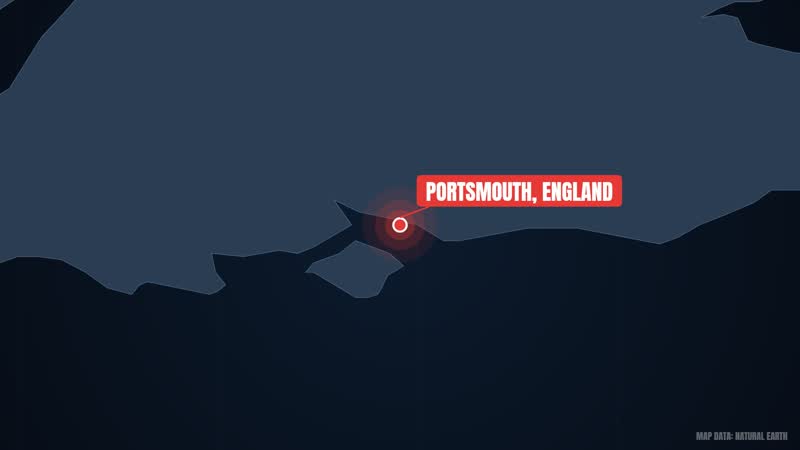
Work on the Mary Rose began in Portsmouth on 29 January 1510, and she was launched in July 1511. Building such a large warship needed high-quality timber. By one estimate about 600 oak trees were used, roughly 16 hectares of woodland. Large trees were scarce, so timber was brought from across southern England. A single unshaped hull plank could weigh more than 300 kg.
The usual story is that the ship's name came from Henry's sister Mary Tudor and the Tudor rose, but historians say there is no direct evidence for this. A more likely candidate is the Virgin Mary. The Peter Pomegranate is thought to be named after Saint Peter and Catherine's pomegranate badge.
Chapter 3Anatomy of a Warship
Now let us look inside the ship. The Mary Rose was built in the carrack style, with high castles at the front and back and a low open deck between them. Her hull narrowed toward the top, a feature called tumblehome. This made it harder for enemies to board and kept the weight of the heavy timber lower. Because only part of the ship survives, her exact dimensions are not fully known. The widest part was about 12 metres and the keel about 32 metres.
The hull had 4 levels and 3 decks. At the bottom was the hold, which held the galley and the ballast, and above it the orlop deck was used for storage. Above that, the main deck carried the heaviest guns. There were 7 gunports on each side, with heavy lids that were watertight when closed. At the top was the upper deck, reserved for fighting. Boarding netting was spread over the open parts to reduce the danger of enemy boarders.
The hull was built in carvel style, which was still a new technique in England at the time. It was first thought to be clinker-planked, but that proved wrong. The rigging had 4 masts and a bowsprit, carrying 9 or perhaps 10 sails. The Anthony Roll picture also shows sheerhooks on the yards. These were curved, sharp blades meant to cut the enemy's rigging during boarding.
The ship was also fast. In March 1513, near The Downs, she raced 9 other ships and won. Admiral Edward Howard called her the best large sailing ship in Christendom of her time. But later repairs and rebuilding did not preserve this quality.
Now to her firepower. Her guns were of two kinds: older wrought iron guns and newer cast bronze guns. Bronze guns were better at punching through a hull's sides with cast iron shot, while iron guns fired stone shot that left large, rough holes. There were also many hand weapons. According to the Anthony Roll, there were 150 pikes and 150 bills, and of 250 longbows, 172 have been found so far, along with around 4,000 arrows. Of 50 handguns on the list, 5 matchlock muskets were found in complete condition, mostly made in Italy.
The biggest change came in 1536. The rebuild turned a 500-ton ship into a 700-ton ship and added an extra tier of broadside guns. Some experts believe this change made the ship less safe. Was that really so? We will return to that question.
Chapter 4Wars, Admirals and the Men on Board
Now to the Mary Rose's career. She first went to war in 1512, when England joined Spain in a campaign against France. In April, the 35-year-old Sir Edward Howard was made Lord High Admiral and chose the Mary Rose as his flagship. His fleet had 18 ships and more than 5,000 men. In August 1512 came the battle of St. Mathieu, where the 1,000-ton Regent attacked the Breton flagship Cordelière, and fire reached the Cordelière's powder magazine.
In 1513 Howard again made the Mary Rose his flagship. On 25 April, near Brest, he attacked French galleys with small boats. He boarded the French admiral's ship, but the ropes were cut and he was separated from his companions. Howard lost his life in that fight, and his brother Thomas Howard became the new Lord Admiral. In September 1513 the Scots were defeated at Flodden, and the war ended in 1514. Peace was sealed by the marriage of Henry's sister Mary to the French king Louis XII. The Mary Rose was then placed in reserve, known as being 'in ordinary'.
In 1522 England went to war with France again. The Mary Rose helped with army movements, and Morlaix was taken by 1 July. From 1522 to 1545 the ship mostly stayed in reserve. In 1527 she was repaired in Portsmouth's new dock.
Now to the men aboard. In war the crew numbered roughly 400 to 450, while in peacetime it was 17 or fewer. Analysis of the bones showed that all the crew were men and that 81 percent were under 30. Most were English and, according to Julie Gardiner, probably from the West Country. Some came from continental Europe. Many skeletons showed a condition called os acromiale, caused by heavy strain on the shoulder. The same condition is found in elite archers today, so some men may have used the longbow from childhood and served as specialist archers on board.
On the main deck, 6 skeletons were found near a 2-ton bronze culverin. Experts think this was a complete gun crew at its station. The names of officers are rarely known. The one person certain to have sailed on the ship was Vice-Admiral George Carew. Some authors name Roger Grenville as captain in the last battle, but maritime archaeologist Peter Marsden questions the sourcing for that. So what happened on that final day?
Chapter 5July 1545: The French Armada
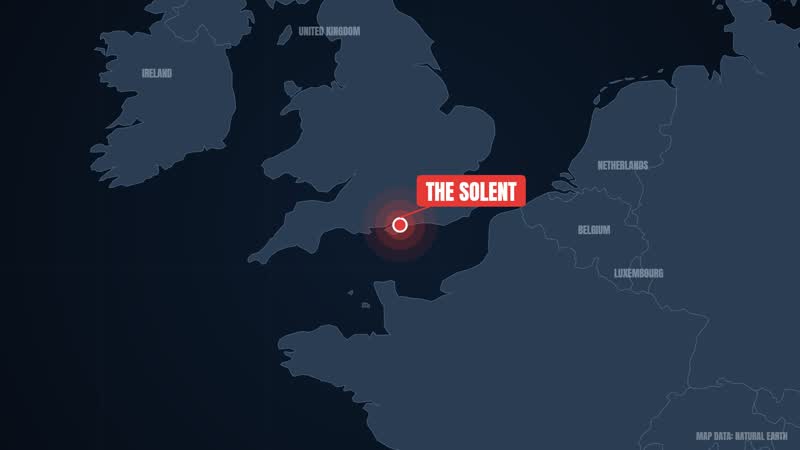
Now we come to 1545. In May, France had assembled a very large fleet in the Seine estuary, intending to land an army on English soil. At Le Havre, 50,000 troops were gathered, while estimates of the number of ships range from 123 to 300. Another source says 38,000 soldiers. The numbers differ between sources, but the fleet was huge and the English were outnumbered.
In early June, Viscount Lisle had 160 ships and 12,000 troops ready at Portsmouth, but only about 80 ships were available to face the French. On 16 July, Admiral Claude d'Annebault's 128 ships entered the Solent unopposed. The English had no heavy galleys, so their fleet pulled back into Portsmouth harbour. On 18 July the two fleets exchanged long-range fire, with very little damage.
On 19 July the wind dropped completely and the sea was calm, leaving the English ships stuck in harbour. The French galleys advanced and threatened 13 small galleys, or rowbarges, which were the only English vessels able to move without wind. Then the wind rose. The Henry Grace à Dieu and the Mary Rose, the two largest ships, began leading the attack on the French galleys. According to one source, Henry VIII watched the sinking from Southsea Castle.
Then, in the early moments of the fight, something went wrong. The Mary Rose suddenly heeled hard to starboard, her right side. Water came in through the open gunports and the crew could not regain balance. Things shifted inside the ship. The galley's brick oven collapsed, a 360-litre copper cauldron fell onto the orlop deck, and the guns moved. The passages were narrow and there was very little time to get up. Anti-boarding netting covered the upper parts, trapping many men beneath it. Of a crew of at least 400, fewer than 35 survived, a loss of over 90 percent. Some sources give 35 to 40 survivors.
The battle ended in a standstill, but France's plan for a large-scale attack became unworkable. On 22 July d'Annebault called off the invasion. The troops landed on the Isle of Wight were withdrawn and the French fleet went home. The next day, 1,500 French troops landed near Seaford, but the local militia pushed them back. The question remained: why did the Mary Rose sink?
Chapter 6Why Did She Sink?
Now the big question: why did the Mary Rose sink? The real cause is still not settled, because the evidence conflicts and hard proof is scarce. The only confirmed eyewitness was a Flemish crewman, whose account was written down in a 24 July letter by the Emperor's ambassador, François van der Delft. According to it, the ship had fired the guns on one side and was turning to the other when a strong wind heeled her over and water came in through the gunports. On 23 July, John Russel wrote to William Paget that the ship sank because of "rechenes and great negligence".
Three years later, Hall's Chronicle said the ship carried a great deal of ordnance, that the gunports were low and open, and that water rushed in as she turned. Later, John Hooker's biography of Peter Carew, written after 1575, blamed crew insubordination. According to it, George Carew's uncle asked about the ship and was told that she had men aboard whom he could not manage. A French cavalry officer, Martin du Bellay, said something completely different: that French guns sank the Mary Rose. Other accounts contradict this.
Now to modern theories. The most common view is that the ship was unstable, a sudden gust of wind struck, and the open gunports proved fatal. A variant by Coates holds that over decades of service, extra weight built up on the ship until she was no longer seaworthy. Peter Marsden thinks the extra heavy guns increased her draught so much that less than a metre was left between the waterline and the main deck gunports. Marsden also asked whether the ship had really fired and turned at all, since the guns on both sides were found loaded.
James Watt offered a new reading of the insubordination story. Dysentery was spreading in Portsmouth, so the crew may have been unfit to handle the ship. Dominic Fontana, using the Cowdray Engraving and GIS analysis, supported du Bellay. In his view, the galleys hit the ship low in the hull. Fontana says the ship's final heading was due north, perhaps a failed attempt to reach the Spitbank shallows. Alexzandra Hildred partly backed this theory, but said being so close to Spitbank could also mean an attempt at a hard turn.
In 2000, the Channel 4 programme What Sank the Mary Rose? ran experiments with scale models and metal weights. The first model turned without capsizing. Then wind was created with a fan. When the model turned, the gunports went under water and it sank within a few seconds. This matched the eyewitness accounts, especially the speed at which the ship went down. But it is not conclusive proof, so the debate continues.
Chapter 7Sleeping in the Seabed
The ship sank, but the story did not end. Only a few days later, Secretary of State William Paget ordered that she be raised. The practical work fell to the Duke of Suffolk, the king's brother-in-law. The method was the one then used to raise ships in shallow water. Strong cables were tied to the sunken ship and joined to two empty ships, called hulks. At low tide, ropes were pulled in with capstans. The plan was for 30 Venetian mariners and a Venetian carpenter to do the work, helped by 60 English sailors. The Jesus of Lübeck and the Samson were chosen as hulks. Both were 700 tons, roughly the size of the Mary Rose.
Suffolk assured the king that the Mary Rose would be up in a few days. This hope proved false. The ship lay tilted 60 degrees to starboard, and much of her was deep in the clay of the seabed. Passing cables under the hull was therefore almost impossible. In trying to attach a cable to the main mast, the mast probably broke. The effort recovered only rigging, some guns and a few other items.
Then the sea went to work. The wreck formed a wall against the Solent currents, and two deep scour pits formed on either side. Sand, silt and shipworm such as teredo weakened the timber. The exposed part slowly collapsed, and the site was gradually hidden under layers of sediment. In the 16th century a hard layer of compacted clay and crushed shells formed, which supported the site and sealed in the Tudor-era objects.
In June 1836, five fishermen's nets snagged on timber. On 10 June, diver Henry Abbinett became the first person in about 300 years to see the Mary Rose. Professional divers John Deane and William Edwards followed. They recovered longbows and several guns, which were sold to the Board of Ordnance for more than £220. One bronze gun was dated 1537, and this helped identify the ship. In 1840 Deane tried to blast a path with gunpowder-filled bomb shells, but modern excavation found no evidence that he broke the hard layer. In the end, about 40% of the original structure survived.
Chapter 8The Great Search and the Great Lift
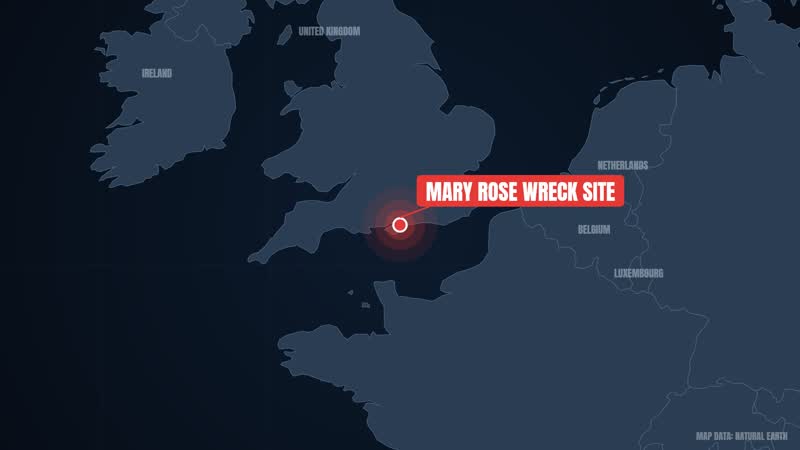
Now the story moves to the 20th century. In 1965 the Southsea branch of the British Sub-Aqua Club began a project to search for shipwrecks in the Solent. It was led by historian, journalist and amateur diver Alexander McKee. Another team, led by Lieutenant-Commander Alan Bax, was also searching. At first they disagreed about where the wreck lay, but eventually they worked together. In February 1966 a chart from 1841 turned up. It marked the Mary Rose's position, which matched the trench McKee's team had already found. The site was about 3 km south of the entrance to Portsmouth Harbour, with a water depth of only 11 metres at low tide.
In 1967-68 a sonar scan by Harold Edgerton showed something buried in the ground. Then on 5 May 1971 the first structural details of the hull, exposed by storms, were identified. A big problem was legal. Wrecks in the UK had no protection, and items recovered under the Merchant Shipping Act 1894 could be auctioned. So the Mary Rose Committee was formed and a lease of the seabed was taken from the Portsmouth authorities. The Protection of Wrecks Act was approved on 5 February 1973. In 1974 Prince Charles gave royal patronage and took part in dives. The Mary Rose Trust followed, and in 1979 the salvage vessel Sleipner was bought. At first only 12 volunteers worked for four months. Now there were more than 50 people, and over four seasons they logged more than 22,000 diving hours.
The hardest question was how to bring the ship up. The Vasa's hull was complete, but only about a third of the Mary Rose survived, stuck in mud. In February 1980 it was decided to empty the hull and strengthen it with steel braces and frames. The aim was to raise the ship by 1982. In May 1981 McKee voiced concerns about the raising method and also questioned Margaret Rule's leadership. After these concerns, nylon strops were dropped; instead, holes were made in 170 places in the hull and a lifting frame was attached with iron bolts and wires.
Preparations began in spring 1982. Problems arose with the lifting equipment, and by June the method had to change. Divers of the Royal Engineers did most of the underwater work. The frame was fixed to the hull and raised on four legs. Then the crane Tog Mor moved it into a cradle while still underwater.
The final lift began on the morning of 11 October 1982. Prince Charles and others watched from boats. At 9:03 am the first timbers of the Mary Rose reached the surface. But the operation came close to failure twice. Once a leg of the frame bent, and then a corner slipped more than a metre, bringing the hull close to being crushed.
Chapter 9A Tudor Time Capsule and What It Taught Us
What came out of the Mary Rose proved that she was a Tudor time capsule. More than 26,000 artefacts and timbers were brought up, and everything was recovered and recorded; nothing was auctioned. A master carpenter's chest held an early backgammon set, a book, three plates, a sundial and a tankard, suggesting he was fairly well off. Eight chests held a collection of carpentry tools unmatched in range and size. The ship could even repair battle damage.
A small cabin in the bow yielded the oldest dated set of navigation instruments found in Europe so far, including compasses, dividers, protractors and a logreel. Surprisingly, records of their use appear only later. Compasses were not shown on English ships until the 1560s, and the first mention of a logreel dates from 1574. The barber-surgeon's chest held more than 60 items, such as handles of surgical tools, a copper syringe and a feeding bottle for patients.
Musical instruments were also found: two fiddles, a bow, a still shawm, three pipes and a tabor drum. They were used for the crew's entertainment and for the rhythm of work. The shawm is the only surviving example of its kind, and the tabor drum is the oldest of its type. The pipes confirmed that older illustrations were accurate. A small visitor turned up too: a dog named Hatch. Found in the 1981 excavation, he was a young male ratter, and his skeleton is now in the museum. When the casks were compared with those from a Basque whale ship at Red Bay, the Mary Rose's casks proved stronger and more reliable, meaning navy supplies were given priority.
During conservation, the hull was sprayed with filtered, recycled water at 2 to 5 °C. Otherwise the wood could have dried out and shrunk by 20 to 50%. Then in 1994 an active three-phase programme began. From 1994 to 2003, low-molecular-weight polyethylene glycol, or PEG, replaced the water inside the wood. From 2003 to 2010, higher-molecular-weight PEG strengthened the surface layers. The last phase was controlled air drying, completed in 2016.
The new Mary Rose Museum opened on 31 May 2013. It cost £35,000,000, and building it over the ship in the dry dock was a challenging job. In 2016 the walls of the hotbox came down, and for the first time since 1545 the ship was seen in a dry state. The museum was closed for 9 months for a £5.4 million redevelopment. By 2018 more than 1.8 million people had visited the new museum, and in 2019 it received 189,702 visitors.
So why did the Mary Rose sink? According to sources, the real cause remains uncertain because of conflicting testimony and a lack of solid evidence. Her story shows that history lost beneath the sea can be brought back through patience, teamwork and science.
Shorts
The Warship That Sank Before the King's Eyes
Premieres:
How Do You Lift a 16th-Century Warship From the Seabed?
Premieres:
The Tudor Navigation Tools That Predate Written Records
Premieres:
Sources
- Mary Rose — Wikipedia (CC BY-SA 4.0)
- Mary Rose Museum — Wikipedia (CC BY-SA 4.0)
- Battle of the Solent — Wikipedia (CC BY-SA 4.0)
- Tudor navy — Wikipedia (CC BY-SA 4.0)
Stock footage & photos
- By Diego Santamaria on Pexels
- By Sururi Ballıdağ Director on Pexels
- By willy one on Pexels
- By Joolsmagools ®️ on Pexels
- By Christopher More on Pexels
- By Sururi Ballıdağ Director on Pexels
- By Engin Akyurt on Pexels
- By Attachet Krasae-intra on Pexels
- By Startup MrParag on Pexels
- By Francesco Ungaro on Pexels
- By ROMAN ODINTSOV on Pexels
- By Attila Pergel on Pexels
- By Videas Cl on Pexels
- By K on Pexels
- By Monstera Production on Pexels
- By ROMAN ODINTSOV on Pexels
- By Erico Felliny on Pexels
- By Jay's Photography on Pexels
- By Vasyl D on Pexels
- By Luciann Photography on Pexels
- By Efrem Efre on Pexels
- By 宋 小天 on Pexels
- By Major &Wang on Pexels
- By Mihman Duğanlı on Pexels
- By Mikhail Nilov on Pexels
- By Pixabay on Pexels
- By Pixabay on Pexels
- By ROMAN ODINTSOV on Pexels
- By Matthias Groeneveld on Pexels
- By Ali Alcántara on Pexels
- By 정규송 Nui MALAMA on Pexels
- By Marten Atsma on Pexels
- By Jerome Mandal on Pexels
- By Nuno Magalhães on Pexels
- By Tima Miroshnichenko on Pexels
- By Tima Miroshnichenko on Pexels
- By Alejandro Ahumada on Pexels
- By Matthias Groeneveld on Pexels
- By Ono Kosuki on Pexels
- By Ono Kosuki on Pexels
- By Efrem Efre on Pexels
- By Ambient_Nature_ Atmosphere on Pexels
- By Any Lane on Pexels
- By Mateusz Feliksik on Pexels
- By Lies on Pexels
- By Numan Gilgil on Pexels
- By Judi Jutras on Pexels
- By wowi allinsky on Pexels
- By Ono Kosuki on Pexels
- By Ono Kosuki on Pexels
- By Los Muertos Crew on Pexels
- By cottonbro studio on Pexels
- By The Instagrapher on Pexels
- By K on Pexels
- By Kindel Media on Pexels
- By https://kaboompics.com/ on Pexels
- By Dan Cristian Pădureț on Pexels
- By Ou Kei on Pexels
- By Stephan Leuzinger on Pexels
- By ArtHouse Studio on Pexels
- By Luis Quintero on Pexels
- By ed1toR ㅤ on Pexels
- By cottonbro studio on Pexels
- By Kai Pilger on Pexels
- By Ahmed on Pexels
- By Enrique on Pexels
- By Анатолий on Pexels
- By LayG Traveller on Pexels
- By Jyoti Pur on Pexels
- By Kampus Production on Pexels
- By RDNE Stock project on Pexels
- By Kampus Production on Pexels
- By RDNE Stock project on Pexels
- By Manjula Sampath on Pexels
- By Glenn Langhorst on Pexels
- By Joolsmagools ®️ on Pexels
- By Fred Mellink on Pexels
- By JANILSON PEREIRA TRARBACH on Pexels
- By JANILSON PEREIRA TRARBACH on Pexels
- By Edward Rode on Pexels
- By Pimon Kumsri on Pexels
- By Ricardo Usher Malcolm on Pexels
- By Felipe Jiménez on Pexels
- By Cemrecan Yurtman on Pexels
- By Taryn Elliott on Pexels
- By max laurell on Pexels
- By Mikhail Nilov on Pexels
- By mark soetebier on Pexels
- By Mark Holmes on Pexels
- By K2 Production on Pexels
- By Sururi Ballıdağ Director on Pexels
- By Sururi Ballıdağ Director on Pexels
- By Luis Hernández on Pexels
- By Marc Espejo on Pexels
- By Val А on Pexels
- By JANILSON PEREIRA TRARBACH on Pexels
- By Tima Miroshnichenko on Pexels
- By David Pickup | Advertising & Marketing 🇬🇧 on Pexels
- By Hamzeh Dauod on Pexels
- By RDNE Stock project on Pexels
- By RDNE Stock project on Pexels
- By RDNE Stock project on Pexels
- By RDNE Stock project on Pexels
- By utopia 36 on Pexels
- By 墨麒麟 西山 on Pexels
- By utopia 36 on Pexels
- By Cemrecan Yurtman on Pexels
- By Glenn Langhorst on Pexels
- By Cheng Shi Song on Pexels
- By Somogro Bangladesh on Pexels
- By Anya Juárez Tenorio on Pexels
- By Mikhail Nilov on Pexels
- By PUWOOK Kwak on Pexels
- By Yaşar Başkurt on Pexels
- By Waddle Aero on Pexels
- By Arnis Rascal on Pexels
- By Postcard Pictures on Pexels
- By K on Pexels
- By Sport O'Scope on Pexels
- By Ros NL on Pexels
- By Lê Cuộc on Pexels
- By Grisha Grishkoff on Pexels
- By Yaroslav Shuraev on Pexels
- By Tom Schönmann on Pexels
- By Arnis Rascal on Pexels
- By Manimaran G Nagaraju on Pexels
- By Kayahan Uluş on Pexels
- By SHOX ART on Pexels
- By SHOX ART on Pexels
- By https://kaboompics.com/ on Pexels
- By cottonbro studio on Pexels
- By Matheus Bertelli on Pexels
- By Attila Pergel on Pexels
- By Andrey Kirievskiy on Pexels
- By Nick C on Pexels
- By Lucius Crick on Pexels
- By Lucius Crick on Pexels
- By Dominik Gryzbon on Pexels
- By Dominik Gryzbon on Pexels
- By cottonbro studio on Pexels
- By KATRIN BOLOVTSOVA on Pexels
- By emirkhan bal on Pexels
- By KoolShooters on Pexels
- By Rafael Minguet Delgado on Pexels
- By Engin Akyurt on Pexels
- By MART PRODUCTION on Pexels
- By KoolShooters on Pexels
- By Cyriac von Czapiewski on Pexels
- By Liudmyla Honcharova on Pexels
- By Florian Delée on Pexels
- By Shoot With Riyas on Pexels
- By Burak The Weekender on Pexels
- By Tatiana Tzviatkova on Pexels
- By Kiwi and Camera on Pexels
- By Boris Hamer on Pexels
- By AdaM miksa on Pexels
- By Marian Croitoru on Pexels
- By Marian Croitoru on Pexels
- By Rahime Gül on Pexels
- By Stephen Pierce on Pexels
- By Ibrahim Bennett on Pexels
- By bora saglam on Pexels
- By Eyüpcan Timur on Pexels
- By cottonbro studio on Pexels
- By RDNE Stock project on Pexels
- By Monstera Production on Pexels
- By https://kaboompics.com/ on Pexels
- By Maria Marin on Pexels
- By willy one on Pexels
- By Kiwi and Camera on Pexels
- By Pressmaster on Pexels
- By Mikhail Nilov on Pexels
- By utopia 36 on Pexels
- By Phát Trương on Pexels
- By Tatiana Tzviatkova on Pexels
- By ArtHouse Studio on Pexels
- By Grisha Grishkoff on Pexels
- By cottonbro studio on Pexels
- By Val А on Pexels
- By Val А on Pexels
- By Boris Ivas on Pexels
- By Ibrahim Bennett on Pexels
- By Herve Traisnel on Pexels
- By K on Pexels
- By Travelling Tourist on Pexels
- By JUN HO LEE on Pexels
- By JUN HO LEE on Pexels
- By Beto Mahler on Pexels
- By Sururi Ballıdağ Director on Pexels
- By Somogro Bangladesh on Pexels
- By Sururi Ballıdağ Director on Pexels
- By Sururi Ballıdağ Director on Pexels
- By Matthias Groeneveld on Pexels
- By Matthias Groeneveld on Pexels
- By Sami Aksu on Pexels
- By RDNE Stock project on Pexels
- By Nino Souza on Pexels
- By Manoo Media on Pexels
- By Aghyad Najjar on Pexels
- By JUN HO LEE on Pexels
- By Dominik Zítka on Pexels
- By Ammad Rasool on Pexels
- By JUN HO LEE on Pexels
- By JUN HO LEE on Pexels
- By JUN HO LEE on Pexels
- By György Lakatos on Pexels
- By Kindel Media on Pexels
- By Kindel Media on Pexels
- By cottonbro studio on Pexels
- By Monstera Production on Pexels
- By Monstera Production on Pexels
- By Tima Miroshnichenko on Pexels
- By MART PRODUCTION on Pexels
- By KATRIN BOLOVTSOVA on Pexels
- By https://kaboompics.com/ on Pexels
- By RDNE Stock project on Pexels
- By Mikhail Nilov on Pexels
- By K on Pexels
- By Salva F. Ayala on Pexels
- By RDNE Stock project on Pexels
- By FÁBIO REIS DE ABREU (PORTUGA) on Pexels
- By max laurell on Pexels
- By Sururi Ballıdağ Director on Pexels
- By Earnest Stephens on Pexels
- By Mikael Blomkvist on Pexels
- By Moe Magners on Pexels
- By Alena Darmel on Pexels
- By Arsel Ozgurdal on Pexels
- By Mario Spencer on Pexels
- By Dindo Bibera Nueza on Pexels
- By Tom Fisk on Pexels
- By JUN HO LEE on Pexels
- By Toàn BDS on Pexels
- By HIROMASA HADACHI on Pexels
- By bala chandar on Pexels
- By Ben Garves on Pexels
- By Rodrigo Ortega on Pexels
- By Kiwi and Camera on Pexels
- By Erik Mclean on Pexels
- By K on Pexels
- By Elvis Deane on Pexels
- By Elvis Deane on Pexels
- By Ono Kosuki on Pexels
- By Pavel Danilyuk on Pexels
- By Saruhan Osmanoğlu on Pexels
- By cottonbro studio on Pexels
- By cottonbro studio on Pexels
- By Nothing Ahead on Pexels
- By cottonbro studio on Pexels
- By cottonbro studio on Pexels
- By shalender kumar on Pexels
- By Hamza Awan on Pexels
- By Eleonora Vokueva on Pexels
- By shalender kumar on Pexels
- By Judas Isariot on Pexels
- By Efrem Efre on Pexels
- By Los Muertos Crew on Pexels
- By K on Pexels
- By K on Pexels
- By K on Pexels
- By Ivan S on Pexels
- By Mikhail Nilov on Pexels
- By Ivan S on Pexels
- By Ron Lach on Pexels
- By Atlantic Ambience on Pexels
- By LayG Traveller on Pexels
- By Christian Vergara on Pexels
- By willy one on Pexels
- By Matthias Groeneveld on Pexels
- By Antoni Shkraba on Pexels
- By Clément Proust on Pexels
- By Mario Krimer on Pexels
- By Engin Akyurt on Pexels
- By Frank Rietsch on Pexels
- By Salva F. Ayala on Pexels
- By Engin Akyurt on Pexels
This documentary is based on the sources above and was fact-checked before publishing. The narration voice, animated host and illustrations are AI-generated. Spotted a mistake? Tell us in the YouTube comments.